


Senior recovery care after hospitalization : A Family Guide
TL;DR:
- Senior recovery care after hospitalization involves coordinated planning to support safe healing and independence. Families should actively verify discharge plans, start home health within 48 hours, and ensure detailed care instructions to prevent setbacks. The right post-discharge setting varies based on medical needs, with in-home care preferred for stable seniors and skilled nursing facilities for complex recoveries.
Senior recovery care after hospitalization is a coordinated, multidisciplinary process designed to support safe healing through tailored medical and non-medical services. Understanding what senior recovery care looks like after hospitalization helps your family make confident decisions at every stage. The process begins before your loved one even leaves the hospital and extends through weeks of structured support at home or in a care facility. Getting this right reduces the risk of setbacks, prevents unnecessary readmissions, and protects your senior’s dignity and independence throughout recovery.
What does senior recovery care look like after hospitalization?
Post-hospital senior care is built on a foundation called discharge planning. Hospitals participating in Medicare must begin discharge planning within 24 hours of admission for seniors who will need post-discharge support. This process includes screening, clinician evaluation, and direct conversations with the patient and family. The goal is to identify every care need before your loved one walks out the door.
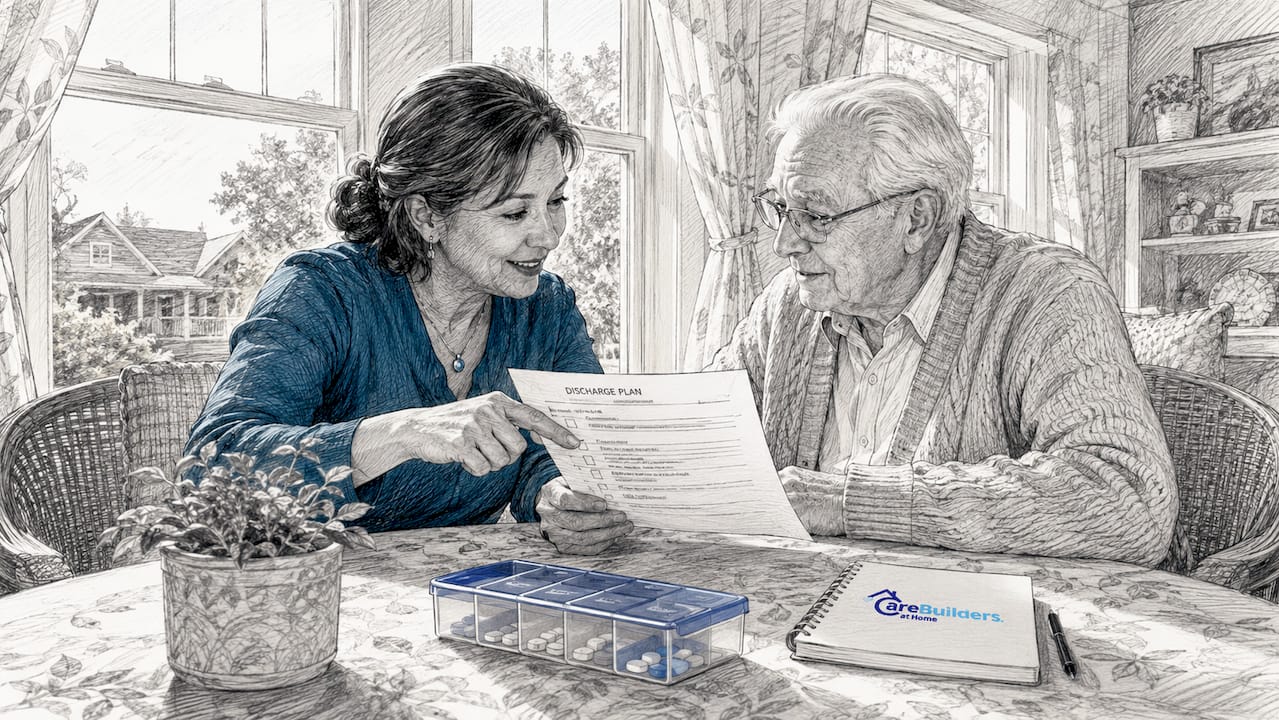
Discharge planning covers wound care requirements, physical therapy needs, medication schedules, and equipment like walkers or hospital beds. The hospital team must provide a written discharge plan that lists care tasks, equipment timelines, and emergency contacts. That document is your family’s operational guide for the weeks ahead. Treat it as a living tool, not a formality.
Coordination between hospital staff, home health providers, and family caregivers is the single most important factor in reducing complications. When communication breaks down at the handoff point, medication errors and missed care tasks follow quickly. Strong coordination keeps every party aligned and your loved one safe.
What does discharge planning actually involve?
The discharge planning process follows a clear sequence that families can track and verify.
- Screening at admission. The care team identifies whether your loved one will need post-discharge support based on diagnosis, age, and functional status.
- Clinical evaluation. A social worker or discharge planner assesses home safety, caregiver availability, and medical complexity.
- Family discussion. The team meets with you to review options, explain care tasks, and confirm your capacity to support recovery.
- Written plan delivery. The hospital provides a formal document covering diagnoses, medications, follow-up appointments, and home care instructions.
- Updates as conditions change. If your loved one’s condition shifts during the stay, the plan must be revised before discharge.
Families who actively question and verify discharge plans achieve better outcomes than those who assume the hospital plan is complete. Ask who performs each care task, when equipment arrives, how payment works, and what to do if something goes wrong overnight.
Pro Tip: Request two versions of the discharge document: one focused on clinical details like diagnoses and medications, and a separate one written for home caregiving routines with step-by-step instructions and escalation contacts. This “task mapping” approach prevents missed care and confusion in the first critical days.
What are the main settings for senior recovery after leaving the hospital?
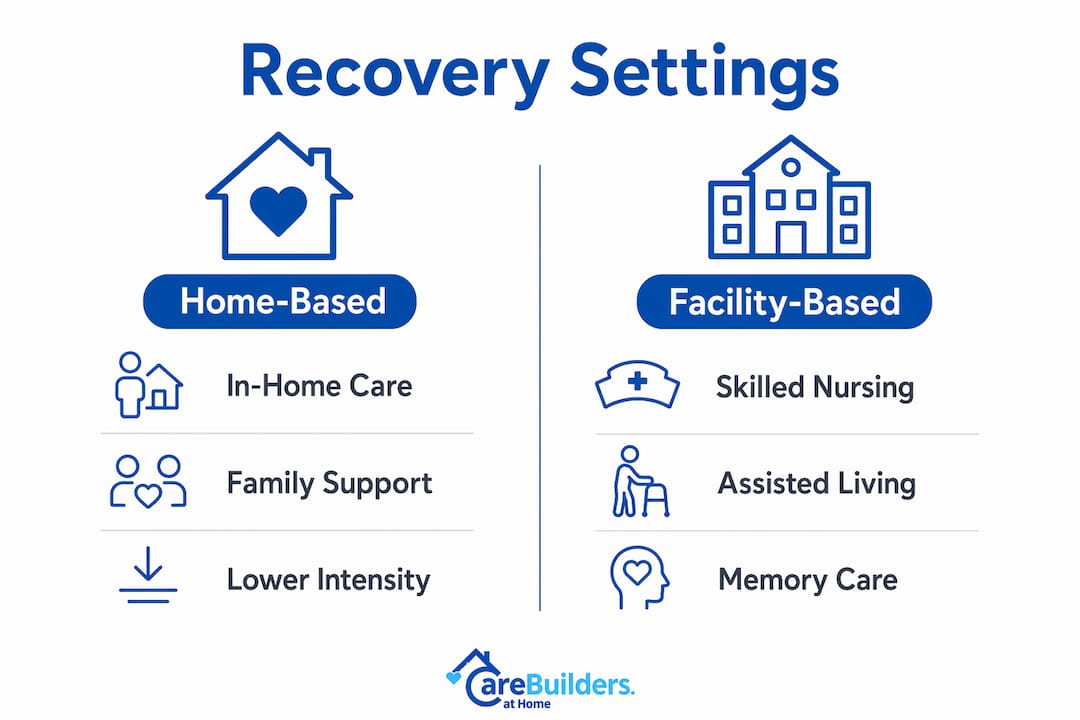
Recovery does not look the same for every senior. The right setting depends on medical complexity, functional ability, and the level of supervision needed.
In-home care
In-home care is the preferred option for seniors who can recover safely in a familiar environment with the right support. Skilled home health services typically start within 24–48 hours of discharge to cover the highest-risk period. Services include skilled nursing visits, physical and occupational therapy, wound care, and medication monitoring. Non-medical caregivers provide bathing assistance, meal preparation, and supervision to prevent falls.
Skilled Nursing Facilities
Skilled Nursing Facilities (SNFs) provide 24/7 skilled care and intensive therapy for seniors who cannot recover safely at home. Stays typically last a few weeks with the goal of returning home once function improves. SNFs suit seniors recovering from major surgery, stroke, or serious fractures who need daily therapy and medical monitoring.
Assisted living and memory care
Assisted living or memory care becomes necessary when a hospitalization reveals permanent changes in mobility or cognitive function. These settings offer ongoing supervision and personal care rather than short-term rehabilitation. The decision to move to assisted living is significant, and families should involve the senior’s physician and a social worker before committing.
| Setting | Best for | Intensity of care | Typical length |
|---|---|---|---|
| In-home care | Medically stable seniors with family support | Moderate | Weeks to months |
| Skilled Nursing Facility | Complex recovery needing daily therapy | High | 2–6 weeks |
| Assisted living | Permanent supervision needs | Moderate ongoing | Long-term |
| Memory care | Cognitive decline with safety risks | High ongoing | Long-term |
How do therapy and caregiver support speed up senior recovery?
Rehabilitation for seniors after hospitalization works best when physical therapy, skilled nursing, and caregiver support operate as a team rather than in isolation.
- Physical therapy focuses on rebuilding strength and mobility through supervised exercises. Tailored physical activity such as walking programs and chair exercises helps seniors regain function safely and reduces fall risk during the vulnerable early weeks.
- Occupational therapy teaches seniors how to perform daily tasks like dressing, bathing, and cooking with adapted techniques or equipment.
- Skilled nursing visits cover wound care, medication monitoring, vital sign checks, and patient education on managing chronic conditions at home.
- Non-medical caregiver support fills the gaps between therapy visits. Caregivers assist with bathing, meals, transfers, and supervision throughout the day.
- Caregiver training is a critical piece that families often overlook. Caregivers trained in medication management, safe transfers, wound care observation, and recognizing warning signs become an extension of the clinical team.
Timing matters significantly. Initiating home health services within 24–48 hours of discharge reduces the risk of coverage gaps during the days when falls and medication errors are most likely. Families should confirm the start date for home health before the senior leaves the hospital, not after.
Pro Tip: Ask the hospital’s discharge planner to schedule the first home health visit before discharge day. Waiting until your loved one is home to make that call creates a dangerous gap in care.
What challenges should families watch for during recovery?
The most common recovery failures share a predictable pattern. Knowing these risks in advance gives your family the chance to prevent them.
- The handoff problem. Information lost between hospital teams and home health providers is a leading cause of post-discharge complications. Medication lists, wound care protocols, and therapy goals must transfer completely and accurately.
- Medication errors in week one. The first week after discharge carries the highest risk for medication confusion. New prescriptions, changed doses, and discontinued drugs create a complex picture that overwhelms many families without a written medication schedule.
- Incomplete discharge documents. Written discharge plans that serve only clinical purposes fail home caregivers. Coordinated written care plans that address both clinical management and daily home caregiving routines reduce errors and keep all parties aligned.
- Delayed or absent home health services. Gaps between discharge and the first skilled nursing or therapy visit leave seniors without professional oversight during the riskiest period.
Comprehensive, flexible transitional care programs that begin at discharge and extend beyond it reduce readmission rates. The VA reports 15–20% readmission rates in high-risk veterans within 30 days, costing approximately $1.2 billion annually. Programs that adapt to individual needs and cover multiple aspects of the transition consistently outperform single-service approaches.
The solution to most of these challenges is explicit, written caregiving plans with clear escalation contacts. Every family member involved in care should know exactly what they are responsible for, when to do it, and who to call if something changes.
Key Takeaways
Effective post-hospital senior care requires coordinated discharge planning, timely home health services, and trained caregiver support to prevent readmission and protect recovery.
| Point | Details |
|---|---|
| Discharge planning starts at admission | Hospitals must begin identifying post-discharge needs within 24 hours of a senior’s admission. |
| Home health should start within 48 hours | Scheduling skilled nursing or therapy before discharge day closes the highest-risk care gap. |
| Written plans need two versions | One document for clinical management and a separate one for daily home caregiving routines reduces errors. |
| Family involvement changes outcomes | Families who ask specific questions and verify every detail of the discharge plan achieve better recovery results. |
| Transitional care must extend beyond discharge | Programs that continue support after the hospital stay reduce readmissions more effectively than one-time handoffs. |
What I’ve learned from watching families navigate the first week home
The first 72 hours after discharge are where recovery is won or lost. Families often arrive home feeling relieved that the hospital stay is over, and that relief can translate into letting their guard down at exactly the wrong moment. The discharge paperwork sits on the kitchen counter, the medication bottles are lined up, and everyone assumes the hard part is done.
The hard part is just beginning. What I have seen work, time and again, is a family that treats the discharge document as a daily operations guide rather than a file to put away. They assign one person to manage medications, one to coordinate therapy appointments, and one to be the point of contact for home health providers. That division of responsibility prevents the “I thought you handled it” conversations that lead to missed doses and skipped exercises.
Emotional support matters more than most clinical guides acknowledge. Seniors who feel encouraged and respected during recovery tend to engage more actively with therapy and report fewer setbacks. A caregiver who shows up with patience and warmth is not a luxury. That person is part of the treatment. If your family is stretched thin, companion care services fill that role with trained, compassionate professionals who provide supervision and genuine connection during the recovery period.
Advocate loudly for equipment and services before your loved one leaves the hospital. If a walker, shower chair, or hospital bed is needed, confirm the delivery date before discharge day. If home health has not been scheduled, push until it is. The system moves slowly when families stay quiet. It moves faster when you ask direct questions and expect direct answers.
— cbahplano
How CareBuilders at Home of Plano & Allen supports senior recovery
Recovering at home after a hospital stay takes more than good intentions. It takes trained hands, consistent presence, and a care plan that actually fits your loved one’s needs. CareBuilders at Home of Plano & Allen provides personal care services designed specifically for seniors returning home after hospitalization, including bathing assistance, medication reminders, mobility support, and meal preparation. The care team coordinates directly with your loved one’s healthcare providers to implement discharge plans accurately and consistently. Families in Plano, Allen, Richardson, Wylie, and surrounding Collin County areas can count on a trusted team that shows up, communicates clearly, and adapts as recovery progresses. Reach out to CareBuilders at Home of Plano & Allen to discuss a care plan built around your loved one’s specific recovery needs.
FAQ
When does discharge planning begin for seniors?
Discharge planning begins within 24 hours of hospital admission for seniors in Medicare-participating hospitals. The process includes clinical evaluation, family discussion, and a written plan delivered before the senior leaves.
What is the biggest risk in the first week after discharge?
Medication errors are the most common cause of hospital readmission in the first week after discharge. A written medication schedule reviewed by a skilled nurse at the first home visit significantly reduces this risk.
How long does senior recovery at home typically take?
Recovery length depends on the diagnosis and the senior’s baseline health. Most seniors receiving skilled home health services after hospitalization complete their primary recovery phase within 4–8 weeks, though ongoing caregiver support may continue longer.
What questions should families ask before a senior leaves the hospital?
Ask who performs each care task, when equipment will be delivered, what the payment arrangement is, and what the protocol is if the senior’s condition worsens overnight. Families who verify these details achieve measurably better outcomes.
Is in-home care better than a skilled nursing facility after hospitalization?
In-home care works best for seniors who are medically stable and have adequate family or professional caregiver support at home. Skilled Nursing Facilities are the right choice when a senior needs daily therapy and 24/7 medical monitoring that cannot be provided at home.
Recommended
- Guide – CareBuilders at Home | Senior and Veteran Care in Plano, Allen & Richardson TX
- Brain Health Care Fitness – CareBuilders at Home | Senior and Veteran Care in Plano, Allen & Richardson TX
- Personal Care – CareBuilders at Home | Senior and Veteran Care in Plano, Allen & Richardson TX
- Virtual Caregiver – CareBuilders at Home | Senior and Veteran Care in Plano, Allen & Richardson TX