


Cut Falls 25% for Seniors: Home Safety Assessment, Priorities & OT/VA
A home safety assessment is a structured walk-through that identifies fall hazards, mobility barriers, and unsafe conditions in a living space, then ranks them by urgency. Family caregivers, occupational therapists, or geriatric care managers can perform one. The goal is a prioritized fix list, not a vague worry list. Start today with a free room-by-room checklist, and call a licensed occupational therapist if you spot stairs, structural damage, or a recent fall.
Table of Contents
- What Does a Room-by-Room Home Safety Checklist Cover?
- Who Should Perform a Home Safety Assessment?
- What Does a Home Safety Assessment Cost?
- How Do You Prioritize Home Safety Fixes?
- Special Considerations for Dementia, Sensory Loss, and Mobility Aids
- How Do Professionals Turn an Assessment Into an Ongoing Safety Plan?
- Where to Find Printable Checklists and How to Use Them
- A Caregiver’s View on What Home Visits Actually Reveal
- How CareBuilders at Home of Plano & Allen Supports Families After an Assessment
- Sources
- FAQ
What Does a Room-by-Room Home Safety Checklist Cover?
Every room in a house carries its own risk profile, and a real home hazard evaluation treats them differently instead of applying one generic list to the whole property. Walk each space slowly, at the pace a person with limited mobility would move through it, not at your normal speed.
Living areas and bedrooms
Loose rugs, trailing power cords, and low furniture with sharp corners cause a disproportionate share of indoor falls. Check for:
- Rugs without non-slip backing or rugs that curl at the edges
- Extension cords crossing walking paths instead of running along walls
- Furniture arranged so there’s a clear, wide path from bed to bathroom
- Lighting bright enough to see the floor clearly at night, including a lamp within reach of the bed
- Phone or medical alert device within arm’s reach of the primary seating and sleeping areas
Kitchen
Kitchens combine two risk types: things that cause falls and things that cause burns or cuts during a fall recovery. Store frequently used items between waist and shoulder height so nobody needs a step stool. Check stove knobs for clear labeling, floor mats for skid resistance, and cabinet doors for handles that don’t require a strong grip.
Bathroom: the highest-priority room
Bathrooms deserve the most attention in any residential safety review, because wet, hard, small surfaces turn minor stumbles into serious injuries. Prioritize:
- Grab bars mounted into wall studs (not just drywall anchors) near the toilet and inside the shower or tub
- Non-slip mats or adhesive strips on tub and shower floors
- A shower seat or transfer bench for anyone with balance or endurance limits
- A raised toilet seat with armrests if standing from a low seat is difficult
- Lever-style faucet handles instead of round knobs, which are easier to operate with arthritis or reduced grip strength
Stairs and entry points
Handrails should run the full length of the staircase on both sides, not just one. Treads need non-slip surfacing, and the top and bottom steps need the strongest color contrast in the house, since that’s where most stair falls start or end. At entry points, check the outdoor path for uneven pavers, adequate lighting at the door, and a threshold that doesn’t require stepping over a raised lip while carrying groceries or a cane.
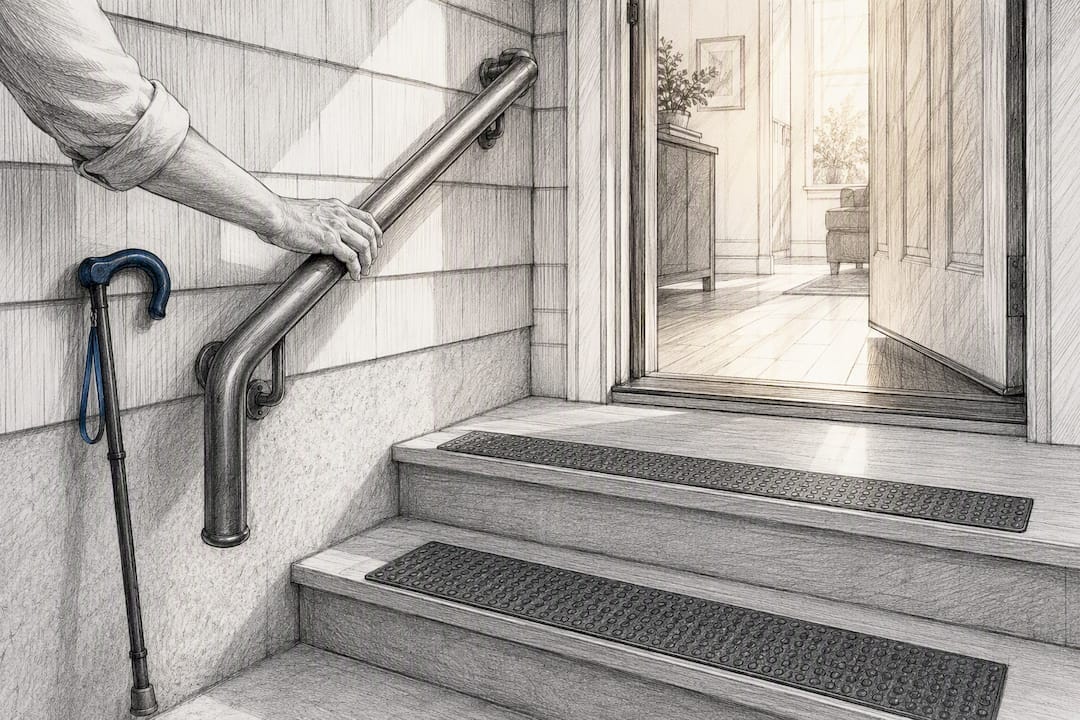
Falls are the leading cause of injury among older adults, and multifactorial fall-prevention approaches that combine home modification with strength training and medication review can cut fall rates by roughly a quarter. That single statistic is the reason a careful walk-through is worth the afternoon it takes.
How to mark and record findings
Use a simple severity code as you go: immediate (fix this week), soon (fix this month), or monitor (watch, revisit later). Photograph every hazard you flag, note the room and date, and keep a running list. This documentation becomes essential later, whether you’re calling a contractor, applying for VA funding, or briefing a home care agency on what changed since the last visit.
Who Should Perform a Home Safety Assessment?
A self-audit works for a first pass, especially using a free checklist like the ones from the National Institute on Aging. But family members routinely miss hazards that trained eyes catch immediately, mostly because familiarity with a space makes people stop noticing its risks.
Occupational therapists evaluate more than the environment. An OT assesses how a person actually moves through daily activities, including bathing, dressing, transferring from bed to chair, and climbing stairs, then matches equipment and modifications to real functional needs rather than generic recommendations. Occupational therapists look at physical, cognitive, and psychosocial factors together, which is why their reports carry more weight with insurers and contractors than a family checklist.
Geriatric care managers take a broader view, coordinating the safety assessment with medical appointments, medication management, and family communication. They’re particularly useful when a family is spread across different cities and needs one point of contact tracking a parent’s overall situation, not just the physical house.
Telehealth or virtual walk-throughs (a family member on a video call describing the space) can catch obvious hazards, but they miss the behavioral cues that matter most: how someone actually grips a railing, where they place their feet on stairs, whether they favor one side while walking. In-person assessments capture that context in a way a video call cannot.
Before hiring anyone, ask a few direct questions:
- Are you licensed, and in what state?
- Can I see a sample assessment report?
- Do you specialize in aging-in-place or fall prevention specifically?
- Will you coordinate directly with my family member’s physician if needed?
Pro Tip: Ask a prospective occupational therapist how they’ll involve the older adult in decisions. The best assessments respect independence and preferences, not just physical safety.
What Does a Home Safety Assessment Cost?
Professional home safety inspection guide services typically run between $200 and $400 for an initial in-home evaluation, though geriatric care managers and occupational therapists sometimes bill hourly, often from $150 to $300 depending on region and credentials. Common modifications carry a wide cost spread depending on scope.
- Grab bars and small fixes: costs typically range from around $90 to $300 installed, often completable in a single afternoon
- Improved lighting (motion sensors, brighter bulbs, night lights): usually under a few hundred dollars for a full house
- Stair lifts or major structural changes: can vary widely, from several thousand to tens of thousands depending on complexity
- Full accessibility renovations (widened doorways, bathroom remodels): commonly involve expenditures in the thousands to tens of thousands range.
Medicare Part B helps pay for medically necessary outpatient occupational therapy after the deductible, covering 80% of the Medicare-approved amount. It typically does not cover geriatric care management services or the cost of home modifications themselves, so those usually fall to out-of-pocket budgets, long-term care insurance, or family funds.
Veterans have a distinct advantage here. The VA’s Housing Adaptation programs, including HISA and SAH grants, fund structural modifications tied to a service-connected condition or documented medical need. Combining an occupational therapist’s assessment with the VA application process tends to speed approval and reduce what a veteran pays out of pocket for larger projects like ramps or bathroom remodels.
Spreading costs across phases keeps a project from becoming financially overwhelming. Fix the cheapest, highest-risk items first (grab bars, lighting, loose rugs), then budget the bigger structural work over the following months.
How Do You Prioritize Home Safety Fixes?
Not every hazard deserves the same urgency. A useful framework weighs three factors: how likely the hazard is to cause harm today, how often the person encounters it, and how severe the consequence would be if something went wrong.
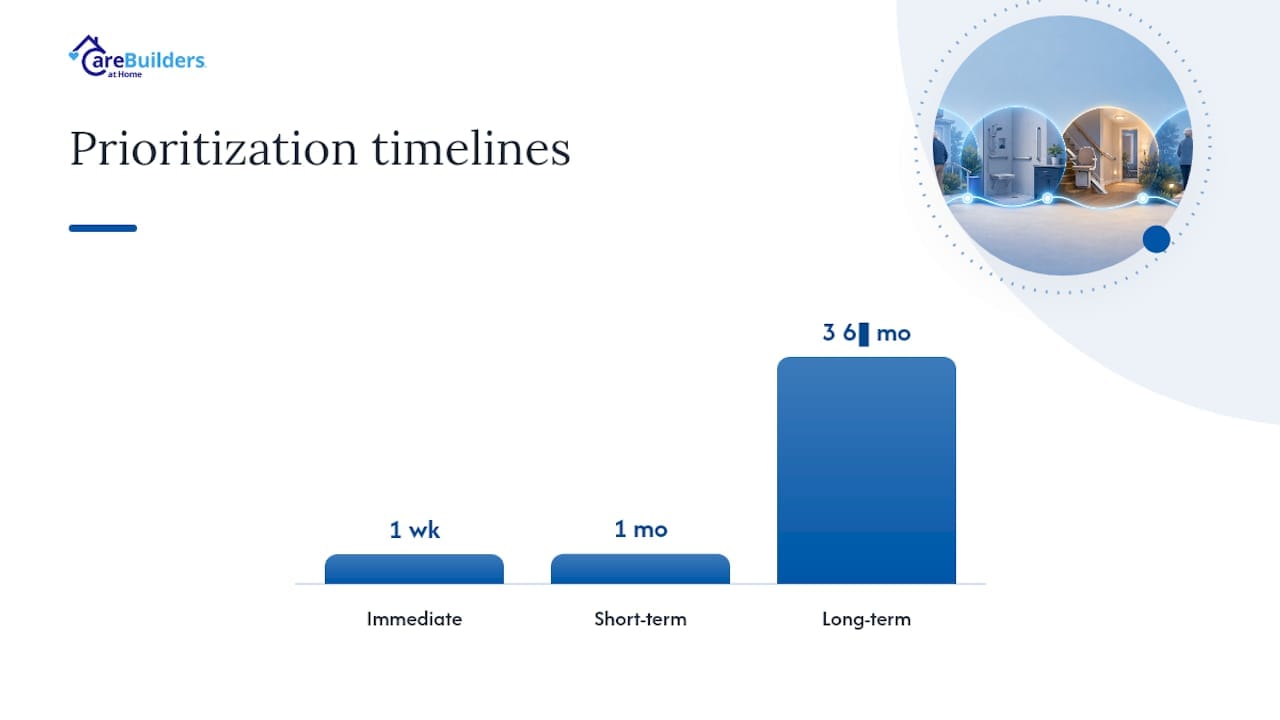
A loose stair tread that’s used ten times a day and could cause a fracture ranks far above a slightly dim reading lamp in a rarely used guest room. Sort findings into three tiers.
Immediate (fix this week): loose rugs, exposed cords in walkways, a wobbly handrail, a burned-out bulb over the stairs.
Short-term (fix this month): installing grab bars, adding a shower seat, improving hallway lighting, replacing door knobs with lever handles.
Long-term (plan over 3 to 12 months): stair lifts, bathroom remodels, ramp construction, widening doorways for a wheelchair or walker.
Set specific, time-bound goals rather than open-ended intentions. “Install two bathroom grab bars by the end of the month” gets done. “Make the bathroom safer” tends to sit on a to-do list indefinitely.
Pro Tip: Revisit the checklist every three to six months, and immediately after any fall, hospitalization, or noticeable change in mobility or memory. Home needs shift faster than most families expect.
Stop the phased plan and seek a new clinical evaluation if you notice a fall, a sudden change in balance, new confusion, or a rapid decline in someone’s ability to manage stairs or transfers, as discussed in detail regarding TMS therapy safety for elderly patients. Those signs mean the home may need more than fixture upgrades; they mean the person’s needs have changed.
| Priority tier | Example fixes | Typical timeline |
|---|---|---|
| Immediate | Remove loose rugs, secure cords, fix broken stair lighting | Within 1 week |
| Short-term | Install grab bars, add shower seat, replace door handles | Within 1 month |
| Long-term | Stair lift, bathroom remodel, ramp installation | 3 to 12 months |
Special Considerations for Dementia, Sensory Loss, and Mobility Aids
Standard checklists cover general fall risks well, but some households need an additional layer of attention.
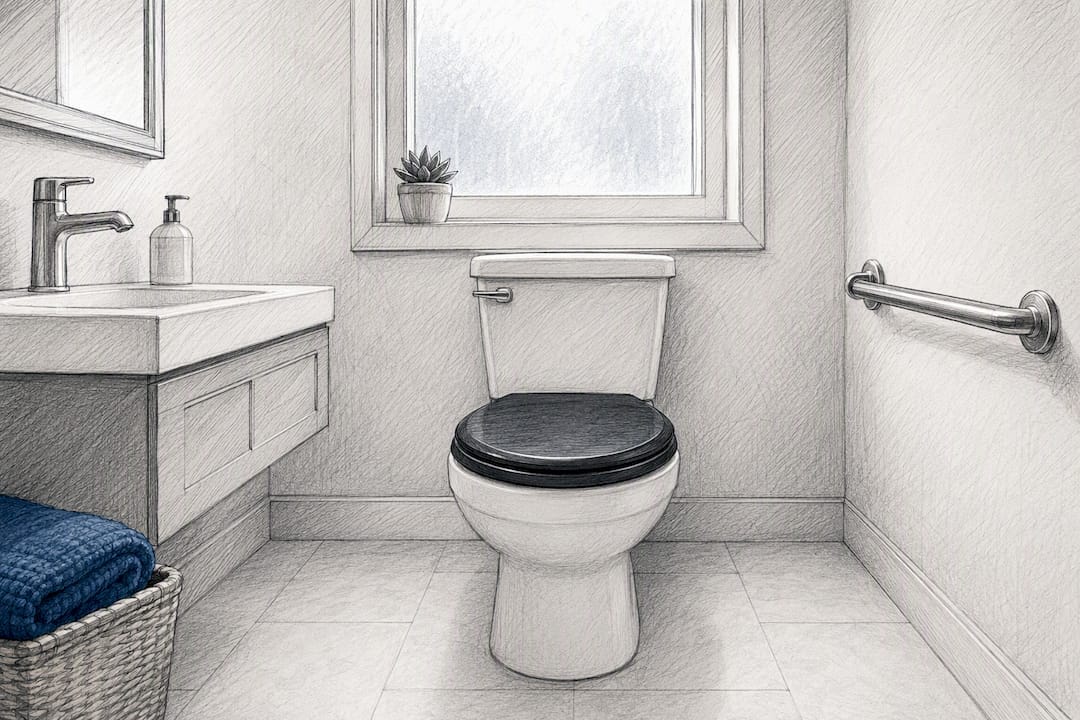
For a person living with dementia, environmental cues matter as much as physical hazards. Simple visual contrast (a dark toilet seat against a light bathroom floor, for instance) helps someone locate fixtures without confusion. Wandering-prevention tactics, like door alarms or camouflaged exit doors, reduce the risk of a nighttime departure that ends badly. Understanding why behavioral changes happen in dementia helps families read the environment through the resident’s perspective rather than their own.
Sensory impairment changes the priority list too. For vision loss, contrast and consistent lighting matter more than raw brightness; harsh glare off polished floors can actually increase disorientation. For hearing loss, visual or vibrating alerts (flashing smoke detectors, vibrating pagers) matter more than audible alarms alone.
Mobility aids like walkers and wheelchairs demand physical clearance most checklists don’t measure by default. Doorways need at least 32 inches of clear width, hallways benefit from 36 inches or more, and thresholds should sit as close to flush with the floor as possible.
A few practical strategies worth building into any plan:
- Use consistent, high-contrast labeling on cabinets and drawers for someone with cognitive or vision changes
- Install door and window alarms if wandering is a documented risk
- Check that every doorway a wheelchair or walker must pass through meets minimum clearance
- Ask about VA Housing Adaptation programs early if the resident is a veteran with a service-connected condition, since applications can take time to process
How Do Professionals Turn an Assessment Into an Ongoing Safety Plan?
A one-time walk-through catches today’s hazards, but home safety changes as health changes. That’s where ongoing professional involvement and monitoring earn their place. Occupational therapists and geriatric care managers typically convert assessment findings into a written care plan, sequencing modifications and reassessment dates so nothing falls through the cracks.
Monitoring services fill the gap between scheduled visits. In-home monitoring paired with fall-detection technology gives families visibility into daily patterns without requiring someone physically present around the clock. Combined with trained, dementia-aware caregivers, this kind of support catches the small changes, a slower gait, a new hesitation on stairs, that often predict a fall weeks before it happens.
Ongoing monitoring or regular caregiver visits make the most sense once an assessment turns up multiple moderate risks, when a resident lives alone, or after any fall or hospitalization. A single professional visit answers “what’s wrong right now.” Continued support answers “how do we know if things change.”
Author credentials and case-specific outcome data can be added here by the publisher as available.
Where to Find Printable Checklists and How to Use Them
The most reliable home safety checklist tools aren’t apps. They’re the free, clinically developed PDFs public health agencies already publish. Print one, walk the house room by room, and mark items directly on the page.
The NIA’s home safety checklist organizes hazards by room and works well as a first pass for families new to the process. The CDC STEADI Check for Safety brochure goes further, tying each hazard to a specific, low-cost fix, which makes it especially useful for building the phased plan described earlier.
To document effectively during the walk-through:
- Take a photo of each hazard alongside a note naming the room, date, and severity code
- Back up photos to a cloud folder or email them to yourself immediately, so nothing gets lost if a phone is lost or replaced
- Use whatever note-taking app is already on your phone; the tool matters less than the consistency of the habit
- Send a summary (photos plus notes) to any occupational therapist, family member, or care manager involved, rather than relying on a verbal recap
A photographed, dated hazard list turns a vague conversation (“the bathroom feels unsafe”) into something a professional can act on immediately.
A Caregiver’s View on What Home Visits Actually Reveal
Fieldwork in home care turns up the same pattern again and again: families fix the hazards they notice and miss the ones they’ve stopped seeing. A throw rug that’s been in the same spot for fifteen years stops registering as a risk. A dim hallway light feels normal because everyone in the house has adjusted around it without realizing it.
That’s precisely why an outside set of eyes, whether a trained caregiver, an occupational therapist, or a geriatric care manager, tends to catch what a loving, attentive family member walks past every day. It isn’t a failure of attention. It’s simply how familiarity works.
Start with the checklist. Fix what you can this week. Then bring in help for the rest, not because you’ve done something wrong, but because a second perspective genuinely finds things the first one can’t.
— cbahplano
How CareBuilders at Home of Plano & Allen Supports Families After an Assessment
A checklist tells you what’s wrong. CareBuilders at Home helps families act on it, with trained caregivers and continual safety monitoring that adapts as needs change, instead of a one-time inspection that goes stale in six months. Our caregivers work directly with the priorities an assessment surfaces, from daily support around bathroom and stair hazards to specialized dementia care that accounts for wandering risk and cognitive cues. Families also get access to 24/7 medical alert monitoring with fall detection, so the gap between assessments doesn’t become a blind spot. Veterans can lean on VA benefit navigation to pair a professional evaluation with HISA or SAH funding for larger modifications. If your walk-through turned up more than you can tackle alone, start with our personal care services page or reach out to talk through what ongoing support could look like for your family in Plano, Allen, Richardson, or Wylie.
Sources
- CDC — Falls data and research
- NIA — Worksheet: Home safety checklist (PDF)
- Medicare coverage — occupational therapy services
This article is general information, not a substitute for advice from a qualified doctor. Consult a qualified healthcare professional about your own circumstances before acting on anything here.
FAQ
What Is a Home Safety Assessment and What Does It Do?
A home safety assessment is a structured evaluation of a living space that identifies fall hazards, mobility barriers, and unsafe conditions, then ranks them by urgency. It can be done as a self-audit with a printable checklist or by a licensed professional like an occupational therapist, who also evaluates how the resident physically moves through daily tasks.
How Much Does a Home Safety Assessment Cost?
A professional evaluation commonly costs $200 to $400, while occupational therapists and geriatric care managers may bill $150 to $300 per hour depending on region and credentials. A self-guided assessment using free tools like the NIA checklist costs nothing beyond your time.
What Is a Home Safety Assessment for Seniors?
For older adults, the assessment focuses heavily on fall risk: bathroom hazards, stair safety, lighting, rugs, and thresholds, since falls are the leading cause of injury in this age group. It also considers mobility aids, cognitive changes, and whether the home layout supports independent daily activities like bathing and transferring safely.
Does Medicare Cover Home Safety Assessments?
Medicare Part B covers medically necessary outpatient occupational therapy, including functional home evaluations an OT performs, after you meet the deductible and pay 20% coinsurance. It typically does not cover geriatric care management services or the physical cost of home modifications like grab bars or ramps.
How Do I Know If I Need a Professional Instead of a Self-Check?
A self-check with a printable checklist works well as a starting point for most households. Bring in an occupational therapist or geriatric care manager if you notice structural damage, electrical hazards, a recent fall, sudden mobility or cognitive decline, or if family members disagree about how safe the home really is.