


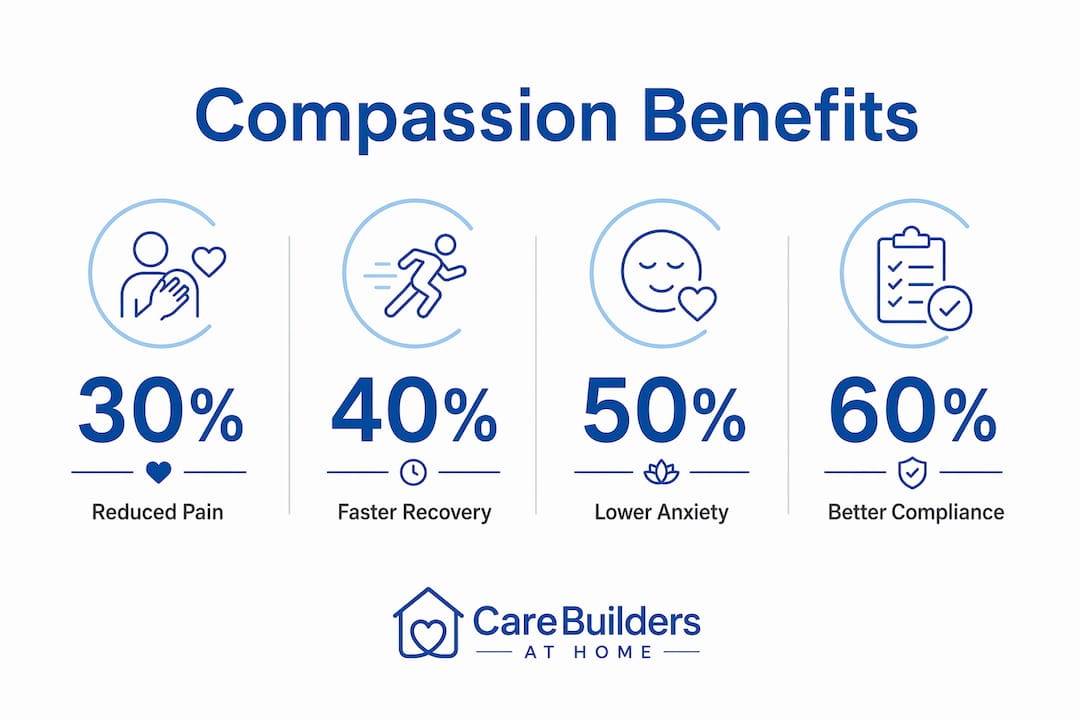
Compassion in senior care is defined as the active combination of empathy, respect, and dignified support that directly improves a senior’s physical and emotional well-being. The role of compassion in quality senior care goes far beyond kindness. Authoritative bodies in geriatric medicine recognize compassionate practice as equally critical as clinical skill. Empathetic communication is linked to increased treatment adherence, reduced pain perception, and faster healing. For families caring for a loved one with dementia or age-related conditions, understanding this connection is the first step toward choosing care that truly works.
How does compassionate care improve seniors’ physical and emotional health?
Compassionate care produces measurable health benefits, not just emotional comfort. Empathetic communication lowers anxiety, which directly reduces pain perception and speeds recovery. When a senior feels heard and respected, their body responds. Stress hormones drop, cooperation with care plans increases, and the overall quality of daily life improves.
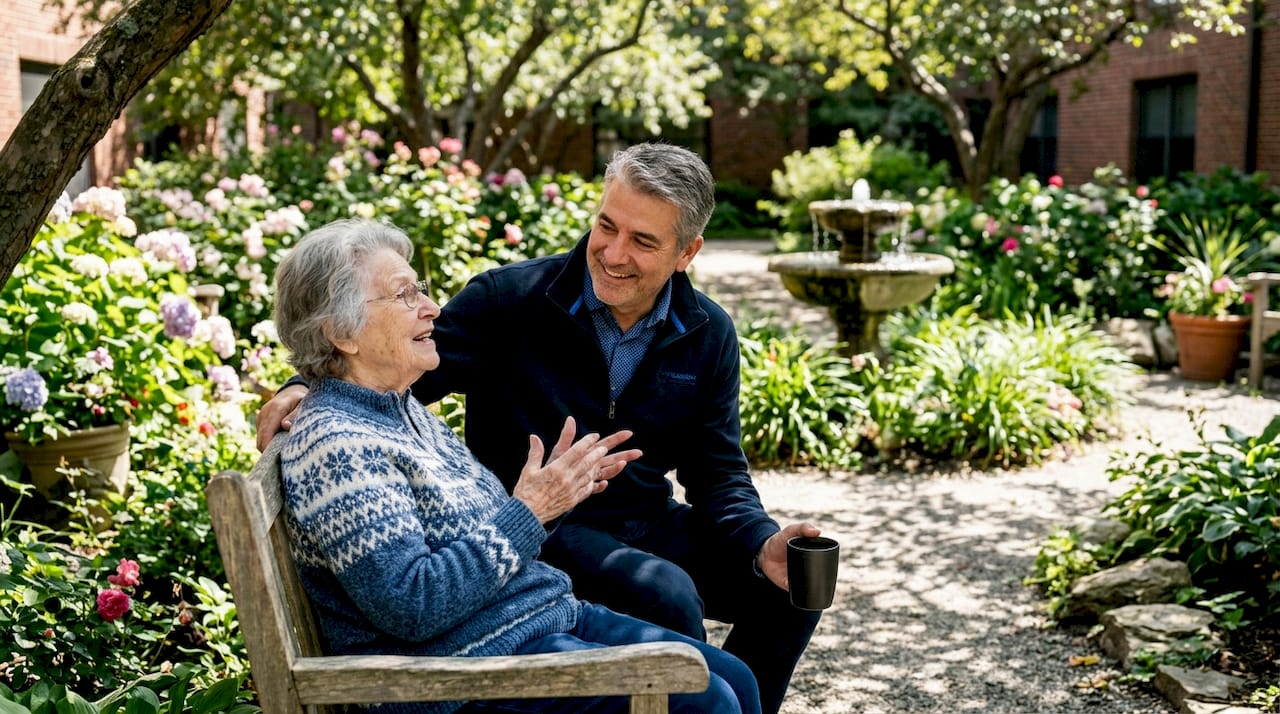
Loneliness is one of the most serious health threats facing older adults today. Loneliness in seniors is recognized as a public health crisis requiring the same clinical attention as blood pressure or blood sugar. A caregiver who notices withdrawal and responds with genuine connection addresses a real health risk, not just a social preference. That response is compassion in its most practical form.
Compassionate behaviors are specific and observable. They include:
- Active listening during conversations, giving the senior your full attention without interrupting
- Informed consent practices, such as explaining what you are about to do before touching or assisting
- Asking permission before providing physical help, which preserves dignity and builds trust
- Acknowledging feelings rather than redirecting or dismissing emotional expressions
- Consistent presence, showing up reliably so the senior knows they are not alone
Pro Tip: When visiting a care facility or meeting a new caregiver, watch how they greet your loved one. Do they make eye contact, use the person’s name, and wait for a response? These small behaviors signal genuine empathetic practice.
Trust built through these behaviors increases a senior’s willingness to follow medical guidance. A senior who trusts their caregiver is more likely to take medications on schedule, report new symptoms honestly, and participate in physical therapy. Compassion, in this sense, is a clinical tool.
What challenges do caregivers face in sustaining compassion?
Sustaining compassion over time is one of the hardest parts of caregiving. Emotional over-identification, where a caregiver absorbs a senior’s pain as their own, leads to burnout and reduced care effectiveness. Emotional over-identification reduces care quality and shortens a caregiver’s ability to remain in the role at all. This is not a personal failure. It is a predictable outcome when caregivers lack structural support.
A meta-analysis of 29 studies confirms that shared responsibilities and organizational support improve compassion sustainability significantly. Caregivers who work within teams, receive regular supervision, and have access to emotional debriefing maintain their empathy longer. Families choosing a care provider should ask directly how the organization supports its caregivers, not just its clients.
Ageism is another barrier that families rarely consider. Ageism reduces caregivers’ empathy and willingness to provide quality care. Simulation and role-playing training effectively counter these biases. Providers that invest in empathy-focused education produce caregivers who are more attentive, more patient, and more effective with older adults.
Self-compassion is the foundation that keeps caregivers effective. Key practices that protect caregiver well-being include:
- Setting clear emotional boundaries without withdrawing warmth
- Taking scheduled breaks and using respite care when available
- Participating in peer support groups or supervision sessions
- Recognizing burnout symptoms early, including irritability and emotional numbness
- Practicing self-care routines that restore energy between shifts
Pro Tip: If you are a family caregiver, schedule one hour each week that belongs entirely to you. Research shows that caregivers with self-compassion experience lower burnout and better physical health, which directly benefits the person they care for.
How does compassion integrate with clinical standards and family involvement?
Compassion and clinical care are not separate tracks. They belong in the same conversation. Dignity-based practices like seeking permission before assisting and explaining procedures are clinical behaviors, not optional courtesies. They increase autonomy, reduce resistance, and improve outcomes across every care setting.
The medical model traditionally isolates physical health from social realities. That separation causes harm. Quality care now treats social connection as a clinical marker equal to vital signs. A senior’s social network health, their sense of belonging and purpose, belongs in the care plan alongside medication schedules and mobility assessments.
Families play a direct role in reinforcing compassionate care. Compassionate caregivers support families by providing clear, kind communication that reduces family stress and builds confidence in the care being delivered. When families feel informed and reassured, they become partners in care rather than anxious observers.
One distinction that matters: genuine compassionate care differs from passive engagement. The table below clarifies the difference.
| Passive Engagement | Compassionate, Active Engagement |
|---|---|
| Watching television together | Discussing a show and asking the senior’s opinion |
| Organizing a bingo game | Inviting the senior to lead or teach an activity |
| Completing hygiene tasks quickly | Explaining each step and asking permission before assisting |
| Checking in briefly each day | Sitting with the senior and listening without a time limit |
| Providing meals on schedule | Asking about food preferences and involving the senior in choices |
Active engagement gives seniors agency. Purpose-driven activities where seniors lead workshops or mentor staff reduce the health risks linked to chronic loneliness. That is a clinical outcome, not a social nicety.
Families benefit from asking providers these four questions:
- How do your caregivers seek permission before providing physical assistance?
- What training do caregivers receive on empathy and age-related bias?
- How does your organization support caregiver well-being to prevent burnout?
- How do you measure and respond to signs of social withdrawal in the seniors you serve?
Practical ways to build a compassionate care environment
Families and providers can take specific steps to build environments where compassion is the standard, not the exception. The UCLA Loneliness Scale is a standardized tool recommended for identifying social withdrawal alongside physical vital signs. Using it regularly ensures that loneliness is caught early, before it becomes a health crisis.
For dementia care specifically, compassionate environments require extra attention to sensory comfort, routine consistency, and nonverbal communication. A senior with dementia may not be able to articulate distress. A trained, empathetic caregiver reads body language, facial expressions, and behavioral changes as communication. That skill is built through deliberate training, not assumed.
Practical steps for families and providers include:
- Assess social connection regularly using tools like the UCLA Loneliness Scale
- Create opportunities for seniors to exercise agency, such as choosing daily activities or meal preferences
- Invest in empathy-building training for all caregivers, including simulation and role-playing exercises
- Build peer support structures so caregivers can process emotional experiences safely
- Involve families in care planning meetings so they understand and reinforce compassionate approaches at home
- Use brain health programs that combine cognitive engagement with emotional support
Pro Tip: Ask any care provider whether their caregivers receive ongoing training, not just initial orientation. Empathy skills require practice and reinforcement. A provider that invests in continuous caregiver education is a provider that takes compassion seriously.
Key Takeaways
Compassion in senior care is a clinical practice, not a personality trait, and it produces measurable improvements in health outcomes, caregiver sustainability, and family confidence.
| Point | Details |
|---|---|
| Compassion improves health outcomes | Empathetic communication reduces pain, speeds healing, and increases treatment adherence. |
| Loneliness is a clinical risk | Use tools like the UCLA Loneliness Scale to detect social withdrawal as early as physical symptoms. |
| Caregiver support sustains quality | Organizational support and shared responsibilities prevent burnout and protect care quality. |
| Active engagement beats passive | Purpose-driven activities where seniors lead reduce loneliness risks better than passive entertainment. |
| Families are care partners | Asking providers the right questions and reinforcing compassionate practices at home improves outcomes. |
What I’ve learned about compassion that most families miss
Families often focus on credentials when choosing a care provider. Certifications matter. Clinical training matters. But I have seen highly credentialed caregivers deliver cold, transactional care, and I have seen caregivers with modest credentials transform a senior’s daily experience through genuine warmth and attention. The difference is relational intelligence, and it is rarely listed on a resume.
The families who get the best outcomes are the ones who watch how a caregiver interacts with their loved one in the first five minutes. They notice whether the caregiver speaks to the senior or about them. They notice whether the caregiver waits for a response or moves straight to tasks. Those early signals predict the quality of care that follows.
One thing I would encourage every family to resist: the assumption that compassion is automatic in professional caregiving. It is not. It requires training, organizational support, and personal commitment. When you find a provider that builds those structures deliberately, that is where your loved one belongs.
— Vasu
Cbahplano’s approach to compassionate senior care
At Cbahplano, we believe that dignity and warmth belong at the center of every care plan. Our caregivers are trained to treat each senior as an individual, not a task list, and that commitment shows in how we design our personal care services around each person’s preferences, routines, and emotional needs.
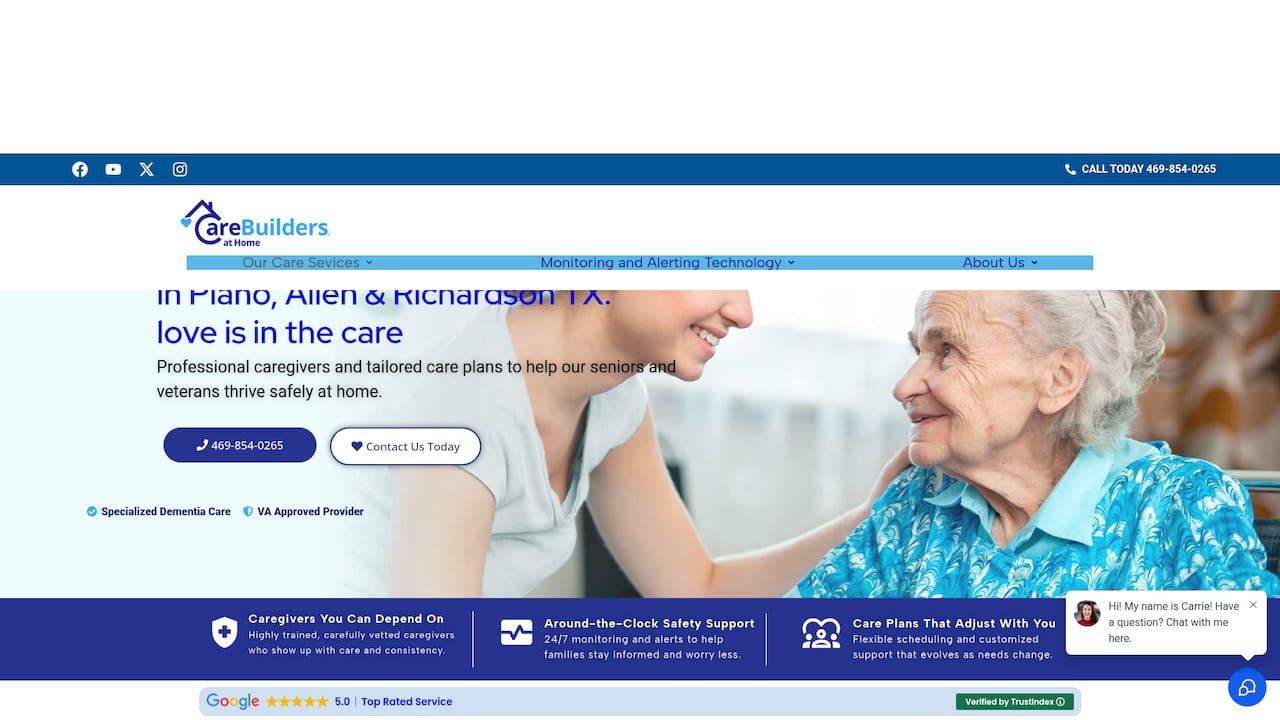
We also know that emotional connection matters as much as physical assistance. Our companion care services are built specifically to address the social isolation that threatens senior health. Whether your loved one needs daily companionship, specialized dementia support, or 24/7 monitoring, we are here to provide care that feels like care. Reach out to our team at Cbahplano to learn how we can support your family.
FAQ
What is the role of compassion in quality senior care?
Compassion combines empathy, dignity-based practices, and emotional support to improve seniors’ physical health, treatment adherence, and quality of life. It is recognized as equally important as clinical skill in effective elder care.
How does empathy improve outcomes for seniors with dementia?
Empathetic caregivers read nonverbal cues and behavioral changes that seniors with dementia cannot verbalize, allowing earlier intervention and reduced distress. Consistent, warm communication also reduces agitation and builds a sense of safety.
What is the UCLA Loneliness Scale used for in senior care?
The UCLA Loneliness Scale is a standardized assessment tool used to detect social withdrawal and loneliness in seniors alongside physical vital signs. Early identification allows caregivers to intervene before loneliness becomes a serious health risk.
How can families advocate for compassionate care?
Families can ask providers specific questions about caregiver training, permission-seeking practices, and organizational support structures. Observing how caregivers interact with their loved one during initial visits also reveals the quality of relational care being offered.
Why do caregivers experience burnout, and how does it affect care quality?
Burnout occurs when caregivers lack organizational support and absorb too much emotional weight without relief. Research confirms that unsupported caregivers lose empathy over time, which directly reduces the quality and consistency of care they provide.
Recommended
- sensi.ai – CareBuilders at Home | Senior and Veteran Care in Plano, Allen & Richardson TX
- Companion Services – CareBuilders at Home | Senior and Veteran Care in Plano, Allen & Richardson TX
- CareBuilders at Home – Exceptional Senior and Veteran Care in Plano, Allen and Richardson
- CareBuilders at Home – Exceptional Senior and Veteran Care in Plano, Allen and Richardson