


What Late-Stage Alzheimer’s Care Involves: A Family Guide
TL;DR:
- Late-stage Alzheimer’s care focuses on comfort, dignity, and symptom management, requiring 24/7 hands-on support. Caregivers manage daily tasks, monitor pain non-verbally, and use sensory stimuli to maintain connection, while considering hospice for ongoing comfort and support. Building a support team and early planning help families provide quality care and avoid burnout during this challenging stage.
Late-stage Alzheimer’s care is defined by complete dependency and a total shift in focus from treatment to comfort, dignity, and symptom management. At this stage, clinically known as Stage 7 on the Global Deterioration Scale, your loved one requires round-the-clock assistance with every activity of daily living. Verbal communication is largely lost, mobility is severely limited, and the body becomes increasingly fragile. Understanding what late-stage Alzheimer’s care involves prepares you to make decisions that truly honor your loved one’s quality of life. The goal is not recovery. The goal is peace, comfort, and presence.
What does late-stage Alzheimer’s care involve day to day?
Late-stage Alzheimer’s care requires hands-on support for every basic physical need, every single day. The Alzheimer’s Association’s 2026 dementia care guidelines confirm that coordinated, specialized care teams improve medication management and help families sustain home care longer. That coordination matters because no single task in this stage is simple.
Core daily care tasks
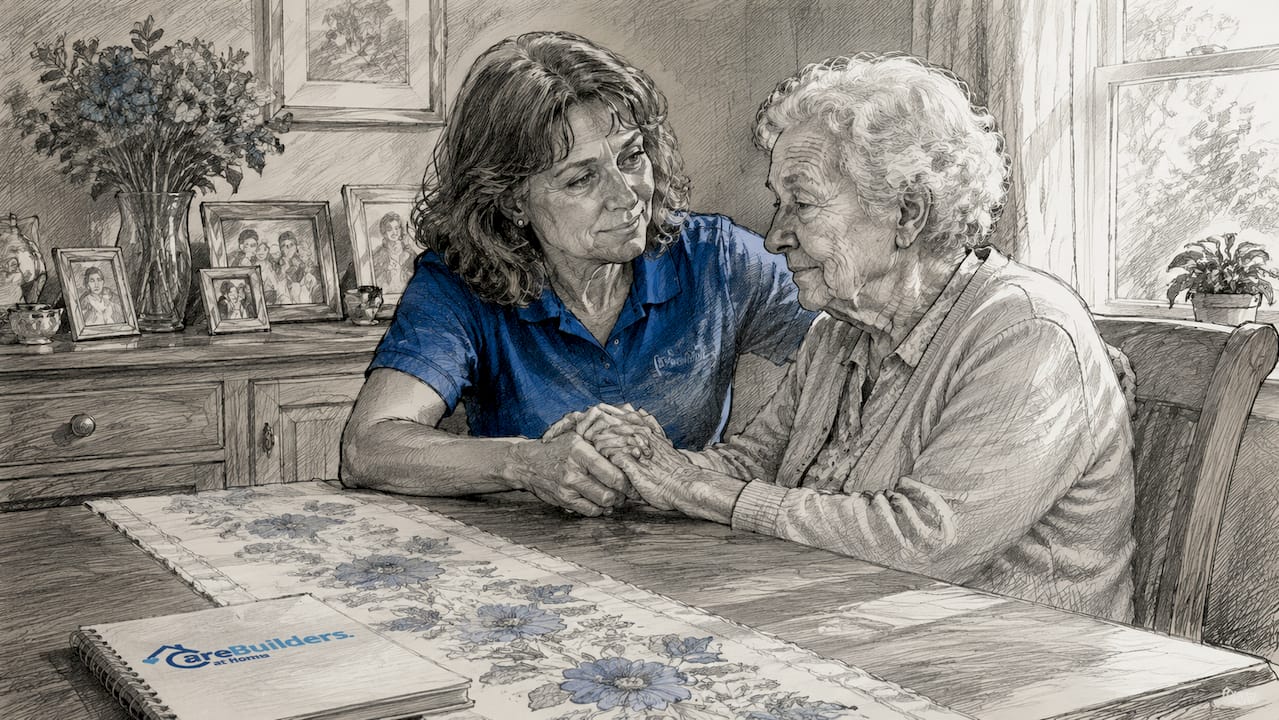
The physical demands of late-stage care are significant. Here is what caregivers manage on a daily basis:
- Bathing and personal hygiene: Full assistance is required. Warm water, gentle touch, and a calm voice reduce distress during bathing.
- Dressing: Choose soft, easy-to-remove clothing. Minimize decisions and keep routines consistent.
- Feeding and nutrition: Swallowing difficulties, called dysphagia, are common. Pureed foods and thickened liquids reduce choking risk. Offer small, frequent meals.
- Toileting and incontinence care: Scheduled toileting every two to three hours prevents accidents. Absorbent briefs and gentle skin care prevent rashes and infections.
- Repositioning and skin care: Pressure sores develop quickly in immobile patients. Repositioning every two hours and using pressure-relieving mattresses are standard practice.
- Oral hygiene: Even patients who cannot eat by mouth need daily mouth care to prevent infection and discomfort.
Pain management: the most underestimated challenge
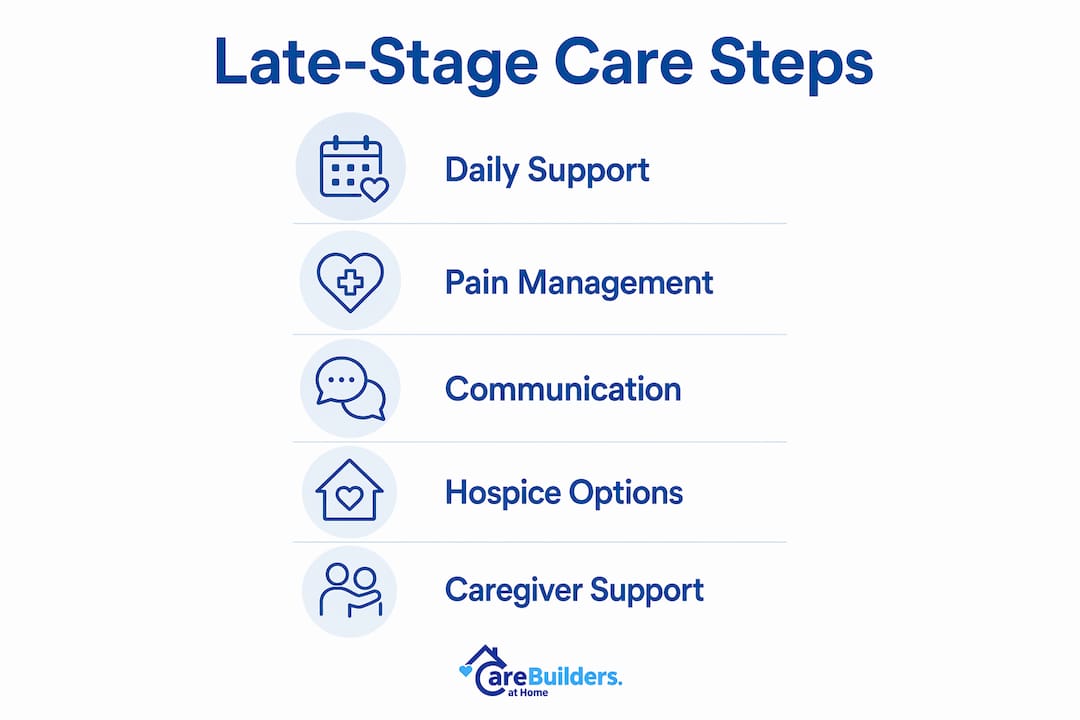
Pain management in late-stage dementia is harder than most families expect. Non-verbal cues are the primary signal for detecting discomfort, because your loved one can no longer say “I hurt.” Watch for grimacing, restlessness, guarding a body part, or changes in breathing patterns.
Delaying scheduled pain medication leads to severe, hard-to-control pain. Preventive, scheduled dosing is far more effective than reactive treatment. Work with the care team to establish a consistent medication schedule and document any behavioral changes that suggest pain.
Pro Tip: Keep a simple daily log of facial expressions, body posture, and sleep patterns. This record helps the medical team adjust pain management quickly and accurately.
| Care Task | Key Consideration |
|---|---|
| Bathing | Use warm water and a calm tone to minimize agitation |
| Feeding | Adapt texture and pace; watch for choking signs |
| Repositioning | Every two hours to prevent pressure sores |
| Pain monitoring | Observe non-verbal cues; use scheduled medication |
| Oral care | Daily mouth hygiene even without oral feeding |
| Incontinence care | Scheduled toileting and gentle skin protection |
When should families consider hospice or palliative care?
Hospice is not giving up. The Hospice Foundation of America’s 2026 best practices describe hospice as a purposeful, multidisciplinary approach focused entirely on dignity and comfort. Many families wait too long to ask about it, and that delay costs them support they could have used for months.
Signs that hospice evaluation is appropriate
Hospice eligibility generally requires a prognosis of six months or fewer, based on clinical decline rather than a specific timeline. For Alzheimer’s patients, the following signs typically prompt a referral evaluation:
- Significant swallowing difficulties or recurrent aspiration pneumonia
- Repeated hospitalizations for infections, falls, or dehydration
- Substantial weight loss despite nutritional support
- Loss of the ability to walk, sit upright, or hold the head up
- Minimal or no verbal communication
One important clinical note: feeding tubes do not improve survival or reduce aspiration pneumonia risk in advanced dementia. Medical organizations broadly discourage their use because they add discomfort without meaningful benefit. Comfort-focused hand feeding, even in small amounts, is the preferred approach.
Palliative care can and should begin earlier, before hospice eligibility. It focuses on symptom management and quality of life alongside any other treatment the family chooses. Think of palliative care as the bridge between active management and full comfort care.
Pro Tip: Ask the primary physician directly: “Would you be surprised if my loved one passed away within six months?” A “no” answer is a clear signal to request a hospice evaluation immediately.
How do late-stage Alzheimer’s patients communicate?
Stage 7 dementia represents a critical medical phase where verbal communication is largely or entirely lost. Your loved one may not recognize you by name. That reality is painful. And yet, connection is still possible and still matters.
What your loved one can still perceive
Late-stage dementia patients respond to sensory stimuli including tone of voice, gentle touch, and familiar music, even when words no longer register. Sensory interaction influences physiological relaxation and emotional well-being. This is not wishful thinking. It is documented in dementia care research.
Practical ways to maintain meaningful connection:
- Speak softly and slowly. Use your loved one’s name. Your tone communicates safety even when words do not land.
- Use gentle touch. Hold a hand, stroke an arm, or offer a light shoulder rub. Physical warmth signals presence and care.
- Play familiar music. Songs from your loved one’s young adulthood often produce visible calm or recognition responses.
- Maintain eye contact. Even without verbal response, eye contact communicates that you see them as a person.
- Avoid correcting or testing. Do not ask “Do you know who I am?” Focus on presence, not performance.
Pro Tip: Create a short sensory playlist of five to ten songs your loved one loved between ages 15 and 25. Play it during personal care routines to reduce agitation and make the experience calmer for both of you.
Honoring personhood at this stage means treating your loved one as a full human being, not a condition to manage. Speak about them with dignity in their presence. Assume they can hear and feel more than they can express.
What support options exist for family caregivers?
Caregiver burnout is a major risk when families manage late-stage Alzheimer’s care alone. The physical demands are constant, the emotional weight is heavy, and the grief is ongoing. Caring for yourself is not optional. It is what makes sustained, quality care possible.
Building a support structure that holds
Families who manage late-stage care most effectively do not do it alone. They build a team. Here is what that looks like in practice:
- Respite care: Scheduled breaks where a trained professional takes over, giving you time to rest, sleep, and recover. Even a few hours a week makes a measurable difference.
- Professional in-home support: Professional caregiver assistance reduces the physical burden on family members and brings trained expertise into the home.
- Caregiver support groups: Connecting with others in the same situation reduces isolation and provides practical advice. The Alzheimer’s Association offers both in-person and online groups.
- Mental health counseling: Grief, anticipatory loss, and caregiver stress are legitimate mental health concerns. A counselor who specializes in caregiving or chronic illness makes a real difference.
- Hospice team coaching: Hospice teams act as educators and supporters, enabling families to continue primary caregiving with professional guidance and scheduled respite. Hospice programs also provide bereavement support for up to 12 months after a loved one’s death.
The virtual caregiver support tools available through CareBuilders at Home of Plano & Allen give families remote access to guidance and check-ins, which is especially useful when in-person support is not immediately available. For families managing care from a distance, this kind of technology-backed support fills a real gap.
Pro Tip: Schedule your own medical appointment this month. Caregivers frequently delay their own health care. Your physical health directly affects your ability to show up for your loved one.
Advance care planning leads to care that better reflects your loved one’s wishes and significantly eases decision-making during the hardest moments. If those conversations have not happened yet, start them now with the help of the hospice social worker or the primary physician.
Key Takeaways
Late-stage Alzheimer’s care requires 24/7 physical support, proactive pain management, sensory-based connection, and a structured caregiver support system to sustain both patient dignity and family well-being.
| Point | Details |
|---|---|
| Full physical dependency | Every daily living task requires hands-on assistance, from feeding to repositioning. |
| Proactive pain management | Scheduled medication and non-verbal cue monitoring prevent uncontrolled pain. |
| Hospice is a support tool | Hospice provides comfort care, family coaching, and respite, not abandonment of hope. |
| Sensory connection still works | Touch, tone, and music reach late-stage patients even after verbal communication is lost. |
| Caregiver self-care is non-negotiable | Respite, counseling, and professional support prevent burnout and sustain quality care. |
What I have learned from walking alongside families in late-stage care
The hardest shift I have seen families make is accepting that the goal of care has changed. For years, the focus was on slowing the disease, maintaining function, and preserving the person they knew. Late-stage care asks something different. It asks you to let go of what cannot be recovered and pour that energy into comfort, presence, and peace.
Families who do this well share one common trait: they planned ahead. They had the hard conversations early, documented wishes, and built a care team before the crisis hit. Advance care planning is not morbid. It is one of the most loving things you can do.
The other thing I have seen clearly: hospice is chronically underutilized because families fear it signals defeat. It does not. It signals wisdom. Families who enroll earlier get more support, more rest, and more meaningful time with their loved one. The hospice team becomes a genuine partner, not a replacement for family care.
Finally, do not underestimate the power of your presence. Your voice, your touch, your calm. Those things still reach your loved one. That connection is real, and it matters to the very end.
— cbahplano
How CareBuilders at Home of Plano & Allen supports late-stage Alzheimer’s families
Families managing late-stage Alzheimer’s care need more than information. They need trained, compassionate hands in the home. CareBuilders at Home of Plano & Allen provides specialized personal care services designed for seniors with complex dementia needs, including full assistance with daily living activities, medication reminders, and skin and comfort care. Caregivers receive specialized dementia training and work within flexible, personalized care plans. The team also supports family caregivers directly through the GUIDE caregiver support program, which includes respite care and ongoing guidance. Serving Plano, Allen, Richardson, Wylie, and surrounding Collin County communities, CareBuilders at Home of Plano & Allen is ready to help your family find the right level of support.
FAQ
What does late-stage Alzheimer’s care involve?
Late-stage Alzheimer’s care involves full assistance with all daily living activities, proactive pain management, skin care, and comfort-focused support. The care goal shifts entirely to dignity and symptom management rather than treatment.
When is hospice appropriate for an Alzheimer’s patient?
Hospice is appropriate when a physician estimates a prognosis of six months or fewer, typically indicated by swallowing difficulties, repeated infections, significant weight loss, or loss of mobility. Families should request an evaluation as soon as these signs appear.
Can late-stage Alzheimer’s patients still feel and respond?
Yes. Late-stage dementia patients respond to sensory stimuli including gentle touch, familiar voices, and music even after verbal communication is lost. Sensory interaction supports relaxation and emotional comfort.
How do caregivers prevent burnout during late-stage Alzheimer’s care?
Caregivers prevent burnout by using scheduled respite care, joining support groups, seeking mental health counseling, and accepting professional in-home assistance. Hospice programs also provide bereavement support for up to 12 months after a loved one’s death.
Are feeding tubes recommended for late-stage Alzheimer’s patients?
No. Medical organizations broadly discourage feeding tube use in advanced dementia because they do not improve survival or reduce aspiration pneumonia risk. Comfort-focused hand feeding is the preferred and more humane approach.