


Why Professional Caregiver Support Matters for Families
TL;DR:
- Professional caregiver support is essential for extending quality home care and preventing caregiver burnout over years. It offers emotional, educational, respite, and resource navigation support, ensuring better outcomes for seniors and families. Building structured professional help early helps families sustain caregiving and maintain dignity for loved ones.
Professional caregiver support is defined as structured assistance provided by trained caregivers that supplements family care for seniors and veterans at home. Why professional caregiver support matters becomes clear when you look at the numbers: 53 million Americans provide unpaid care, averaging 24.4 hours per week, with many exceeding 41 hours. That level of sustained effort, without relief, leads directly to physical exhaustion, anxiety, and burnout. Professional support, whether through in-home care agencies, respite services, or trained companions, gives families the backup they need to keep their loved one’s safe, comfortable, and cared for at home.
Why professional caregiver support matters for long-term care
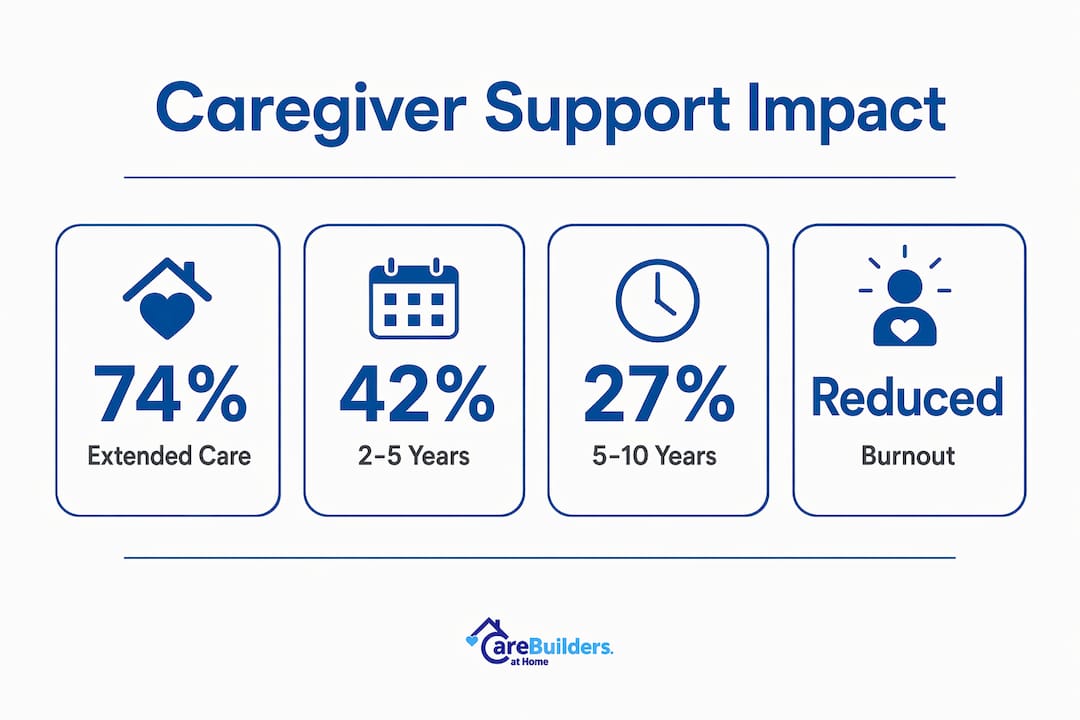
Family caregivers who receive professional help provide better care for longer periods. 74% of family caregivers reported that professional support allowed them to provide care longer, and 62% said their loved ones would need nursing home placement without it. That statistic tells you something critical: professional support is not a luxury. It is the difference between a senior aging at home with dignity and an early transition to institutional care.
The Administration for Community Living’s National Family Caregiver Support Program has served over 700,000 caregivers, with 88% reporting improved caregiving quality. Programs like this deliver respite care, counseling, peer support, and skills training, all of which reduce depression, lower anxiety, and delay institutionalization. The evidence is consistent: structured professional support extends the caregiving relationship and protects everyone involved.
Caregiving is also a long commitment. 42% of family caregivers provide care for 2–5 years, and 27% do so for 5–10 years. Without professional relief built into the plan from the start, burnout is not a risk. It is a near certainty.
| Caregiver situation | Typical outcome |
|---|---|
| No professional support | Higher burnout rates, earlier nursing home placement |
| Respite care only | Reduced stress, modest delay in institutionalization |
| Full professional support (counseling, training, respite) | Improved care quality, significantly delayed placement |
| Agency-managed in-home care | Reduced family legal risk, consistent care standards |
Pro Tip: Schedule professional respite care before you feel you need it. Waiting until you are exhausted makes recovery harder and care quality suffers in the meantime.
What forms of support do professional caregivers provide?
Professional caregivers offer far more than physical assistance. The support they provide falls into four distinct categories, each addressing a different dimension of the caregiving experience.
- Emotional validation and peer support. Family caregivers often feel isolated. Peer support groups and counseling sessions, offered through programs like the National Family Caregiver Support Program, reduce feelings of loneliness and normalize the caregiver experience. Knowing others share your challenges reduces the emotional weight significantly.
- Skills training and health management education. Professional caregivers and care coordinators teach families how to manage medications, recognize warning signs of decline, assist with mobility safely, and communicate with medical providers. This training directly reduces care errors and improves outcomes for seniors and veterans.
- Respite care. Temporary relief from caregiving duties is one of the most evidence-backed interventions available. Even a few hours of professional coverage per week gives family caregivers time to rest, attend appointments, or simply decompress. Professional staff managing routine care tasks frees family members to focus on meaningful connection rather than task completion.
- Community resource navigation. Professional caregivers and care managers help families access Medicaid waiver programs, veteran benefits, local meal delivery services, and transportation assistance. Many families miss out on available resources simply because they do not know where to look.
Each of these support types addresses a real gap that family caregivers cannot fill alone. Together, they create a care structure that is sustainable over years, not just months.
How does caregiver support protect mental and physical health?
Caregiver stress is not just emotional. It has measurable physiological effects, including elevated cortisol levels and stress-induced immune suppression. Chronic stress at that level increases a caregiver’s own risk of illness, which then threatens the continuity of care for the person they support.
Compassion fatigue is a specific condition that develops when caregivers absorb the emotional pain of those they care for over extended periods. Critically, compassion fatigue is systemic, not a personal failure. It results from high-intensity work with low autonomy, and it requires multi-level solutions, not just individual coping strategies.
The BMC Nursing research on compassion fatigue is direct: organizational and interpersonal support structures are not optional add-ons. They are the primary mechanism by which professional caregivers remain effective and family caregivers remain healthy. Without them, the entire care system degrades over time.
Professional support acts as a structural safeguard at both levels. At the organizational level, care agencies provide supervision, scheduling, and accountability. At the interpersonal level, trained caregivers bring emotional boundaries and clinical skills that protect both the caregiver and the care recipient from the compounding effects of unrelieved stress.
Pro Tip: If your loved one’s caregiver, whether family or professional, shows signs of withdrawal, irritability, or physical fatigue, treat it as a care quality issue, not a personal one. Adjust the support structure before the situation deteriorates.
How to integrate professional caregiver support into your family’s plan
Getting professional support in place requires a few deliberate decisions. The process is manageable when you approach it in steps.
-
Decide between an agency and an independent caregiver. Agencies handle background checks, payroll, scheduling, and liability coverage. Families who hire privately often unknowingly become employers with IRS tax obligations and workers’ compensation requirements. For most families, an agency reduces legal and financial risk significantly.
-
Clarify roles before care begins. Write down which tasks the professional caregiver handles and which remain with family members. Overlap and ambiguity create friction and gaps in care. A simple written schedule prevents most conflicts.
-
Understand your financial options. Medicare covers limited skilled nursing and therapy at home but does not cover ongoing personal care. Medicaid waiver programs, long-term care insurance, and VA benefits can offset costs substantially. Veterans in Plano, Allen, and surrounding Collin County communities may qualify for veteran respite care benefits through VA-approved providers.
-
Build communication into the routine. Brief weekly check-ins between family members and professional caregivers prevent small issues from becoming serious problems. Ask the caregiver to note any changes in behavior, appetite, or mobility. That information is clinically valuable.
-
Reassess the plan every 90 days. A senior’s needs change. A care plan that worked well in january may be inadequate by april. Schedule formal reviews to adjust hours, tasks, and support types as conditions evolve.
The combination of family involvement and professional structure produces better outcomes than either approach alone. Professional caregivers provide structural relief that frees family members to focus on the relationship rather than the logistics of daily care.
| Hiring approach | Key advantage | Key consideration |
|---|---|---|
| In-home care agency | Handles payroll, liability, and scheduling | Typically higher hourly cost |
| Independent caregiver | Lower cost, more direct relationship | Family assumes employer legal obligations |
| VA-approved provider | Access to veteran benefits and specialized training | Must meet VA eligibility requirements |
Key Takeaways
Professional caregiver support is the single most effective tool families have for extending quality home care and preventing caregiver burnout over the long term.
| Point | Details |
|---|---|
| Delays institutionalization | 74% of caregivers with professional support provided care longer, reducing nursing home placement. |
| Protects caregiver health | Professional support reduces cortisol elevation and compassion fatigue through structural relief. |
| Covers four support types | Emotional, educational, respite, and resource navigation each address distinct caregiver needs. |
| Reduces legal and financial risk | Agencies manage payroll, taxes, and liability that families often overlook when hiring privately. |
| Requires regular reassessment | Care needs change over months; reviewing the plan every 90 days keeps support aligned with reality. |
What I have learned from watching families navigate this
The families I see struggle most are not the ones dealing with the hardest medical situations. They are the ones who waited too long to ask for help. There is a persistent belief that bringing in a professional caregiver signals failure, as if accepting help means you love your parent or spouse less. That belief causes real harm.
What professional support actually does is give family caregivers their role back. When a trained caregiver handles bathing, medication reminders, and mobility assistance, the adult child or spouse gets to be a son, daughter, or partner again, not just a care technician. That shift matters enormously for the quality of the relationship and for the senior’s sense of dignity.
The other thing I have observed is that families consistently underestimate how long caregiving lasts. A few months of intense effort feels manageable. Five to ten years does not. Building professional support into the plan early, before exhaustion sets in, is the only approach that holds up over that kind of timeline. The importance of caregiver support is not theoretical. It shows up in whether families are still standing, emotionally and physically, years into the commitment.
— cbahplano
CareBuilders at Home of Plano & Allen: professional care for your family
CareBuilders at Home of Plano & Allen provides personal care services and companion services designed specifically for seniors and veterans in Plano, Allen, Richardson, Wylie, and surrounding Collin County communities. As a VA-approved provider, CareBuilders at Home of Plano & Allen helps veteran families access benefits that offset care costs while receiving trained, compassionate support at home. Care plans are built around your loved one’s specific needs and adjusted as those needs change. If you are ready to talk about what professional in-home care looks like for your family, contact CareBuilders at Home of Plano & Allen for a personalized consultation.
FAQ
Why does professional caregiver support matter for seniors?
Professional caregiver support gives seniors consistent, trained assistance with daily living while reducing the risk of early nursing home placement. Research shows 62% of family caregivers say their loved ones would need institutional care without professional help.
How do professional caregivers supplement family care?
Professional caregivers handle routine physical tasks like bathing, medication reminders, and mobility support, freeing family members to focus on emotional connection and relationship quality rather than logistics.
What are the best caregiver support resources in 2026?
The Administration for Community Living’s National Family Caregiver Support Program offers counseling, respite care, peer support, and training. VA-approved providers like CareBuilders at Home of Plano & Allen offer additional resources for veteran families.
How does caregiver support help prevent burnout?
Professional support reduces chronic stress by providing scheduled relief, skills training, and emotional validation. Without structural support, caregivers face elevated cortisol levels and compassion fatigue that compromise both their health and care quality.
Why hire a caregiver through an agency rather than independently?
Agencies manage background checks, payroll, scheduling, and liability coverage. Families who hire independently often take on employer tax and workers’ compensation obligations they are not prepared for, according to AARP guidance on hiring caregiving support.
Recommended
- Personal Care – CareBuilders at Home | Senior and Veteran Care in Plano, Allen & Richardson TX
- Virtual Caregiver – CareBuilders at Home | Senior and Veteran Care in Plano, Allen & Richardson TX
- sensi.ai – CareBuilders at Home | Senior and Veteran Care in Plano, Allen & Richardson TX
- Specialized Services – CareBuilders at Home | Senior and Veteran Care in Plano, Allen & Richardson TX
One Response