


Veteran Home Care Services: A Family Guide to VA Programs
If you’re trying to keep a veteran safely at home, six VA programs cover almost every situation: Homemaker/Home Health Aide (H/HHA) care for daily personal help, Home Based Primary Care (HBPC) for complex medical needs, Skilled Home Health Care for nursing and therapy, Respite Care and Veteran-Directed Care for caregiver relief, and Aid & Attendance or Housebound benefits to help pay for it all. Eligibility for the clinical programs depends on VHA enrollment and a documented clinical need; Aid & Attendance and Housebound are separate pension add-ons with their own eligibility tests. Your first move is simple: call your local VA social worker or start VA health care enrollment today.
- Homemaker/Home Health Aide — non-medical help with bathing, dressing, meals
- Home Based Primary Care — a full medical team that visits the home
- Skilled Home Health Care — nursing and therapy for a specific condition
- Respite Care & Veteran-Directed Care — relief and flexibility for family caregivers
- Aid & Attendance / Housebound — monthly pension payments for veterans needing help
Key Takeaways
Matching a veteran’s needs to the correct VA program, and pairing it with strong physician documentation, determines whether home care applications succeed or stall.
| Point | Details |
|---|---|
| Six core programs cover most needs | H/HHA, HBPC, Skilled Home Health, Respite, Veteran-Directed Care, and Aid & Attendance/Housebound address different situations. |
| A&A and Housebound can’t overlap | The 2026 maximum annual rates are $29,093 for Aid & Attendance and $21,313 for Housebound; VA pays whichever applies. |
| Enrollment is a separate step | Form 10-10EZ enrollment is required for VHA clinical services, regardless of disability compensation status. |
| Documentation drives approval | Form 21-2680 needs specific, narrative detail from a physician, not vague descriptions of need. |
| Social workers coordinate everything | VA social workers assess eligibility, combine services, and connect families to community resources when VA options are limited. |
| CareBuilders at Home fills the gaps | As a VA-approved provider, CareBuilders at Home of Plano & Allen offers dementia-trained personal care, respite, and monitoring alongside VA benefit navigation support. |
Primary VA Pages, Forms, and Notices to Reference
- Aid and Attendance benefits and Housebound allowance — current rates and eligibility rules
- Home Based Primary Care — program overview and clinical scope
- [Homemaker and Home Health Aide Care](https://www.va.go v/geriatrics/pages/Homemaker_and_Home_Health_Aide_Care.asp) — services and eligibility basics
- VA Long-Term Care Services — copay rules and hospice exemption
- VHA Notice: Purchased Home and Community-Based Services Programs (PHCBS) — availability and policy background
- VA main site — health care enrollment (Form 10-10EZ) and general guidance
This article is general information, not a substitute for advice from a qualified doctor. Consult a qualified healthcare professional about your own circumstances before acting on anything here.
Table of Contents
- What VA Home Care Services Are Available to Veterans?
- How Does Homemaker & Home Health Aide Care Work?
- When Do Veterans Need HBPC or Skilled Home Health Care?
- Aid & Attendance vs. Housebound: What’s the Difference?
- Who Decides Eligibility, and How Do You Apply?
- What Do Veterans Actually Pay for Home Care?
- What Specialized Home Care Exists for PTSD and TBI?
- How Do VA Home Care Services Connect to Other Resources?
- How Can Family Caregivers Get Support and Training?
- What Eligibility Factors Matter Beyond Clinical Need?
- Should Veterans Choose Long-Term or Short-Term Home Care?
- What Legal Rights Do Veterans Have in Home Care?
- How Should Families Approach a VA Care Assessment?
- How CareBuilders at Home Supports Veterans and Families
- Sources
What VA Home Care Services Are Available to Veterans?
Veteran home care services fall into two buckets: medical care delivered by VA clinical staff, and non-medical personal support delivered by trained aides. Knowing which bucket your loved one needs saves weeks of back-and-forth with intake staff.
- Homemaker/Home Health Aide (H/HHA): non-medical, hands-on help with daily activities.
- Home Based Primary Care (HBPC): medical, a full care team managing chronic illness at home.
- Skilled Home Health Care: medical, nursing and therapy visits tied to a specific diagnosis.
- Respite Care: short-term relief, medical or non-medical depending on the veteran’s needs.
- Veteran-Directed Care: a flexible budget the veteran or family controls to hire caregivers.
- Aid & Attendance / Housebound: financial, not a service. It’s a monthly payment added to VA pension.
All of the clinical programs live inside the VHA Standard Medical Benefits Package, which means they require VA health care enrollment first. Availability varies by VA medical center, and some rural areas have longer waitlists than others.
How Does Homemaker & Home Health Aide Care Work?
Homemaker and Home Health Aide services put a trained aide in the veteran’s home to help with the tasks that make independent living hard after illness, injury, or age catches up. These aides work under the supervision of a registered nurse, and the VA’s H/HHA program is built specifically for veterans who need consistent, non-medical support rather than nursing care.
A typical H/HHA visit might include:
- Bathing, grooming, and dressing assistance
- Meal preparation and light housekeeping
- Help with mobility, transfers, and fall prevention
- Medication reminders (not administration)
- Companionship and safety supervision during the visit
This care can run alongside respite care or Veteran-Directed Care, giving families more flexibility to combine services around one care plan. Basic copays sometimes apply based on income and priority group, but many veterans qualify for reduced or waived fees.
Pro Tip: Ask your VA social worker whether H/HHA hours can be scheduled around a family caregiver’s work shifts. Many VA medical centers will adjust the visit schedule if you simply ask during the initial assessment.
When Do Veterans Need HBPC or Skilled Home Health Care?
Home Based Primary Care fits veterans managing several chronic conditions at once, especially when getting to a clinic is physically difficult. It’s essentially a doctor’s office that comes to the veteran, with a full team including a physician, nurse, social worker, and sometimes a pharmacist or dietitian managing care over time. The VA describes HBPC as functioning like clinic care delivered at home, and it’s designed for homebound patients whose conditions are complex enough to need ongoing medical oversight rather than periodic aide visits.
Skilled Home Health Care is different. It’s intermittent, meaning nurses or therapists visit for a defined period tied to a specific medical event, like recovering from surgery or managing a new wound care regimen.
- HBPC suits veterans with multiple chronic illnesses and mobility limits.
- Skilled Home Health suits veterans recovering from an acute event with clear clinical goals.
- Both programs may carry a basic copay per visit, depending on the veteran’s priority group.
- Neither program replaces H/HHA. Many veterans use HBPC and H/HHA together.
Aid & Attendance vs. Housebound: What’s the Difference?
Aid & Attendance and Housebound are both pension enhancements, not care services themselves, and you cannot receive both at the same time. Aid & Attendance targets veterans who need hands-on help with daily activities like bathing or dressing. Housebound targets veterans who are substantially confined to their home because of a permanent disability, even if they don’t need physical assistance.
For 2026, the VA lists a maximum annual A&A rate of $29,093 for a single veteran, and a maximum annual Housebound rate of $21,313. The VA pays whichever rate applies to the veteran’s actual circumstances, not both.
Getting approved comes down almost entirely to paperwork. VA Form 21-2680 is the medical exam form a physician completes, and it needs specific, narrative detail, not vague checkboxes.
- Frequency of assistance needed (daily, several times a day, etc.)
- Specific tasks the veteran cannot do alone
- Concrete examples of dependence, not general statements like “needs help”
Claims with thin physician documentation are a common reason applications get denied on the first try.
Who Decides Eligibility, and How Do You Apply?
Two separate systems handle veteran home care benefits, and mixing them up wastes time. Clinical services like HBPC and H/HHA come through the Veterans Health Administration (VHA), which requires health care enrollment. Aid & Attendance and Housebound come through the Veterans Benefits Administration (VBA) pension system, which has its own application track.
- Enroll in VA health care using Form 10-10EZ if you haven’t already. Receiving service-connected disability compensation does not automatically enroll you in VHA care.
- Request a needs assessment from your VA social worker or case manager at your local VA medical center.
- Gather physician documentation, including a completed Form 21-2680 if pursuing Aid & Attendance or Housebound.
- Consider an accredited representative (a Veteran Service Officer) if the pension application feels complicated.
- Follow up in writing and keep copies of every form submitted.
VA social workers coordinate these assessments directly and often know which combination of services will fit a veteran’s specific situation faster than any online form.
What Do Veterans Actually Pay for Home Care?
Costs depend on the program and the veteran’s priority group, and there’s no single flat rate that applies to everyone.
- Basic copays may apply to HBPC or Skilled Home Health visits based on income and disability rating.
- Long-term care copays generally don’t start until day 22 of continuous care, and hospice care is exempt entirely.
- VA does not bill Medicare for these services; it bills the veteran directly when a copay applies.
- Local availability varies. The VA’s PHCBS interim policy sets the framework, but actual service hours depend on your regional VA’s capacity and the veteran’s clinical need.
Pro Tip: Don’t assume a high disability rating guarantees automatic access to home care. Service-connected compensation and VHA enrollment are two different systems, so you still need to enroll and get assessed.
What Specialized Home Care Exists for PTSD and TBI?
Veterans living with PTSD or traumatic brain injury need home care that goes beyond bathing and meal prep. These conditions affect memory, impulse control, and emotional regulation in ways that standard homemaker aides aren’t necessarily trained to handle.
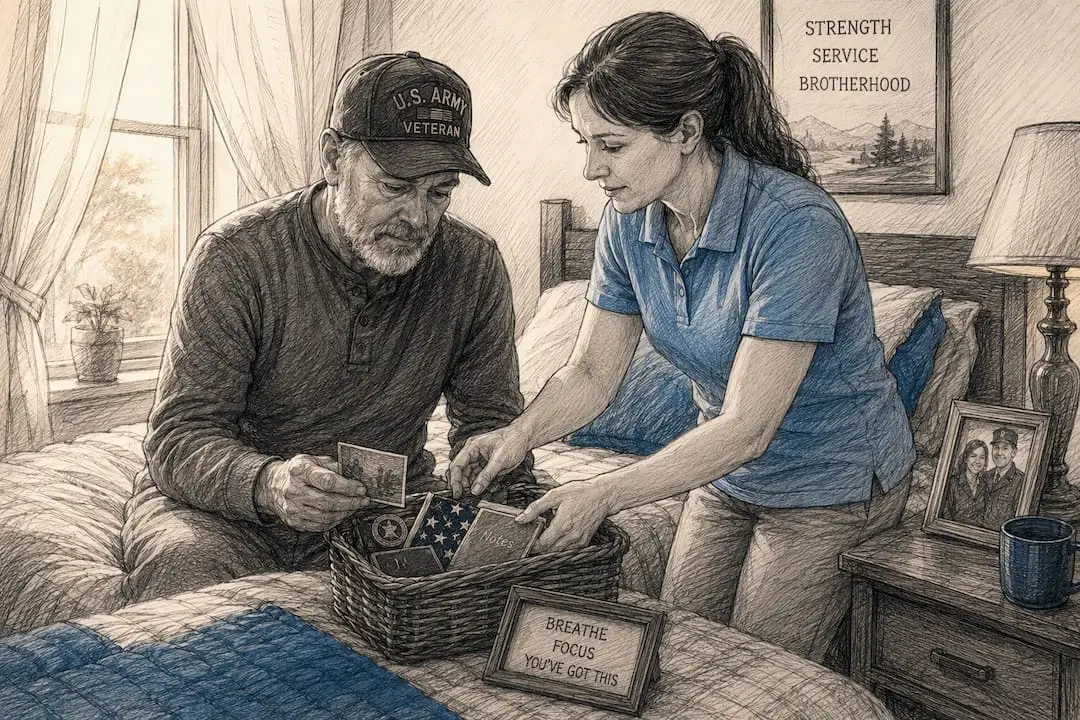
HBPC teams often include a mental health provider when a veteran’s chart shows PTSD or TBI, and the visiting physician or nurse practitioner can adjust medication management around cognitive symptoms rather than just physical ones. For TBI specifically, occupational therapists working through Skilled Home Health Care can address practical safety issues: labeling cabinets, simplifying daily routines, reducing sensory overload in the home environment, and training family members on redirection techniques when confusion or agitation spikes.
Aides delivering H/HHA care to veterans with PTSD benefit from consistency. A rotating cast of unfamiliar caregivers can trigger hypervigilance or withdrawal, so many families request the same aide for every visit rather than accepting whoever is available that week. It’s worth raising this preference directly with your VA social worker during the initial assessment rather than waiting until a problem shows up.
Respite care matters more here too. Caregiving for a veteran with PTSD or TBI carries a different kind of exhaustion, one built on vigilance rather than just physical labor, and short breaks through respite or Veteran-Directed Care can prevent caregiver burnout before it becomes a crisis. If your loved one’s symptoms include memory loss or wandering behavior common to TBI, ask specifically whether the local VA medical center’s HBPC team includes a case manager experienced with those risks, since not every team has the same specialization.
How Do VA Home Care Services Connect to Other Resources?
None of these programs work in isolation, and the veterans who get the most out of home care are usually the ones whose services are actually talking to each other. A veteran receiving H/HHA visits should have that aide’s observations feeding back to the HBPC team or primary care provider, not sitting in a separate file nobody reads.
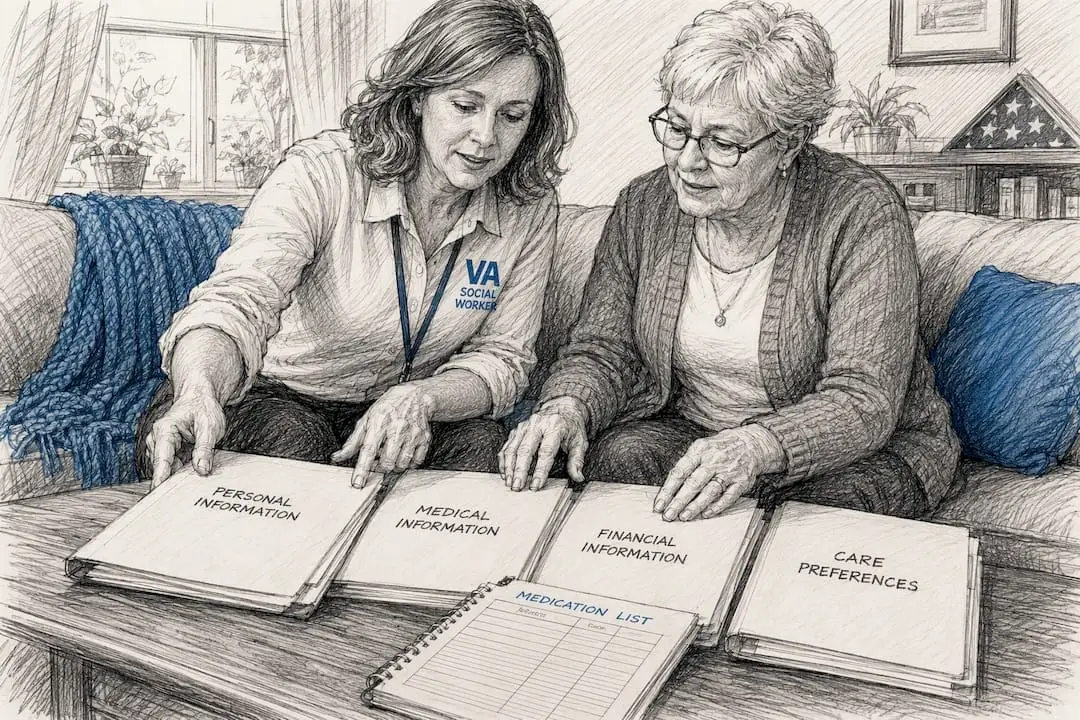
VA social workers are the connective tissue here. They coordinate between VA specialty clinics, the Veterans Justice Outreach program if it applies, community nonprofits, and Vet Centers offering counseling, making sure a veteran’s home care plan lines up with everything else happening in their treatment. If VA services aren’t available locally due to waitlists or geography, social workers can also point families toward community-based providers, sometimes through the Veterans Community Care Program, that accept VA referrals.
Families managing care for a veteran with multiple providers often find it helpful to keep a single shared folder, physical or digital, with medication lists, recent VA appointment summaries, and aide visit notes. Bring it to every assessment. A tool like a virtual monitoring platform can also help family members and outside caregivers stay aligned on daily changes in condition, which matters when a veteran is juggling HBPC, a home health aide, and a family caregiver all in the same week.
The goal isn’t just getting each program approved individually. It’s making sure the pieces reinforce each other instead of duplicating effort or leaving gaps.
How Can Family Caregivers Get Support and Training?
Caregiving for a veteran is a full-time responsibility even when it’s unpaid, and VA recognizes that family caregivers need their own support system, not just training manuals.
Respite care is the most direct relief valve. It gives a family caregiver scheduled time off, whether that’s a few hours a week or an extended break, while VA-arranged care covers the veteran at home. Veteran-Directed Care goes a step further by giving the veteran (or their representative) a flexible budget to hire and schedule caregivers, including in some cases a family member, rather than working strictly within VA’s standard scheduling.
Beyond respite, many VA medical centers offer caregiver training programs covering practical skills: safe transfer techniques, medication management, wound care basics, and recognizing warning signs that a veteran’s condition is declining. These programs exist specifically because family caregivers are doing tasks that would otherwise require professional staff, and doing them without training raises injury risk for everyone involved.
Caregivers of veterans with certain service-connected disabilities may also qualify for the VA’s Program of Comprehensive Assistance for Family Caregivers, which includes a monthly stipend, health insurance access, and mental health counseling for the caregiver, not just the veteran. Eligibility rules are specific, so this is worth raising directly with a VA social worker rather than assuming you don’t qualify.
If you’re feeling stretched thin managing appointments, medications, and daily care alone, that’s not a sign you’re doing something wrong. It’s a sign it’s time to ask what support programs exist, because most families don’t find out about respite or caregiver stipends until someone tells them directly.
What Eligibility Factors Matter Beyond Clinical Need?
Clinical need drives most home care decisions, but it’s not the only factor VA weighs when determining what a veteran qualifies for.
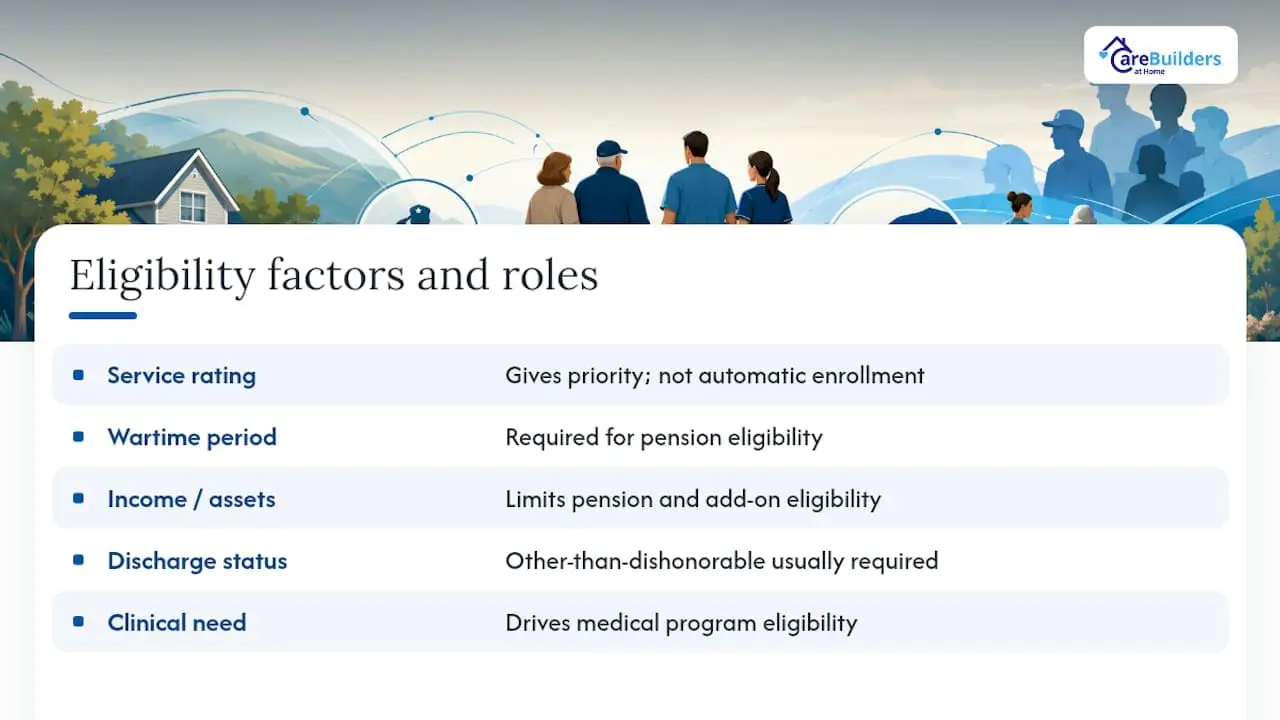
Service-connected disability rating matters for certain programs and benefits, though it doesn’t automatically unlock every service. A veteran with a high disability rating may have priority access to some programs, but as covered earlier, that rating alone doesn’t equal VHA enrollment. You still need to enroll separately.
Income and net worth factor into Aid & Attendance and Housebound pension eligibility, since these are needs-based pension add-ons rather than universal entitlements. Veterans with substantial assets or income above VA’s thresholds may not qualify for the pension itself, which means they wouldn’t qualify for the A&A or Housebound add-on either, regardless of how much hands-on care they need.
Wartime service period matters for pension eligibility too. Aid & Attendance and Housebound require the veteran to have served during a VA-recognized wartime period, in addition to meeting the disability and financial criteria. Discharge status also plays a role. Most VA benefits require an other-than-dishonorable discharge, though some exceptions exist depending on individual circumstances.
None of these factors override clinical need for the medical programs like HBPC or Skilled Home Health, but they absolutely shape what’s available on the pension and long-term care side. This is exactly the kind of layered eligibility question worth bringing straight to a VA social worker rather than trying to sort out alone.
Should Veterans Choose Long-Term or Short-Term Home Care?
The right answer depends entirely on whether the veteran’s condition is expected to improve, stay stable, or decline over time, and VA structures its programs around that distinction.
Short-term home care fits recovery situations: a veteran discharged after surgery, a hospital stay, or an acute illness who needs Skilled Home Health Care for a defined period while regaining strength or managing a healing wound. These arrangements typically have a clear endpoint tied to a treatment goal.
Long-term home care fits veterans managing chronic, ongoing conditions where the need for support isn’t going away. HBPC, ongoing H/HHA visits, and Veteran-Directed Care are usually structured for the long haul, sometimes running for years as a veteran’s needs evolve. Long-term arrangements also interact differently with copay rules, since copays generally don’t apply until day 22 of continuous long-term care, a distinction that doesn’t come up in short-term recovery care.
Respite care sits somewhere in between. It’s short-term by design, but a veteran receiving long-term care from a family caregiver might use respite repeatedly, month after month, as an ongoing relief valve rather than a one-time service.
The practical takeaway: don’t assume you have to pick one lane and stay in it. Many veterans move between short-term and long-term services as their health changes, and the same VA social worker who set up initial Skilled Home Health Care can later help transition a veteran into HBPC if a temporary condition turns into a chronic one.
What Legal Rights Do Veterans Have in Home Care?
Veterans retain specific rights when receiving VA-arranged home care, and knowing them helps families advocate effectively when something isn’t working.
Veterans have the right to be informed about their care plan, including what services are being provided, by whom, and why. They also have the right to refuse specific treatments or services without losing eligibility for other VA benefits, a distinction that matters if a veteran is uncomfortable with a particular type of care but still wants access to others.
Privacy protections apply to home care records the same way they apply to any VA medical record, governed by federal privacy law. Aides and clinical staff entering a veteran’s home are bound by the same confidentiality standards as staff in a VA facility.
Veterans and their representatives also have appeal rights if a benefits claim, including Aid & Attendance or Housebound, gets denied. A denial isn’t necessarily final, and many successful appeals hinge on submitting stronger physician documentation the second time around, which is exactly why the narrative detail on Form 21-2680 matters so much on the first attempt.
If a veteran lacks capacity to make care decisions, a legal representative, whether that’s a family member with power of attorney or a court-appointed guardian, steps into that decision-making role. Establishing this documentation early, before a crisis forces the issue, saves families significant stress later.
Working with an accredited Veteran Service Officer costs nothing and can help navigate both the benefits application process and any disputes that arise along the way.
How Should Families Approach a VA Care Assessment?
Walking into a VA assessment prepared changes the outcome more than most families realize. Bring a written log of the activities the veteran struggles with, whether that’s bathing, cooking, or managing medications, along with any safety incidents like falls or missed medications. Note how caregiving is affecting the family member providing daily support, since caregiver burden is a legitimate factor in service decisions.
If you’ve already used outside home health agencies, bring those records. If you’re pursuing Aid & Attendance or Housebound, bring the physician’s completed Form 21-2680 with specific examples of dependence, not general descriptions.
Ask the social worker directly which programs the veteran likely qualifies for, what the waitlist looks like locally, and whether services can be combined. These are reasonable questions, and a good social worker will walk through the options with you rather than pointing you toward a single form.
How CareBuilders at Home Supports Veterans and Families
Alongside VA-delivered programs, CareBuilders at Home of Plano & Allen works as a VA-approved provider that fills the gaps families often hit between clinical visits and daily reality at home. Our homemaker and personal care services mirror what H/HHA covers, bathing, dressing, meal prep, mobility support, but with dementia-trained caregivers who understand the specific challenges that come with PTSD, TBI, and cognitive decline in veterans. We also offer respite care for family caregivers who need a reliable break, and 24/7 virtual monitoring with fall detection that adds a layer of safety between scheduled visits.
Because we’re VA-approved, our team can work alongside your VA social worker, helping gather the documentation, aide visit notes, ADL logs, caregiver observations, that strengthens applications for Aid & Attendance or Housebound benefits. If you’re trying to figure out where VA services end and where private support might bridge the gap, our personal care services page outlines exactly what our caregivers handle day to day. For a practical walkthrough of getting started, our guide on arranging in-home care for an elderly parent covers the steps families follow before their first visit. Reach out to discuss your loved one’s specific situation and we’ll help you map out what fits.
Sources
- Aid and Attendance benefits and Housebound allowance | Veterans Affairs
- Home Based Primary Care | Geriatrics and Extended Care | Veterans Affairs
- VHA notice: Purchased Home and Community-Based Services Programs (PHCBS) | Veterans Health Administration
Recommended
- Veterans Care – CareBuilders at Home | Senior and Veteran Care in Plano, Allen & Richardson TX
- CareBuilders at Home – Exceptional Senior and Veteran Care in Plano, Allen and Richardson
- CareBuilders at Home – Exceptional Senior and Veteran Care in Plano, Allen and Richardson
- CareBuilders at Home – Exceptional Senior and Veteran Care in Plano, Allen and Richardson