


Transportation for Seniors: Finding Rides That Actually Work
Reliable transportation for seniors comes from six main sources: aging-network rides through your local Area Agency on Aging, ADA complementary paratransit, Medicaid non-emergency medical transportation, volunteer driver programs, discounted public transit, and private ride-hailing or taxi services. No single option covers every trip, which is why the smartest first move isn’t picking one, it’s calling one number.
That number is the Eldercare Locator: 1-800-677-1116, the national hotline that connects you to your regional Area Agency on Aging in a few minutes. They know which of these programs actually operate in your county, what they cost, and how to apply.
- Aging-network rides through your Area Agency on Aging (often 60+, voluntary donation)
- ADA complementary paratransit for those unable to use fixed-route buses
- Medicaid NEMT for covered medical appointments
- Volunteer driver programs and faith-based or senior center shuttles
- Public transit with senior fare discounts
- Microtransit, ride-hailing, and taxi services for flexibility
Pro Tip: Federal rules require paratransit agencies to serve any address within three-quarters of a mile of a fixed bus route and cap fares at no more than twice the regular bus fare, so ask specifically about “complementary paratransit” when you call your transit agency.
Key Takeaways
No single transportation program covers every senior’s needs, so the strongest plan layers aging-network rides, ADA paratransit, Medicaid NEMT, volunteer drivers, and private options together with help from a mobility manager.
| Point | Details |
|---|---|
| Start with one call | Dial the Eldercare Locator at 1-800-677-1116 to reach your local Area Agency on Aging first. |
| Know the ADA rule | Paratransit must serve within three-quarters of a mile of fixed routes and cap fares at twice the regular fare. |
| Separate NEMT from aging services | Medicaid non-emergency medical transportation covers medical trips only and is arranged through a state broker. |
| Layer, don’t pick one | Combine paratransit, volunteer drivers, and ride-hailing rather than expecting one program to cover every trip. |
| Get accompaniment when needed | CareBuilders at Home of Plano & Allen offers companion rides, scheduling help, and 24/7 monitoring for families in Collin County. |
Table of Contents
- What Are the Main Transportation Options for Seniors?
- How Do You Find Local Senior Transportation Resources?
- What Are the Eligibility Rules and Costs?
- Why Mobility Management Matters More Than Any Single Program
- Safety Considerations Every Senior Rider Should Know
- How Technology Is Changing How Seniors Book Rides
- Getting Seniors With Dementia or Cognitive Decline to Appointments Safely
- Practical Advice for Caregivers Coordinating Rides
- Taxis, Ride-Hailing, and Senior-Focused Transport: Which Private Option Fits?
- Sources
What Are the Main Transportation Options for Seniors?
Each option solves a different problem, and understanding the differences saves you from wasted calls and missed appointments.
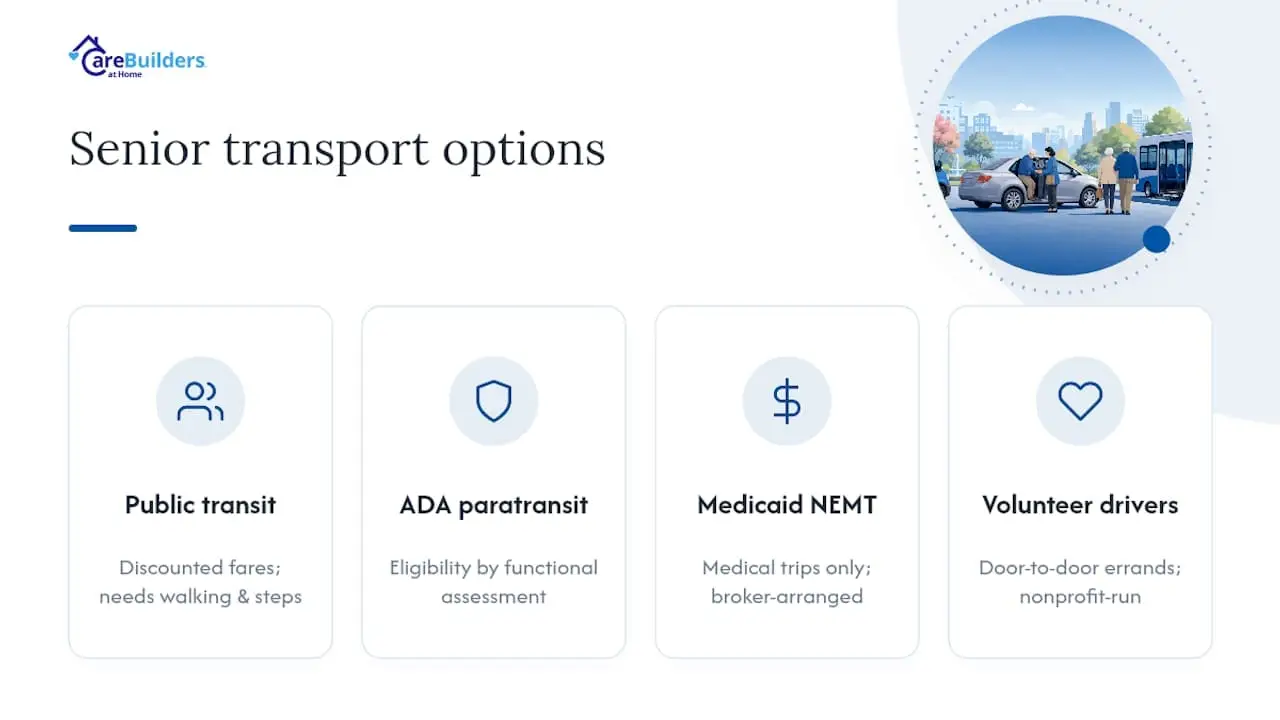
Public transit works well for seniors who can walk to a stop, climb steps, and handle a schedule. Most transit agencies offer discounted senior fares, usually half the regular rate, and many run free travel training programs that pair a new rider with a trainer for a few practice trips before they go solo. It’s often the cheapest option, but it demands independence that not every rider has anymore.
ADA complementary paratransit exists for people who genuinely cannot use the bus or train system because of a disability or functional limitation, not simply personal preference. Eligibility is based on a functional assessment, not a diagnosis. Service must reach anywhere within three-quarters of a mile of a fixed route, run during comparable hours, and cost no more than double the fixed-route fare. Most systems allow a companion or personal care attendant to ride along, though you typically need to note that when booking.
Medicaid NEMT covers rides to and from covered medical appointments only, not groceries or social visits, and it’s arranged through your state’s Medicaid transportation broker rather than your local transit agency.
Volunteer driver programs and shuttles, often run through senior centers, churches, or nonprofits like Independent Transportation Network, tend to fill the biggest gap: door-to-door help for errands and social trips in areas paratransit doesn’t reach well.
Microtransit and transit partnerships with ride-hailing companies are newer, on-demand options some cities use to stretch thin bus routes, though wheelchair-accessible vehicles aren’t always guaranteed.
Ride-hailing and taxis offer speed and flexibility at a real cost, and drivers aren’t trained for mobility assistance the way paratransit staff are.
How Do You Find Local Senior Transportation Resources?
Finding the right program is less about searching the internet and more about making three calls in the right order.
- Call the Eldercare Locator at 1-800-677-1116 and ask them to connect you with your local Area Agency on Aging.
- Dial 211, the free community resource line, and ask specifically about senior transportation programs in your area.
- Contact your local transit agency directly and ask about “Dial-A-Ride” or “complementary paratransit” services.
- If searching online, pair your ZIP code with terms like “volunteer driver program” or “senior shuttle” plus your town or county name for better results.
Pro Tip: Before you call, jot down the rider’s mobility needs, Medicaid ID if applicable, and the typical destinations and how often trips are needed. Coordinators can match you faster when a request is specific rather than a general “I need transportation” call.
What Are the Eligibility Rules and Costs?
Eligibility and cost vary by program, and knowing the rules ahead of time prevents frustrating denials.
ADA paratransit eligibility hinges on a functional inability to use fixed-route transit, whether that’s due to vision loss, a mobility limitation, or a cognitive condition that makes navigating a bus route unsafe. Agencies must operate within that three-quarter-mile service area and cap fares at twice the regular bus fare. If a condition varies day to day, such as fatigue or balance problems, document that variability and request an in-person assessment rather than accepting a denial based on paperwork alone.
Medicaid NEMT is a covered benefit for enrollees, but it’s a separate system from aging-network services and must be arranged through the state’s transportation broker or the Medicaid managed care plan directly.
Aging-network rides funded under the Older Americans Act are often open to any adult 60 or older, with no income test, though a voluntary contribution is usually welcomed.
- Demand-response and paratransit trips typically require 24 to 48 hours’ advance notice.
- Some systems offer same-day or next-day booking windows depending on capacity.
- Costs range from free (aging-network rides) to a capped paratransit fare to full market rate for private ride-hailing.
Why Mobility Management Matters More Than Any Single Program
The biggest obstacle families run into isn’t a lack of programs. It’s that the programs don’t talk to each other. A mobility manager, sometimes working through a “one-call, one-click” center, exists to solve exactly that problem by matching a rider’s needs across paratransit, volunteer drivers, and NEMT instead of making you juggle multiple applications.
- They can combine paratransit for a weekly grocery run with a volunteer driver for a Sunday church trip.
- They often help schedule recurring NEMT rides for dialysis or physical therapy so you’re not calling weekly.
- They sometimes have fare vouchers or temporary taxi arrangements ready while a formal paratransit application is pending.
Federal support for this coordination comes through the FTA’s CCAM program, which funds NEMT coordination and Section 5310 grants that help local agencies buy accessible vehicles and expand mobility projects. Communities that use these grants well tend to have far fewer transportation gaps for older residents.
Pro Tip: Ask your Area Agency on Aging directly whether a mobility manager serves your county. If one exists, they can save you weeks of separate phone calls.
Next Steps: What to Do in the Next 7 to 10 Days
- Write down the rider’s mobility limitations, Medicaid ID number if applicable, and typical destinations.
- Call the Eldercare Locator or your Area Agency on Aging, then your transit agency’s paratransit coordinator, then the Medicaid broker if relevant.
- Ask each contact about attendant policies, door-through-door assistance, and how far ahead you need to book.
- Line up an interim ride, a family member, a taxi, or a volunteer driver, while formal eligibility paperwork processes.
Safety Considerations Every Senior Rider Should Know
Transportation safety for older adults goes beyond seatbelt use. Paratransit and NEMT drivers typically complete defensive driving courses and training on assisting riders with walkers, wheelchairs, and vision impairments, including how to secure mobility equipment properly before the vehicle moves.
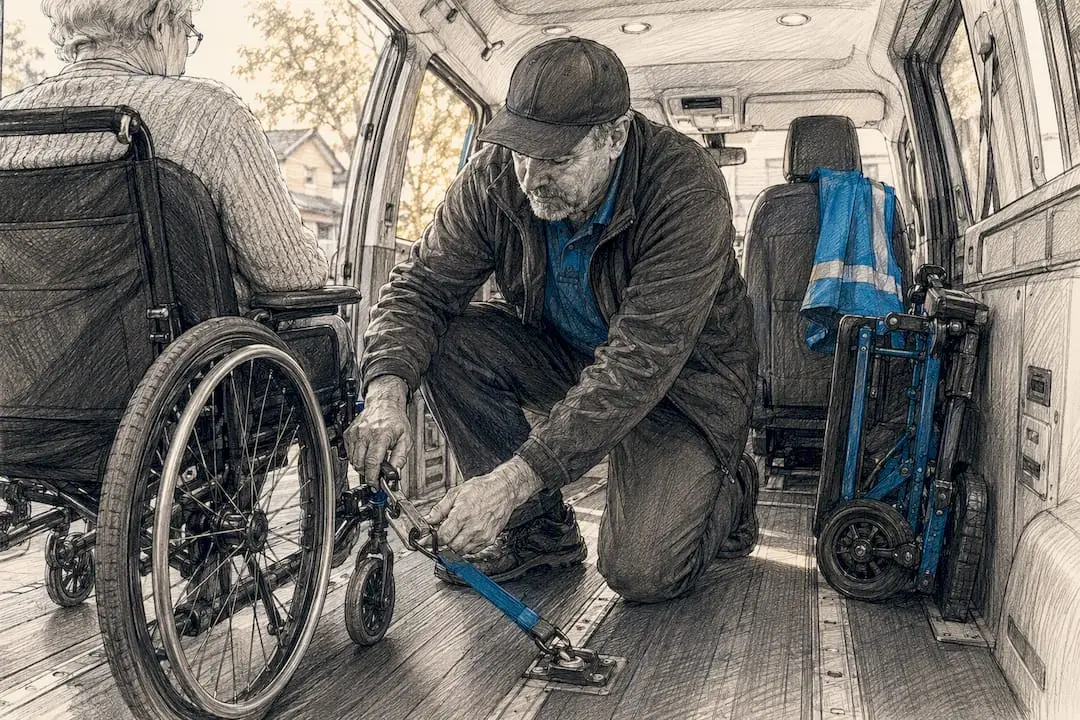
Ask any program, public or private, whether drivers are trained in passenger assistance and whether vehicles carry working wheelchair lifts and secure tie-downs, not just a ramp. A ramp with no tie-down system is a fall risk waiting to happen.
For seniors riding independently, a few habits reduce risk substantially: sit near the front where the driver can see you, keep a phone charged and reachable, and carry a card listing emergency contacts and any medical conditions a driver or dispatcher should know about.
Some Area Agencies on Aging and community organizations run brief passenger safety workshops covering how to board safely, use a cane or walker on a bus, and recognize a driver who isn’t following proper securement procedures. These sessions are worth asking about, especially for a rider using paratransit for the first time.
Caregivers should also confirm what happens if a scheduled ride doesn’t show up. Reliable programs have a dispatch number you can call within minutes of a missed pickup, not a form to fill out after the fact. If a program can’t answer that question clearly, treat it as a warning sign.
How Technology Is Changing How Seniors Book Rides
Booking a ride used to mean one phone call to a dispatcher, and for plenty of seniors, that’s still the most comfortable option. Most paratransit and NEMT systems still run full call centers precisely because a large share of riders prefer a human voice over an app.
That said, digital tools have expanded fast. Many transit agencies now offer apps for scheduling paratransit trips, checking real-time vehicle location, and receiving text alerts when a ride is five minutes out. Ride-hailing apps let a caregiver book and pay for a trip remotely, then track it from across town or across the country.
The gap tends to show up in usability, not availability. An app built for a 25-year-old commuter isn’t automatically usable by someone with limited vision or shaky hands. Look for larger text options, voice command features, or a simplified “senior mode” some transit apps now build in.
For caregivers, technology’s real value is coordination at a distance. A phone-based monitoring platform paired with ride alerts means you can confirm mom made it to her cardiology appointment without physically being there. That layered approach, phone calls for booking plus digital tools for tracking, tends to work better than betting everything on one method.
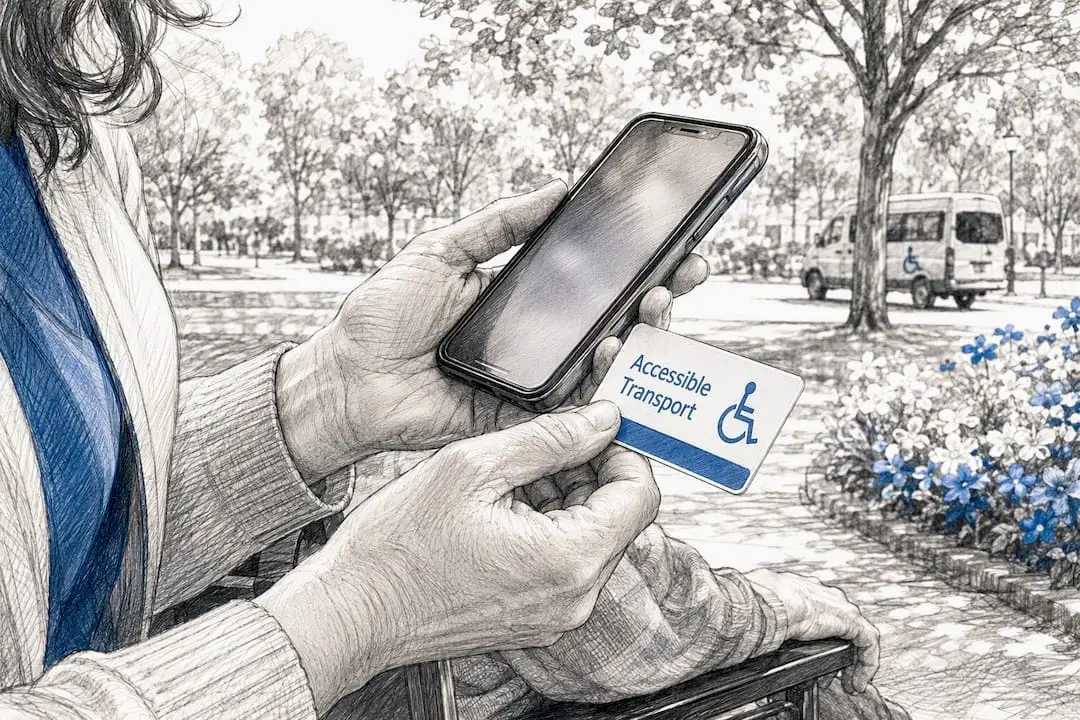
If in-person tech support would help a parent learn a scheduling app or ride-tracking feature, a companion visit focused on that kind of hands-on practice often makes the difference between an app that gets used and one that gets abandoned after one confusing try.
Getting Seniors With Dementia or Cognitive Decline to Appointments Safely
Standard paratransit and public transit assume a rider can follow verbal instructions, recognize a bus number, and communicate a destination clearly. For someone with dementia or significant cognitive impairment, that assumption often breaks down fast, and it’s one of the more overlooked gaps in the entire transportation system.
Many paratransit programs allow a personal care attendant to ride along at no extra cost specifically for riders who need cueing, reassurance, or help communicating with the driver. Ask about this attendant policy by name when you book, since it’s not always volunteered upfront.
Volunteer driver programs are sometimes a better fit than paratransit for cognitive impairment because the same driver often serves the same rider trip after trip, building familiarity that reduces anxiety and confusion. A new paratransit driver every time can be genuinely distressing for someone with moderate to advanced dementia.
For appointments that require more than a ride, actual accompaniment inside the building, help remembering questions for the doctor, support if the rider becomes disoriented, a family member or professional caregiver riding along tends to matter more than which vehicle shows up. This is where in-home care services and paratransit stop being either/or choices and start working together: the van gets the rider there, and a companion handles everything else.
Practical Advice for Caregivers Coordinating Rides
Caregivers juggling work, their own families, and a parent’s transportation needs benefit from a few habits more than any single app or program.
Build a simple written schedule of recurring trips first, dialysis three times a week, the Tuesday senior center shuttle, monthly bloodwork, so you’re not reinventing the plan every week. Recurring trips are exactly what mobility managers and NEMT brokers are best at handling once they’re set up.
Keep a one-page reference sheet with the rider’s mobility needs, medication list, and emergency contacts, and have copies ready for any new driver or dispatcher. This single habit prevents most of the confusion that happens when a substitute driver shows up.
Don’t assume one program covers everything. Layering paratransit for medical trips, a volunteer driver for the grocery run, and occasional ride-hailing for last-minute plans is normal, not a sign you’re failing to find “the right service.”
Finally, plan the conversation about giving up driving before it becomes an emergency. Transportation is recognized as a genuine social determinant of health, and waiting until a crash or a health scare forces the issue almost always makes the transition harder on everyone involved. If your parent lives alone, the Aging Solo guide to transportation options offers useful groundwork for starting that conversation early.
Taxis, Ride-Hailing, and Senior-Focused Transport: Which Private Option Fits?
Private transportation fills the gaps public programs can’t, but the three main categories differ enough that picking blind leads to disappointment.
Traditional taxis remain the most predictable option for a rider without a smartphone. You call, a car shows up, and payment is straightforward, though wait times can run long in suburban areas and drivers have no specific senior mobility training.
Ride-hailing apps like Uber and Lyft offer faster pickup and the ability for a caregiver to book and track remotely, which matters when you live states away from an aging parent. The tradeoff is that wheelchair-accessible vehicles are limited in many markets, and drivers aren’t trained to assist someone who needs help with balance or transfers.
Senior-focused private transport companies split the difference: trained drivers, scheduled or on-demand rides, and sometimes door-through-door assistance into the building, not just to the curb. They cost more than a standard taxi but less than an ambulance, and they’re often the right call for a rider who needs more than a driver, someone who needs an actual escort.
The honest comparison comes down to what the trip requires. A quick pharmacy run might be fine with a standard ride-hailing app. A cardiology follow-up for someone who gets confused in unfamiliar buildings calls for an escort, not just a driver, which is where in-home companion support often does more good than any vehicle upgrade.
A caregiver’s honest take on losing the keys
Giving up driving feels like losing a piece of independence, and pretending otherwise helps no one. The families who handle this transition best start planning months before it’s urgent, not the week after a scary drive. CareBuilders at Home of Plano & Allen helps coordinate rides, provides accompaniment to appointments, and offers monitoring so no one navigates this alone. If you’re facing this now, reach out. We’re here to help.
— cbahplano
How CareBuilders at Home of Plano & Allen Fills the Gaps Between Programs
Public transit, paratransit, and volunteer drivers solve the “getting there” problem, but none of them solve what happens inside the doctor’s office or the worry you feel when a parent rides alone. CareBuilders at Home of Plano & Allen fills that specific gap for families in Plano, Allen, Richardson, Wylie, and the surrounding Collin County area, offering companion services that include ride accompaniment, help remembering what the doctor said, and support getting safely from the curb to the waiting room. Our caregivers can also help schedule recurring rides around a client’s medical calendar, so appointments don’t get missed while a family juggles work and other responsibilities.
For veterans, we’re a VA-approved provider, which means veteran care benefits can help offset the cost of that accompaniment. And when a loved one is riding or traveling without a companion present, our 24/7 virtual monitoring adds a layer of reassurance that a missed pickup or a confusing moment won’t go unnoticed.
If transportation gaps are just one piece of a bigger caregiving puzzle, our personal care services page outlines how we build a full plan around a family’s specific needs. Call us to talk through what accompaniment or monitoring could look like for your situation.