


What Care Coordination Means for Social Workers
Care coordination means the deliberate organization of a person’s care activities and the sharing of information across all involved, so needs and preferences are known and acted on at the right time. For social workers, this shifts daily work from reacting to one crisis at a time toward owning the plan: tracking transitions, connecting people to resources, and keeping every provider talking to each other. That distinction between “helping when asked” and “coordinating on purpose” is what separates ad hoc casework from real care coordination.
For a social worker, that definition translates into three concrete shifts on any given day:
- You assess the whole picture, not just the referral that landed on your desk.
- You build a proactive plan with dates attached, instead of waiting for the next call.
- You follow up on outcomes, not just on whether the referral was made.
Key Takeaways
Care coordination succeeds when social workers treat it as an ongoing, owned process, assess, plan, communicate, monitor, transition, and link, rather than a series of disconnected referrals.
| Point | Details |
|---|---|
| Definition anchors the role | Care coordination combines deliberate organization, information sharing, and person-centered planning, per AHRQ. |
| Framework maps to daily tasks | AHRQ’s eight activities, from assessment to transitions, give social workers a checklist for any case. |
| Time investment is measurable | Embedded social workers spend about 21.7 hours weekly on coordination, roughly 30 minutes per patient. |
| Accountability prevents failure | Naming one owner per action at every handoff is the single most common gap AHRQ flags. |
| Local referrals matter | CareBuilders at Home of Plano & Allen offers dementia-trained, VA-approved in-home care that social workers can include when a plan calls for home-based support. |
Table of Contents
- Understanding Care Coordination in Social Work and Why It Matters
- The AHRQ Framework: Core Coordination Activities for Social Workers
- What Social Workers Actually Do in Care Coordination
- How Care Coordination Differs From Case Management and Patient Navigation
- A Step-by-Step Workflow for Coordinating Care
- Technology and Documentation That Make Coordination Reliable
- Measuring Whether Coordination Is Actually Working
- Common Barriers and Ethical Considerations in Care Coordination
- Building a Reusable Care-Coordination Plan Template
- Owning Coordination Instead of Just Making Referrals
- When to Refer Clients to In-Home Support Services
- Frequently Asked Questions
- Sources
Understanding Care Coordination in Social Work and Why It Matters
Pull the definition apart and three pieces do the real work. “Deliberate organization” means someone owns the sequence of care activities instead of leaving it to chance. “Sharing information” means the primary care provider, the specialist, the family, and you are working from the same facts. “Patient and family-centered” means the plan reflects what the person actually wants, not just what’s clinically convenient. The Agency for Healthcare Research and Quality (AHRQ) reviewed more than 40 published definitions of care coordination and found these same elements recurring across nearly all of them.
Why does this matter for your caseload specifically? Fragmented care produces the outcomes you spend your time cleaning up: missed follow-ups, duplicate services, and clients who fall through the gap between hospital discharge and home. Coordinated care closes that gap. Three practical benefits follow directly:
- Fewer missed follow-ups because someone is explicitly accountable for the next step.
- Smoother transitions between hospital, home, and community settings.
- Better access to social supports because needs are surfaced early instead of discovered in a crisis.
The National Association of Social Workers (NASW) frames this as a core professional competency, not an optional add-on to clinical work.
The AHRQ Framework: Core Coordination Activities for Social Workers
AHRQ’s care coordination measurement framework breaks the work into eight recognizable activities. Most social workers already do several of these instinctively; the framework just names them so you can track and defend the work.
| AHRQ Activity | Social-Work Action | Example in Practice |
|---|---|---|
| Assess needs/goals | Screen for medical and social needs together | Ask about transportation before assuming a missed appointment was noncompliance |
| Create a proactive plan | Draft a written plan with dates, not just intentions | Set a 7-day post-discharge check-in before the client leaves the hospital |
| Monitor and follow up | Track whether referrals actually resulted in services | Call the home health agency to confirm the first visit happened |
| Align and link resources | Match verified community resources to specific needs | Connect a veteran to VA benefits navigation, not a generic hotline |
| Facilitate transitions | Own the handoff between settings | Send a transition summary to the outpatient clinic before discharge |
| Establish accountability | Name who owns each next step | Document “PCP follows up on labs; SW follows up on housing” |
| Support self-management | Coach clients on managing their own care | Teach a caregiver how to use a pill organizer tied to a medication schedule |
| Communicate | Keep every party informed in real time | Update the shared care plan the same day a status changes |
Statistic Callout: Full-time care coordinators in clinics with an embedded social worker spend an average of 21.7 hours per week on coordination, roughly 30 minutes per patient weekly, across a panel of about 48.5 patients.
What Social Workers Actually Do in Care Coordination
Translate the framework into a Tuesday afternoon, and it looks like this: screening for social needs during intake, making warm referrals instead of handing over a phone number, advocating with insurers or landlords, documenting every step in the shared record, engaging family caregivers, and circling back days later to confirm something actually happened.

The evidence backs up how central this work is. In the same 2025 study, over 80% of embedded social workers assessed social needs and referred patients to community resources, well above what happens in clinics without a dedicated social worker on the team. Clinics using an integrated social-worker model tended to have more frequent patient contact and coordinated across multiple clinicians more than those without such integration.
Common coordinator tasks include:
- Screening for social needs (housing, food, transportation, isolation) at intake and at intervals.
- Making and tracking referrals, not just documenting that one was mentioned.
- Advocating for clients with insurers, landlords, or benefits offices.
- Engaging family caregivers directly in the plan.
- Logging every contact and outcome in the shared record.
Pro Tip: When your panel is too large to coordinate everyone with equal intensity, triage by transition risk first. A client leaving the hospital this week needs your time more urgently than a stable client due for a routine check-in next month.
How Care Coordination Differs From Case Management and Patient Navigation
These terms get used almost interchangeably in job postings, which causes real confusion about scope. NASW notes that titles vary by organization even when the underlying functions overlap.
A rough way to separate them:
- Care coordination: ongoing, team-based, spans multiple providers and settings; nobody “owns” the client, everyone shares the plan.
- Case management: often tied to a specific program or payer, with a defined caseload and eligibility rules attached.
- Patient navigation: typically time-limited and condition-specific, like guiding someone through a cancer treatment pathway.
- Chronic care management (CCM): a billable Medicare service focused on ongoing management of chronic conditions, usually clinically led.
A discharge planning call to line up home health is coordination. Enrolling a client in a state Medicaid waiver program with income documentation is case management. Walking someone through their first three oncology appointments is navigation.
A Step-by-Step Workflow for Coordinating Care
AHRQ’s own guidance pushes practitioners to think in a full sequence rather than treating coordination as “make a referral and move on.” Here’s a workflow you can adapt to nearly any case:
- Assess medical and social needs together during intake or a status change.
- Plan by writing specific goals with named owners and target dates.
- Communicate the plan to every provider and family member involved.
- Monitor whether each step actually happened, not just whether it was scheduled.
- Transition by sending a summary ahead of any handoff between settings.
- Link to verified community resources that match the assessed need.
Two quick templates make this repeatable:
- Assessment prompt: “What has changed since we last talked, and what’s making daily life harder right now?”
- Transition checklist: diagnosis and current status, medications, mobility needs, caregiver availability, next appointment date, and the name of who is responsible for the first follow-up call.
Set a specific follow-up date at every step, and name one person, not a department, as accountable. Vague ownership is where plans quietly die.
Technology and Documentation That Make Coordination Reliable
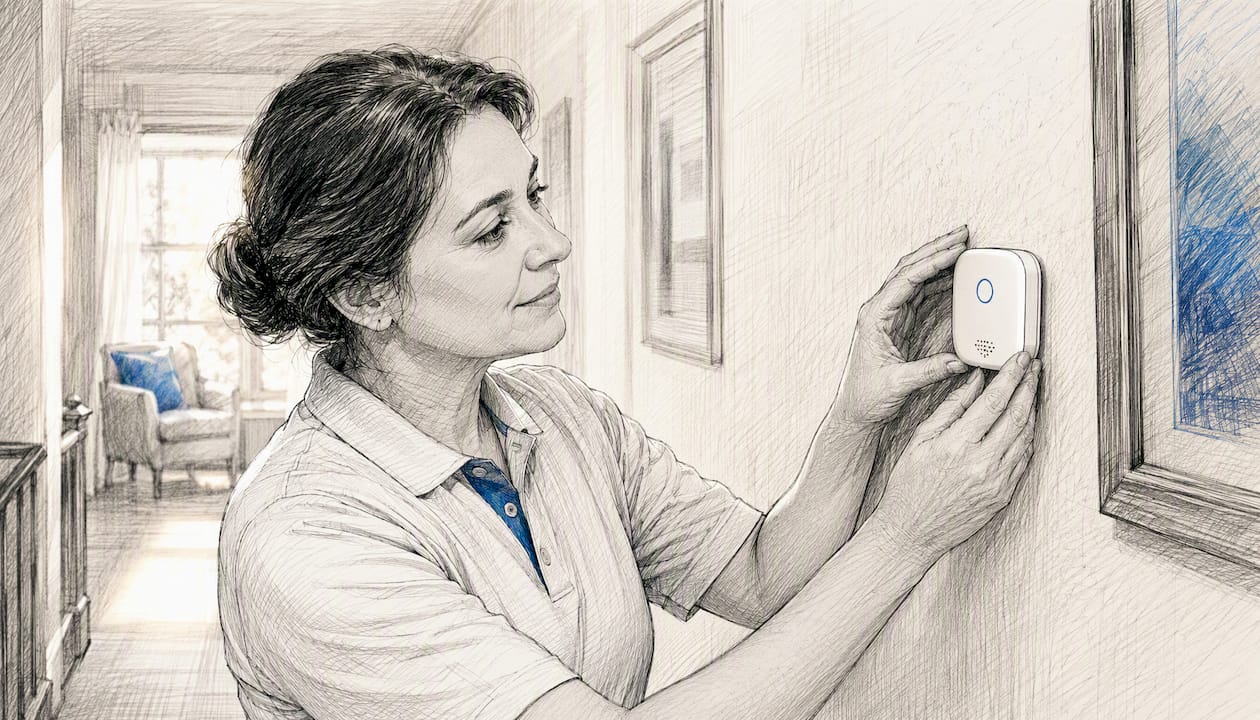
A plan that lives only in your head disappears the moment you’re out sick. Shared care plans inside the electronic health record (EHR) let every provider see the same status. Health information exchanges (HIEs) pull records across systems that otherwise never talk to each other. Secure messaging keeps time-sensitive updates out of voicemail limbo, and a simple spreadsheet tracker can outperform an expensive platform if your team actually updates it.
Documentation habits that hold up under review:
- Record the plan and its owner in the shared note, not a private file only you can see.
- Log every contact attempt, not just successful ones.
- Note the exact date of the next follow-up, every time.
Pro Tip: Write your EHR notes assuming a clinician who has never met the client will read them cold. Lead with the action needed, not the backstory.
Measuring Whether Coordination Is Actually Working
Track process measures like care-plan completion rates, timeliness of follow-up calls, and whether referrals were completed, not just made. Pair those with outcome measures: 30-day readmissions, emergency department visits, patient-reported experience, and progress toward self-management goals. AHRQ’s Care Coordination Measures Atlas catalogs dozens of these measures and is worth bookmarking when your program needs to justify itself with data.
Pro Tip: Pick two or three metrics you can actually track consistently rather than a dozen you’ll abandon after one quarter.
Common Barriers and Ethical Considerations in Care Coordination
Expect information gaps between incompatible record systems, unclear accountability during handoffs, and resource shortages that outpace referral volume. AHRQ’s own framework flags “establish accountability” as a distinct activity precisely because handoffs are where coordination most often fails.
Ethically, stay alert to consent boundaries, HIPAA limits on what you can share and with whom, and the edges of your own scope of practice when clinical decisions come up.
Pro Tip: During any handoff, get explicit verbal or written confirmation of who owns the next step before you end the conversation. If nobody claims it clearly, escalate immediately rather than assuming it will get covered.
Building a Reusable Care-Coordination Plan Template
A one-page plan you can paste into any chart beats a polished document nobody updates. Include these fields every time:
- Reason for coordination
- Participants involved (provider names, family, agencies)
- Primary goals
- Specific actions assigned
- Timeline with dates
- Accountability (named owner per action)
- Follow-up dates
- Community referrals made
Applied to a common scenario, an older adult discharged after a fall with mobility and medication concerns, a sample plan might read:
- Home health referral for physical therapy, initiated before discharge, owner: SW.
- Medication reconciliation call with pharmacy within 48 hours, owner: PCP.
- Home safety assessment scheduled within one week, owner: SW.
- Family caregiver check-in call at day 7, owner: SW.
- Follow-up appointment confirmed within 10 days, owner: SW.
Owning Coordination Instead of Just Making Referrals
Early in most social work careers, the job feels like a series of one-off rescues: a referral here, a phone call there, each closed out and forgotten. The more useful shift is treating every case as an open loop until you’ve confirmed the outcome, not just the action.
That means pushing back when a caseload gets structured around volume of referrals made rather than referrals completed. NASW’s standards support this reframing, and AHRQ’s workflow gives you the vocabulary to make the case to a supervisor: this isn’t extra work, it’s the coordination function the framework already assumes someone will perform.
Pro Tip: If your panel size makes real follow-up impossible, don’t quietly absorb the gap. Bring your supervisor a specific number, current caseload versus AHRQ’s documented time-per-patient benchmark, and ask for either more staffing or a narrower scope.
That conversation is uncomfortable. It’s also how coordination gets funded properly instead of running on unpaid overtime.
When to Refer Clients to In-Home Support Services
Care coordination sometimes points toward a need you can’t meet with a phone call: a client who’s safe cognitively but struggling with daily tasks, a caregiver who’s stretched too thin, or a post-discharge plan that requires supervision at home. That’s the moment to know your local referral options well.
Before referring a family to any in-home care provider, verify a few things: what services they actually offer, whether caregivers carry dementia-specific training, whether they’re VA-approved for veteran clients, what monitoring technology they use, and how they handle consent and communication with your team. CareBuilders at Home of Plano & Allen offers non-medical personal care, companion support, and specialized dementia care for seniors and veterans in Plano, Allen, Richardson, and Wylie, backed by 24/7 virtual monitoring and fall detection so families and care teams stay informed between visits. As a VA-approved provider, the agency also helps veteran clients navigate benefits that can offset the cost of care. If a discharge plan or ongoing case in your caseload calls for reliable in-home support, review CareBuilders at Home’s personal care services as one option to include in your referral list, or reach out directly to ask what a coordinated care plan with their team would look like for a specific client.
Frequently Asked Questions
What does care coordination mean for social workers specifically?
It means owning the deliberate organization of a client’s care activities and ensuring information flows between providers, family, and community resources, rather than handling isolated referrals one at a time.
How is care coordination different from case management?
Care coordination spans multiple providers and settings on an ongoing basis, while case management is often tied to a specific program, payer, or eligibility-based caseload.
What tools help social workers document coordination effectively?
Shared EHR care plans, secure messaging, health information exchanges, and simple tracking spreadsheets all support reliable, auditable coordination when updated consistently.
How much time do social workers typically spend on care coordination?
Full-time coordinators embedded in clinics average about 21.7 hours per week on coordination tasks, roughly 30 minutes per patient weekly.
What are the biggest barriers to effective care coordination?
Information gaps between incompatible records, unclear accountability during handoffs, and resource shortages are the most common obstacles social workers report facing.
Sources
For teams that want the original frameworks behind this guide, start with AHRQ’s care coordination overview for the foundational definition, and the measurement framework chapter for the activity breakdown. NASW’s practice standards cover social-work-specific competencies. The AIMS model study demonstrates a time-bounded protocol, and the JABFM study provides direct evidence on embedded social-worker time use. For selecting metrics, consult the Care Coordination Measures Atlas.
- Care Coordination | Agency for Healthcare Research and Quality
- Care Coordination: How Is It Implemented and Is It Different If a Social Worker Is on the Team? | JABFM
Recommended
- In-Home Care Services Social Workers Refer to Seniors – CareBuilders at Home | Senior and Veteran Care in Plano, Allen & Richardson TX
- How to Build a Senior Care Support Network – CareBuilders at Home | Senior and Veteran Care in Plano, Allen & Richardson TX
- Virtual Caregiver – CareBuilders at Home | Senior and Veteran Care in Plano, Allen & Richardson TX
- sensi.ai – CareBuilders at Home | Senior and Veteran Care in Plano, Allen & Richardson TX