


In-Home Care Services Social Workers Refer to Seniors
In-home care services social workers refer to are defined as a coordinated set of medical, personal, and social supports delivered in a person’s home to help seniors and veterans maintain independence and avoid premature placement in a facility. Social workers assess each client’s physical, emotional, and financial situation before recommending specific services. Their referrals span skilled nursing and therapy to companion care and community programs. Understanding exactly which services social workers recommend, and why, helps you make faster, more confident decisions for the person you love.
What in-home care services do social workers refer to for medical needs?
Medical in-home services are the first category social workers address when a senior or veteran leaves the hospital or shows declining health at home. The most common referral is Medicare-certified skilled home health care, which covers skilled nursing visits, physical therapy, occupational therapy, and speech therapy. Medicare covers these services at $0 copay when a physician’s order is in place and the client meets homebound status criteria. Medicare also reviews treatment plans every 60 days under its Home Health Prospective Payment System, so care stays aligned with current needs.

When Medicare criteria are not met, families turn to private-pay options. Private-duty nursing costs range from $90 to $130 or more per hour, while non-medical home care averages around $30 per hour nationally. Agency overhead raises that base rate by 20–40%. Knowing these numbers upfront helps you budget realistically and ask the right questions when comparing providers.
Pro Tip: Request the physician’s order as early as possible, ideally before discharge. A delay in that order can push back the start of covered skilled nursing by days, leaving a gap in care.
| Service | Typical coverage | Estimated cost |
|---|---|---|
| Skilled nursing visits | Medicare (if homebound + MD order) | $0 copay under Medicare |
| Physical/occupational therapy | Medicare Home Health benefit | $0 copay under Medicare |
| Private-duty nursing | Private pay or long-term care insurance | $90–$130+ per hour |
| Home health aide (medical) | Medicare (limited hours, skilled need) | $0 under Medicare; $25–$35 private pay |
| Medication management | Medicare or private pay | Varies by visit frequency |
Medical social workers also support families with discharge planning, treatment coordination, and insurance navigation, including resolving coverage denials before they become crises.
Which personal care and companion services do social workers recommend for daily living?
Personal care services cover the hands-on, non-medical help that keeps a senior safe and comfortable at home each day. Social workers refer these services when a client struggles with activities of daily living, known in care settings as ADLs, such as bathing, dressing, grooming, toileting, and meal preparation. These services are typically provided by home health aides or personal care attendants and are paid privately or through Medicaid waiver programs. Understanding what personal assistance services include helps families set realistic expectations before the first caregiver arrives.
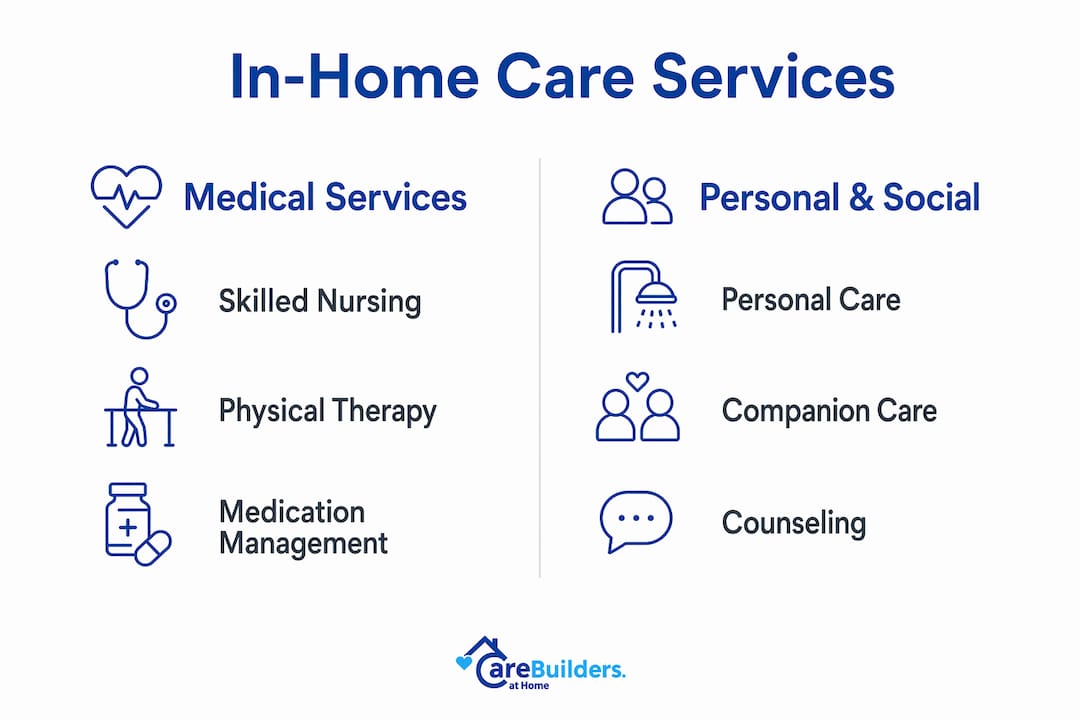
Companion care is a distinct but equally important category. It addresses social connection, emotional well-being, and light household support rather than physical care tasks. Social workers refer companion services specifically when they identify social isolation, which research shows is as critical a risk factor as many medical conditions in preventing premature assisted living placement. A companion caregiver may provide conversation, accompany a client to appointments, assist with errands, or simply be present to reduce anxiety.
Common personal care and companion services social workers refer include:
- Bathing and grooming assistance to maintain hygiene and dignity
- Dressing and mobility support to reduce fall risk during daily routines
- Meal preparation and feeding assistance tailored to dietary needs
- Light housekeeping to keep the home safe and organized
- Medication reminders (non-medical prompting, not administration)
- Transportation to appointments and community activities
- Companionship and social engagement to reduce isolation and depression
- Errand running and grocery shopping to maintain household function
Social workers balance three factors when recommending these services: the client’s assessed need, the family’s financial capacity, and the client’s own preferences. A senior who resists help with bathing may accept a companion for grocery trips. Starting with what the client will accept builds trust and opens the door to more support over time.
How do social workers help families access community resources and counseling?
Social workers connect families to a wide network of community programs that most caregivers do not know exist. These referrals address gaps that medical services alone cannot fill, including transportation, nutrition, respite care, and emotional support. Social isolation, depression, and transportation difficulty are as critical as medical needs in preventing premature assisted living placement, and social workers treat them with the same urgency as a wound care referral.
The process social workers typically follow when connecting families to community resources looks like this:
- Conduct a comprehensive needs assessment. The social worker evaluates medical, functional, emotional, social, and financial needs in one structured conversation, often using a standardized tool like the Older Americans Act assessment framework.
- Identify coverage and eligibility. They determine which services qualify under Medicare, Medicaid, Veterans Affairs benefits, or state-funded programs before recommending anything that requires out-of-pocket payment.
- Connect to specific programs. Referrals often include Meals on Wheels for nutrition, Area Agency on Aging programs for transportation and respite, and nonprofit caregiver support groups for emotional relief.
- Coordinate counseling services. Social workers refer clients and family caregivers to licensed clinical social workers or therapists who specialize in caregiver stress, grief, and adjustment to chronic illness.
- Advocate within systems. When insurance denies a service or a landlord refuses a home modification, the social worker acts as a co-leader in resolving the barrier so care can proceed.
- Follow up and adjust. Social workers schedule check-ins to confirm services are in place and working, then modify the referral list as the client’s condition changes.
Counseling referrals deserve special attention. Caregiver burnout is real, and social workers recognize it early. They refer family members, not just patients, to counseling because a burned-out caregiver cannot sustain safe care at home. Integrated care models that include social worker participation and weekly interdisciplinary case conferences improve home care outcomes for Medicaid patients, with documented reductions in hospital readmissions.
What challenges do social workers navigate when recommending in-home care?
Financial constraints are the most common barrier social workers face. Medicare covers skilled services under strict criteria, and Medicaid eligibility varies significantly by state. Families who do not qualify for either program face full private-pay costs, which can reach several thousand dollars per month for daily care. Social workers map out every available funding source, including Veterans Affairs Aid and Attendance benefits, state-funded respite programs, and nonprofit grants, before telling a family a service is unaffordable.
Family disagreement is the second major challenge. Adult children often hold conflicting views on how much care a parent needs, who should provide it, and how much to spend. Social workers mediate these emotionally charged decisions by presenting objective assessments and facilitating structured family meetings. They act as neutral guides rather than advocates for any one family member’s position. This mediation role prevents conflict from stalling care and keeps the focus on the client’s actual needs.
Home safety assessment is a third area social workers address directly. A beautiful family home can become a fall hazard without grab bars, adequate lighting, or cleared pathways. Social workers assess the physical environment and refer occupational therapists for home modification evaluations when needed. They also assess whether family caregivers have the physical and emotional capacity to provide the level of care the plan requires.
Pro Tip: Engage a social worker before a crisis, not after. Early social worker involvement allows time to identify respite resources, apply for benefits, and build a care plan that prevents unplanned nursing home placement.
Key Takeaways
Social workers refer a coordinated mix of medical, personal, and social support services that together keep seniors and veterans safely at home and out of facilities.
| Point | Details |
|---|---|
| Medical services first | Skilled nursing and therapy under Medicare require a physician’s order and homebound status. |
| Personal care fills daily gaps | Bathing, dressing, and meal prep services preserve independence when medical care alone is not enough. |
| Community resources matter equally | Transportation, nutrition, and respite programs address social needs that prevent premature institutionalization. |
| Social workers mediate family conflict | Objective assessment and structured family meetings keep care decisions focused on the client. |
| Early engagement prevents crises | Contacting a social worker before hospitalization allows time to build a plan and secure benefits. |
What I have learned from watching families navigate social worker referrals
Families consistently underestimate how much a social worker actually does. Most people think of a social worker as someone who hands out a list of phone numbers. The reality is that a skilled geriatric social worker functions more like a care architect, assessing the full picture and then building a plan that holds together across medical, personal, and social dimensions.
The biggest misconception I see is that families wait until a crisis to call. A parent falls, a hospitalization happens, and suddenly everyone is scrambling to arrange care in 48 hours. At that point, the social worker is doing triage instead of planning. When families engage early, the social worker has time to apply for Veterans Affairs benefits, identify Medicaid waiver eligibility, and arrange in-home care thoughtfully rather than reactively.
The second thing families get wrong is assuming that non-medical care is less important than skilled nursing. Companion care and personal assistance are what keep a person at home between skilled visits. A nurse may come three times a week, but a personal care aide or companion caregiver is there every day. That daily presence is what actually prevents falls, missed medications, and the slow slide toward isolation that ends in a facility admission.
My honest advice: ask the social worker to walk you through every funding source before you assume a service is out of reach. Most families leave money on the table because they did not know the right questions to ask.
— cbahplano
How CareBuilders at Home of Plano & Allen supports social worker care plans
CareBuilders at Home of Plano & Allen works directly alongside social workers to put care plans into action for seniors and veterans in Plano, Allen, Richardson, Wylie, and surrounding Collin County communities. When a social worker recommends personal assistance or companion care, CareBuilders provides personal care services and companion support delivered by trained caregivers who understand the specific needs of aging adults and veterans. As a VA-approved provider, CareBuilders also helps veteran families access benefits that reduce out-of-pocket costs. Families can contact CareBuilders to discuss a social worker’s referral and build a care schedule that fits both the care plan and the family’s life.
FAQ
What types of in-home care services do social workers most often refer?
Social workers most often refer skilled nursing, physical therapy, personal care assistance, companion care, and community support programs such as Meals on Wheels and transportation services. The specific mix depends on the client’s medical condition, functional needs, and financial situation.
Does Medicare cover in-home care services that social workers recommend?
Medicare covers skilled nursing and therapy services at $0 copay when a physician’s order is in place and the client meets homebound status criteria. Non-medical personal care and companion services are generally not covered by Medicare and require private pay or Medicaid waiver funding.
How do social workers help with the cost of in-home care?
Social workers identify every available funding source, including Medicare, Medicaid waivers, Veterans Affairs Aid and Attendance benefits, and state-funded respite programs, before recommending services that require full private payment.
When should a family contact a social worker about in-home care?
Families should contact a social worker before a crisis occurs, not after. Early engagement gives the social worker time to assess needs, apply for benefits, and build a personalized care plan that prevents unplanned nursing home placement.
Can a social worker help when family members disagree about care?
Yes. Social workers act as neutral mediators in family decision-making, presenting objective assessments and facilitating structured conversations to resolve disagreements about the level and type of care a senior needs.
Recommended
- Refer Patients to In-Home Geriatric Care: A Proactive Guide
- Personal Care – CareBuilders at Home | Senior and Veteran Care in Plano, Allen & Richardson TX
- Arrange in-home care for an elderly parent: essential steps
- Companion Services – CareBuilders at Home | Senior and Veteran Care in Plano, Allen & Richardson TX