


What Personal Assistance Services Include: A 2026 Guide
TL;DR:
- Personal assistance services provide hands-on help with daily activities like bathing, dressing, and meal preparation for individuals needing support. They promote safety and independence by addressing specific physical needs and preventing injuries. Families are encouraged to recognize early signs of help needed and plan tailored care arrangements that include trusted caregivers and safety technology.
Personal assistance services are defined as hands-on support with activities of daily living (ADLs), including bathing, dressing, toileting, mobility, and meal preparation, for individuals who need help due to age, disability, or health conditions. The industry term “personal care services” covers this same category and is used interchangeably by state agencies, Medicare, and Medicaid programs. Understanding what personal assistance services include helps families make confident decisions about in-home care before a crisis forces the choice. This guide breaks down the specific service types, how they compare to other care options, and how to build a plan that protects your loved one’s dignity and independence.
What types of personal assistance services are usually included?
Personal assistance services cover hands-on help with the physical tasks a person cannot safely complete alone. These services fall into five clear categories, each targeting a specific area of daily function.
Physical hygiene and grooming
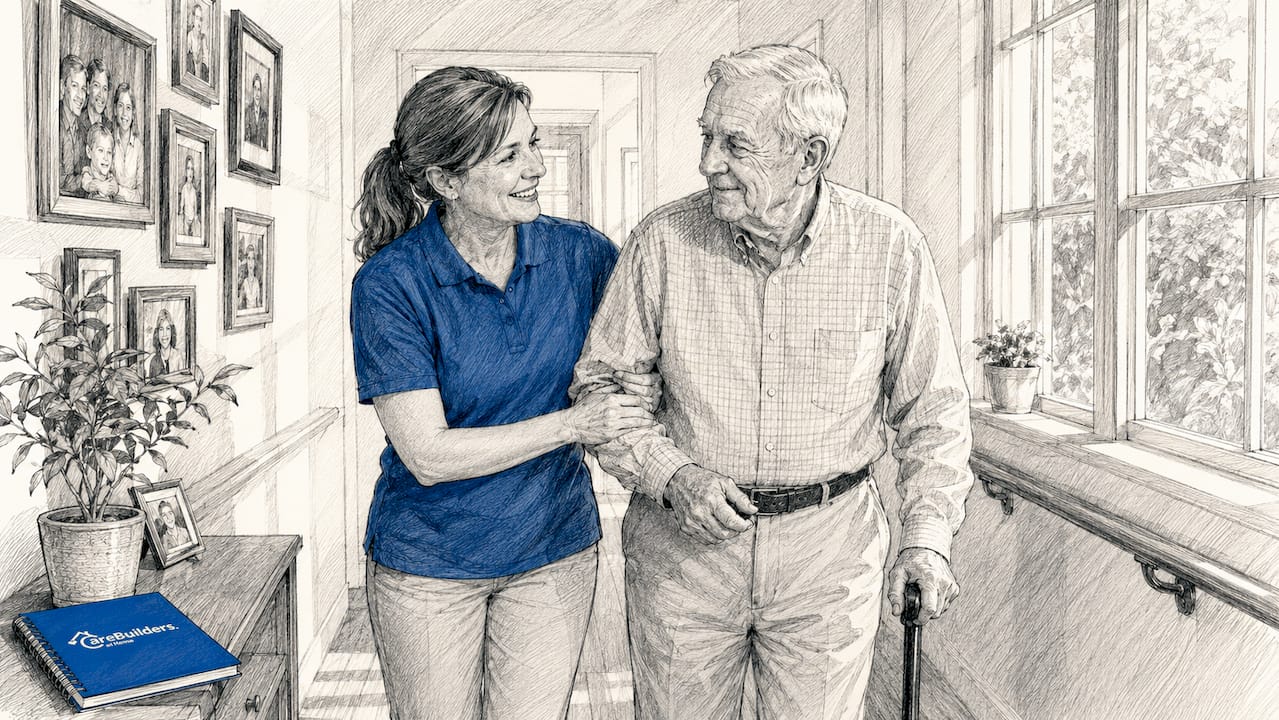
Bathing, dressing, hair care, shaving, and oral hygiene are the core of personal care. Grooming assistance directly affects a senior’s mental health and self-esteem, not just their physical cleanliness. Families often underestimate this connection until they see how much a person’s mood improves after consistent, dignified grooming support.
Mobility and transfer support
Caregivers assist with moving safely from bed to chair, navigating stairs, and walking with stability. Safe transfer techniques protect both the client and the caregiver from injury. This is especially critical for seniors recovering from stroke or managing Parkinson’s disease.
Meal preparation and nutrition
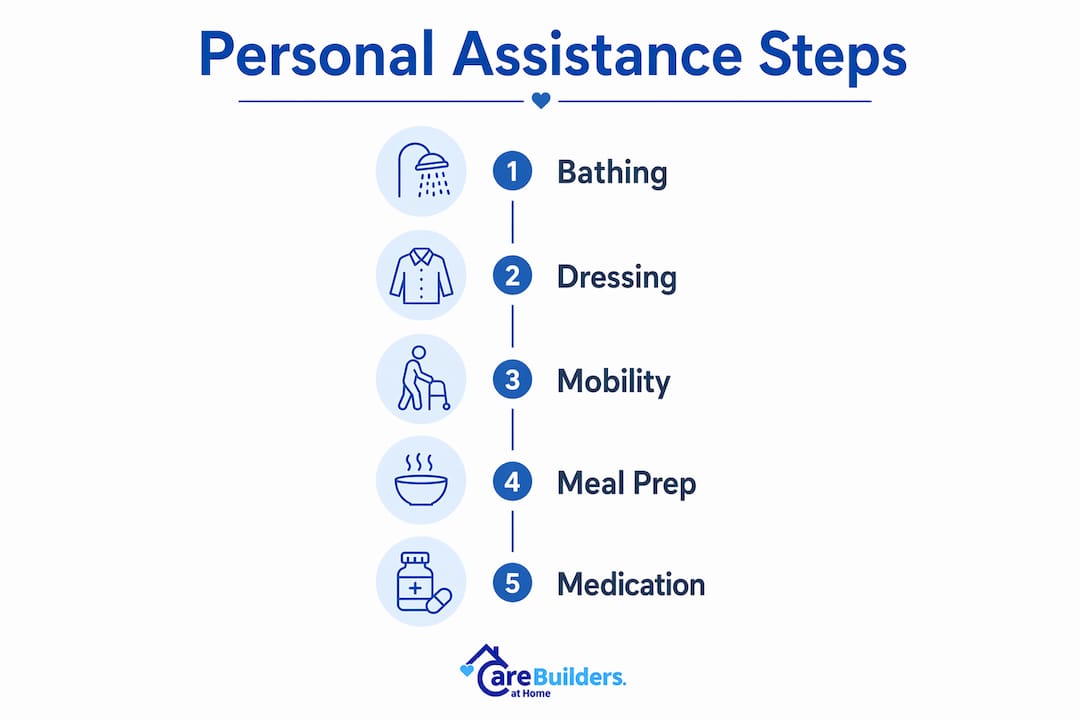
Caregivers prepare meals, assist with eating when needed, and provide hydration reminders throughout the day. Consistent meal support prevents malnutrition, which is a common and underreported risk in older adults living alone.
Medication reminders and health monitoring
Medication reminders are a standard part of personal assistance, though caregivers do not administer medications. They prompt clients to take the right dose at the right time and flag missed doses to family members or care coordinators.
Light housekeeping tied to health and safety
Washing dishes, laundering clothes, and keeping living areas clear of fall hazards fall within personal assistance when they directly affect the client’s safety. This is not general cleaning; it is targeted upkeep that keeps the home environment safe.
Pro Tip: Ask any agency to provide a written task list for each visit. Vague agreements lead to inconsistent care. A specific list holds everyone accountable and makes it easy to adjust as needs change.
How do personal assistance services help seniors maintain independence and safety?
Personal assistance supports autonomy by helping with essential daily tasks while allowing individuals to remain in their preferred living environment. The goal is not to take over a person’s life. It is to fill the specific gaps that put safety or dignity at risk.
Falls are the leading cause of injury in adults over 65. Professional supervision during transfers and the use of adaptive equipment reduce this risk significantly. A caregiver trained in proper body mechanics can prevent the kind of fall that leads to a hip fracture and a hospital stay.
Meal preparation and medication reminders address two of the most common causes of preventable health decline in older adults. Seniors living alone frequently skip meals or miss medications, not out of neglect, but because fatigue and cognitive changes make these tasks harder than they appear. A caregiver who shows up consistently closes that gap before it becomes a medical emergency.
“Recognizing needs early supports better care planning and safety. Families should be honest about the degree of assistance needed — some seniors may only require light help, while others benefit from consistent personal care support.” — Harvard Health Publishing
Consumer Directed Services give individuals control over who provides their care, often allowing them to hire a trusted family member or friend. This model produces stronger care relationships and better outcomes because the client feels respected, not managed. CareBuilders at Home of Plano & Allen supports personalized care arrangements that reflect each client’s preferences and values.
What is the difference between personal assistance, companion care, and skilled nursing?
These three service types are often confused, but they serve distinct needs. Choosing the wrong one wastes money and leaves real needs unmet.
| Care type | What it includes | What it does not include |
|---|---|---|
| Personal assistance | Bathing, dressing, toileting, transfers, meal prep, medication reminders | Clinical procedures, medical decisions |
| Companion care | Conversation, errands, light housekeeping, social activities | Hands-on physical help with ADLs |
| Skilled nursing | Wound care, IV management, medication administration, clinical assessment | Ongoing daily personal hygiene tasks |
Personal assistance involves hands-on help with basic physical tasks, while companion care focuses on social support and homemaker services without physical contact. A companion caregiver might drive a client to a doctor’s appointment and sit with them during the visit. A personal care aide helps that same client bathe and dress before they leave the house.
Skilled nursing sits at the clinical end of the spectrum. A registered nurse or licensed practical nurse manages wound care, administers medications through a feeding tube, or conducts post-surgical assessments. These are medical tasks that require a license. Personal care aides are not licensed clinicians, and they are not expected to perform clinical work.
Many families find that two or more care types work together. A client might receive personal assistance in the morning, companion care in the afternoon, and a weekly skilled nursing visit to monitor a chronic condition. CareBuilders at Home of Plano & Allen coordinates these layers so families do not have to manage multiple agencies on their own.
How can families effectively plan and utilize personal assistance services?
Effective care planning starts with an honest assessment of what your loved one can and cannot do safely. The distinction between ADLs and IADLs (instrumental activities of daily living) matters here. ADLs are basic physical tasks like bathing and dressing. IADLs include managing medications, preparing meals, and handling finances. A senior may manage their ADLs independently but struggle with IADLs, which is a clear signal that personal assistance is needed.
Follow these steps to build a plan that works:
- List every task the person struggles with. Be specific. “Needs help in the morning” is not useful. “Cannot safely step into the shower without support” is.
- Separate ADL needs from IADL needs. This determines whether you need personal care, companion care, or both.
- Set a structured visit schedule. Care routines with task rotation prevent caregivers from becoming passive companions. Each visit should have a clear list of goals.
- Request consistent caregiver assignment. Rotating caregivers disrupts trust, especially for clients with dementia or anxiety. Consistency improves comfort and the quality of grooming and hygiene assistance.
- Review and adjust the plan monthly. Needs change. A plan built in january may be inadequate by april. Schedule a monthly check-in with the care coordinator to update the task list.
Pro Tip: If your loved one qualifies for Consumer Directed Services through Medicaid, you may be able to hire a family member as a paid caregiver. This keeps care familiar and trusted while compensating the person doing the work.
24/7 medical alert monitoring adds a safety layer between scheduled visits. Technology does not replace a caregiver, but it catches emergencies that happen when no one is present. CareBuilders at Home of Plano & Allen integrates monitoring tools with personal care plans to give families confidence around the clock.
Key Takeaways
Personal assistance services are the most direct tool families have to protect a senior’s safety and dignity at home, and their value depends entirely on how specifically they are planned and delivered.
| Point | Details |
|---|---|
| Core services defined | Personal assistance covers bathing, dressing, toileting, transfers, meal prep, and medication reminders. |
| Falls are the top risk | Professional transfer support and adaptive equipment reduce the leading cause of injury in adults over 65. |
| Three care types serve different needs | Personal assistance, companion care, and skilled nursing each fill a distinct role and often work together. |
| Structured routines drive results | Task-specific visit schedules prevent caregivers from becoming passive and keep care consistent. |
| Consumer Directed Services add control | Individuals can select their own caregivers, including trusted family members, for better care relationships. |
What I have learned from watching families navigate personal care
Families almost always wait too long. By the time they call for help, a fall has already happened or a hospitalization has already occurred. The signs that personal assistance is needed are usually visible months earlier: a parent who stops bathing regularly, a spouse who skips meals, a veteran who can no longer manage a button or a zipper. These are not small things. They are signals.
The second pattern I see consistently is that families confuse personal assistance with giving up. They worry that bringing in a caregiver means admitting their loved one has lost independence. The opposite is true. A well-matched caregiver doing the right tasks at the right times actually extends independence. The senior stays home longer, stays safer, and retains control over the parts of their life that matter most to them.
The hardest conversations are the ones families avoid. A parent who insists they are fine when they are not. A sibling who disagrees about the level of care needed. These conversations feel uncomfortable, but recognizing needs early is the single most effective thing a family can do. Get honest. Get specific. Then get the right help in place before the situation forces your hand.
— cbahplano
Personal care services from CareBuilders at Home of Plano & Allen
CareBuilders at Home of Plano & Allen provides personal care services for seniors and veterans across Plano, Allen, Richardson, Wylie, and surrounding Collin County communities. Care plans are built around each client’s specific ADL and IADL needs, with consistent caregiver assignment and flexible scheduling. As a VA-approved provider, CareBuilders at Home of Plano & Allen also helps veterans access benefits that cover personal assistance costs. Families who want a trusted partner in daily care, not just a staffing agency, will find a team here that treats every client with the dignity and respect they deserve. Contact CareBuilders at Home of Plano & Allen to schedule a free care consultation.
FAQ
What does personal assistance services include?
Personal assistance services include hands-on help with bathing, dressing, grooming, toileting, mobility and transfers, meal preparation, medication reminders, and light housekeeping related to health and safety. These services are designed to support activities of daily living for seniors, veterans, and individuals with disabilities.
How is personal assistance different from companion care?
Personal assistance involves physical contact and hands-on help with ADLs, while companion care focuses on social support, conversation, errands, and light homemaking without physical assistance. Many clients benefit from both services working together.
When does a senior need personal assistance services?
A senior needs personal assistance when they can no longer safely complete bathing, dressing, or mobility tasks on their own, or when they are skipping meals and missing medications regularly. Early intervention prevents falls, malnutrition, and hospital readmissions.
Can a family member be hired as a personal care aide?
Consumer Directed Services, available through some Medicaid programs, allow individuals to select and hire their own caregivers, including trusted family members or friends. This model produces stronger care relationships and more consistent outcomes.
Does CareBuilders at Home of Plano & Allen offer personal assistance for veterans?
CareBuilders at Home of Plano & Allen is a VA-approved provider and offers veteran-focused care that includes personal assistance services. Veterans may be able to use their VA benefits to cover the cost of in-home personal care.
Recommended
- Companion Services – CareBuilders at Home | Senior and Veteran Care in Plano, Allen & Richardson TX
- Specialized Services – CareBuilders at Home | Senior and Veteran Care in Plano, Allen & Richardson TX
- Virtual Caregiver – CareBuilders at Home | Senior and Veteran Care in Plano, Allen & Richardson TX
- CareBuilders at Home – Exceptional Senior and Veteran Care in Plano, Allen and Richardson
One Response