


How Memory Care at Home Works: A Family Guide

TL;DR:
- Memory care at home provides specialized support for individuals with dementia in their familiar environment, focusing on routines, safety, and personalized assistance. Families should carefully vet caregivers based on dementia-specific knowledge, observe interactions, and ensure safety adaptations are in place; funding options like the 2026 Medicare GUIDE program offer financial relief. Regularly updating the care plan and involving the person with dementia in decisions improve care quality and reduce crises.
Memory care at home is the provision of specialized support services for individuals living with dementia or Alzheimer’s disease, delivered within their own familiar living environment. Unlike a facility setting, in-home memory care centers on personalized routines, cognitive support, and safety adaptations that fit around your loved one’s daily life. Families who understand how memory care at home works are better positioned to make confident decisions, reduce caregiver stress, and protect their loved one’s dignity and independence. This guide covers the services involved, how to find qualified caregivers, home safety adaptations, and how to fund care in 2026.
How memory care at home works: services and daily support
In-home memory care, the recognized industry term for this approach, delivers dementia-specific assistance directly in the person’s home rather than in a residential facility. The core principle is that familiar surroundings reduce confusion and anxiety for people with Alzheimer’s or other forms of dementia. Predictable routines benefit dementia patients’ stability and mood in measurable ways. That stability translates to fewer behavioral episodes and a calmer daily experience for everyone involved.
Effective in-home memory care covers a wide range of daily needs:
- Personal care: Assistance with bathing, dressing, grooming, and eating, delivered with patience and respect for the person’s pace.
- Cognitive support: Memory cueing, gentle orientation to time and place, and mood management techniques that reduce agitation.
- Behavioral strategies: De-escalation approaches for sundowning, confusion, and repetitive questioning, grounded in calm, consistent responses.
- Medication reminders: Structured prompts to ensure medications are taken correctly and on schedule.
- Nighttime supervision: Monitoring for nighttime wandering, restlessness, or disorientation, which are common in mid-to-late stage dementia.
- Safety oversight: Continuous attention to fall risks, appliance use, and exit-seeking behavior.
The best dementia home care providers address specific risk areas like wandering prevention, kitchen safety, and nighttime supervision rather than offering only general companionship. That specificity is what separates true memory care from standard senior home care.
Pro Tip: Ask any prospective caregiver to walk you through exactly what they do when a person with dementia becomes agitated at 2:00 AM. A vague answer signals a lack of dementia-specific training.
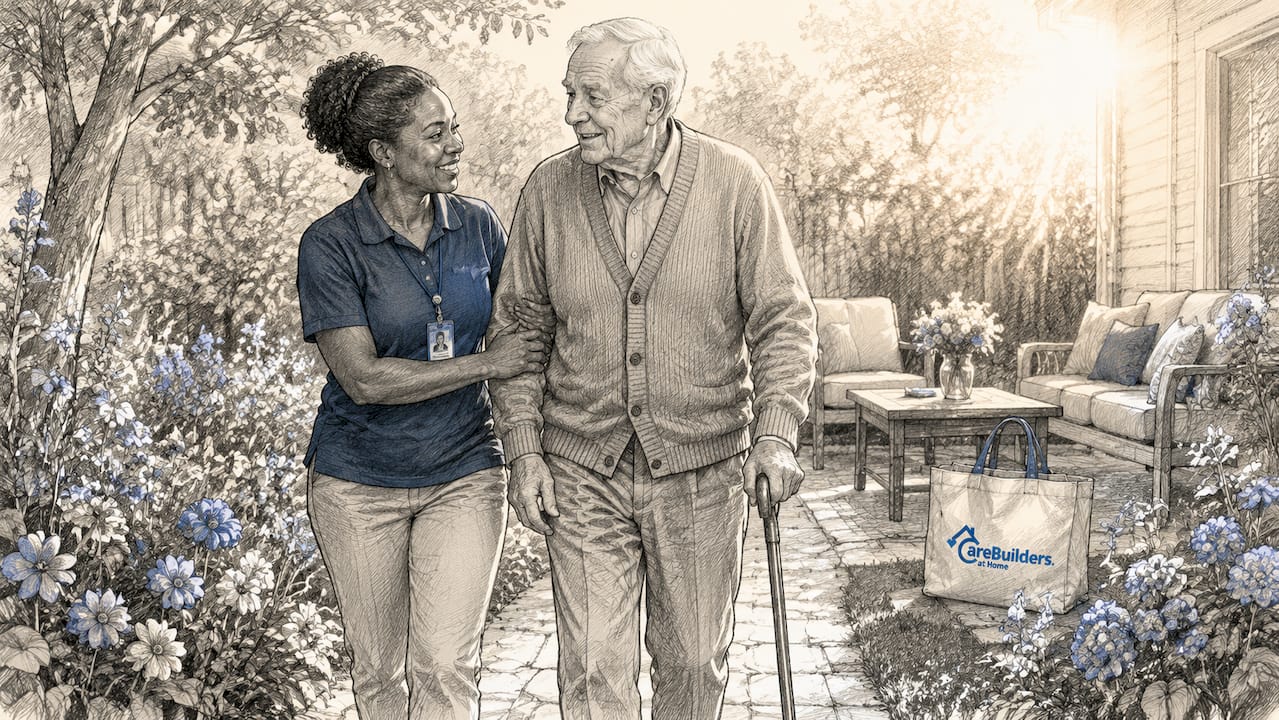
What should families look for when hiring a memory care caregiver?
Selecting the right caregiver is the single most consequential decision you will make in this process. The first 10 minutes of a caregiver’s interaction with your loved one reveal more than any resume. Observing calm tone and respectful body language during the initial meeting is the most critical vetting step families can take.
Follow these steps to vet candidates thoroughly:
- Interview at least three candidates with your loved one present. Watch how each candidate speaks directly to the senior, not just to you.
- Assess dementia-specific knowledge. Ask candidates to describe their approach to wandering, sundowning, and medication refusal. Generic answers are a red flag.
- Run a background check. Background checks for home health aides typically cost $30–$75 and should cover criminal history, sex offender registry, and employment verification. This step is non-negotiable.
- Verify relevant training. Confirm dementia care training, CPR certification, and experience with medication management.
- Start with a trial period. A two-week trial with structured feedback from your loved one and other family members gives you real data on fit and quality.
- Make unannounced visits. Trial periods and unannounced visits provide genuine insight into daily caregiving quality that scheduled check-ins cannot replicate.
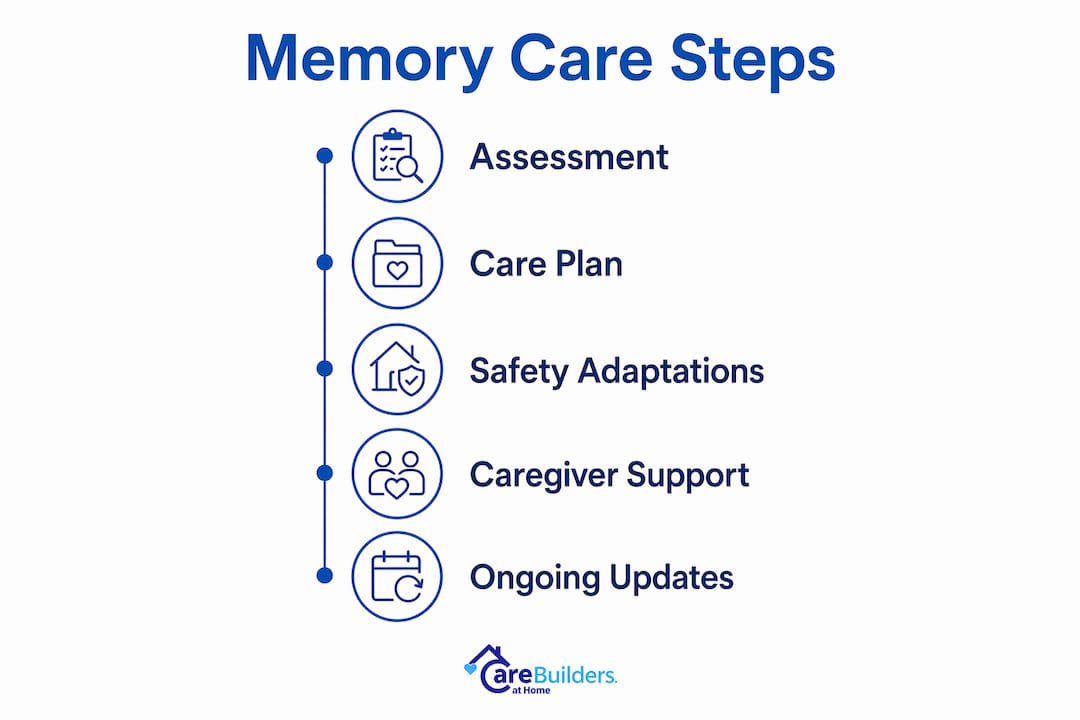
- Set a written care plan. Document daily routines, behavioral triggers, emergency contacts, and communication expectations before the caregiver’s first full shift.
Caregivers’ emotional skills and demeanor often matter more than formal certificates in delivering effective dementia care at home. A warm, patient presence with solid dementia knowledge outperforms a credentialed caregiver who lacks empathy.
Pro Tip: Use the in-home care arrangement guide from CareBuilders at Home of Plano & Allen as a checklist when preparing for caregiver interviews. It covers questions most families forget to ask.
What home safety adaptations does memory care require?
A safe home environment is the foundation of effective in-home dementia support. Home safety adaptations include securing hazards, using technology aids, and establishing emergency protocols to prevent memory-related accidents. These changes do not have to be expensive or disruptive. Most can be completed over a weekend with basic tools and a clear priority list.
Key safety measures to put in place:
- Secure hazardous items: Lock away firearms, sharp objects, cleaning supplies, and medications. People with dementia lose the ability to assess danger accurately.
- Kitchen safety: Use stove knob covers, automatic shut-off devices, and consider disabling the stove entirely if unsupervised cooking poses a risk.
- Door alarms: Install door and window alarms to alert caregivers immediately when a person attempts to leave unsupervised. Wandering is one of the leading causes of injury in dementia.
- Fall prevention: Add grab bars in bathrooms, remove loose rugs, improve lighting in hallways and stairwells, and keep pathways clear of clutter.
- Technology aids: Medical alert monitoring systems and wearable devices provide an additional layer of protection, especially during nighttime hours or caregiver transitions.
- Emergency protocols: Post a single-page document near the front door listing emergency contacts, the person’s diagnosis, current medications, and behavioral triggers. First responders rely on this information.
The goal is not to turn the home into a clinical space. The goal is to remove specific, predictable risks while preserving as much of the person’s normal environment as possible.
How can families pay for memory care at home in 2026?
Cost is one of the most common barriers families face when arranging in-home dementia support. The good news is that 2026 brings a meaningful new funding option through Medicare. The Medicare GUIDE program offers a respite care benefit of $2,563 annually for caregivers of people with dementia. That benefit is specifically designed to give family caregivers scheduled breaks without sacrificing care quality.
Respite care can be delivered in-home, at adult day centers, or in short-term facility stays, giving families flexibility in how they use the benefit. Caregiver burnout is a real and serious risk. Using respite funding proactively, rather than waiting for a crisis, keeps the primary caregiver healthy and the care arrangement sustainable.
Beyond Medicare, families should explore these funding sources:
| Funding Source | What It Covers |
|---|---|
| Medicare GUIDE (2026) | Up to $2,563/year in respite care for dementia caregivers |
| VA benefits | In-home care and respite for eligible veterans with dementia |
| Medicaid waiver programs | State-specific in-home care funding for qualifying low-income seniors |
| Long-term care insurance | Varies by policy; often covers in-home personal care and supervision |
| Local Area Agency on Aging | Connects families to subsidized or free community-based support services |
Pro Tip: Contact your local Area Agency on Aging before assuming you must pay out of pocket. Many families qualify for subsidized services they never knew existed.
Care plans for memory care must be dynamic. Adjusting to gradual or sudden changes in functional ability with clear documentation protects both the person receiving care and the family managing it. Review the care plan at least monthly and after any significant health event.
Key Takeaways
Effective memory care at home combines dementia-specific services, a carefully vetted caregiver, targeted home safety adaptations, and proactive use of funding sources like the 2026 Medicare GUIDE program.
| Point | Details |
|---|---|
| Routines reduce distress | Predictable daily sequences stabilize mood and reduce behavioral episodes in dementia. |
| Vetting saves families from poor hires | Background checks ($30–$75) and observed interactions reveal caregiver suitability before commitment. |
| Safety adaptations are non-negotiable | Securing hazards, installing door alarms, and using medical alert systems prevent the most common dementia-related accidents. |
| Medicare GUIDE funds respite in 2026 | Eligible caregivers can access $2,563 annually to cover scheduled breaks from caregiving duties. |
| Care plans must evolve | Review and update the written care plan monthly and after any change in the person’s condition. |
What I’ve learned about dementia care that most guides won’t tell you
The families I’ve seen struggle most are not the ones dealing with the hardest symptoms. They are the ones who hired a caregiver based on credentials alone and skipped the part where they watched that person actually talk to their loved one. A calm voice, unhurried movements, and genuine respect for the person’s dignity matter more than any certificate on the wall.
The other thing most guides understate is this: the person with dementia still has preferences, still has personality, and still responds to being treated as a full human being. Involving them in small decisions, like what to wear or what music to play, preserves a sense of control that medication cannot replicate. Caregivers who understand this produce noticeably better outcomes.
Families also tend to wait too long to adjust the care plan. Dementia is progressive. What worked three months ago may not work today. Build a habit of monthly reviews and treat the care plan as a living document, not a one-time task. The families who do this consistently report less crisis, less guilt, and more confidence in the care they are providing.
— cbahplano
Memory care support in Plano, Allen, and Richardson, TX
CareBuilders at Home of Plano & Allen provides personalized memory care services for seniors living with dementia and Alzheimer’s throughout Collin County, including Plano, Allen, Richardson, and Wylie. Every care plan is built around the individual’s routines, behavioral patterns, and safety needs. Caregivers receive dementia-specific training and are matched to clients based on personality and care requirements, not just availability. Families also receive education and support to help them navigate each stage of the disease with confidence. As a VA-approved provider, CareBuilders at Home of Plano & Allen also helps eligible veterans access benefits that offset care costs. Reach out to learn how a tailored care plan can support your family.
FAQ
What does memory care at home include?
Memory care at home includes personal care assistance, cognitive support, medication reminders, wandering supervision, and behavioral management, all delivered in the person’s own home. Services are tailored to the specific stage and symptoms of the individual’s dementia.
How is in-home memory care different from a memory care facility?
In-home memory care delivers support within the person’s familiar environment, which reduces confusion and preserves routine. A memory care facility provides 24-hour supervised residential care, which is better suited for individuals who need constant oversight beyond what one caregiver can provide.
How much does in-home memory care cost, and is there financial help?
Costs vary based on hours of care and caregiver qualifications. The 2026 Medicare GUIDE program offers up to $2,563 per year in respite care benefits for eligible dementia caregivers, and VA benefits or Medicaid waivers may cover additional costs.
What qualifications should a memory care caregiver have?
A qualified memory care caregiver should have dementia-specific training, CPR certification, experience with behavioral management, and a clear, calm demeanor. A background check covering criminal history and the sex offender registry is required before any caregiver begins work.
How often should a memory care plan be updated?
A memory care plan should be reviewed at least once a month and immediately after any significant change in the person’s health or behavior. Dementia is progressive, and care plans that are not updated regularly fail to meet the person’s current needs.
Recommended
- Guide – CareBuilders at Home | Senior and Veteran Care in Plano, Allen & Richardson TX
- sensi.ai – CareBuilders at Home | Senior and Veteran Care in Plano, Allen & Richardson TX
- Personal Care – CareBuilders at Home | Senior and Veteran Care in Plano, Allen & Richardson TX
- Brain Health Care Fitness – CareBuilders at Home | Senior and Veteran Care in Plano, Allen & Richardson TX
One Response