


Alzheimer’s In-Home Care Types: A Family Guide
What are the main Alzheimer’s in-home care types?
Choosing the right care for a loved one with Alzheimer’s starts with understanding what each type of support actually provides. There are four primary Alzheimer’s in-home care types, and they differ significantly in scope, skill level, and cost.
- Companion care: Non-medical support focused on conversation, supervision, light housekeeping, and transportation. Companions keep patients engaged and safe without providing hands-on personal assistance.
- Personal care (home care): Hands-on help with bathing, dressing, toileting, grooming, and mobility. Personal care aides are not medical professionals, but they handle the daily tasks that become difficult as Alzheimer’s progresses.
- Skilled nursing and home health care: Medically focused services ordered by a physician, including wound care, medication management, physical therapy, and monitoring of unstable health conditions. These are typically short-term and tied to a specific medical need.
- Specialized dementia care: A category of personal or companion care delivered by caregivers with specific training in dementia behavior, communication techniques, and safety supervision. This is the most tailored option for Alzheimer’s patients.
The right match depends on where your loved one is in the disease. Early-stage patients often do well with companion care and light personal assistance. As needs grow, personal care and eventually specialized dementia support become necessary. Skilled nursing steps in when a medical condition requires clinical attention at home.
Pro Tip: Don’t assume one type replaces another. Many families layer companion care with personal care services as Alzheimer’s progresses, adjusting the schedule rather than switching providers entirely.
How each type of in-home care service works for Alzheimer’s patients
Understanding what caregivers actually do during a visit helps you set realistic expectations and ask the right questions when interviewing providers.

Companion care
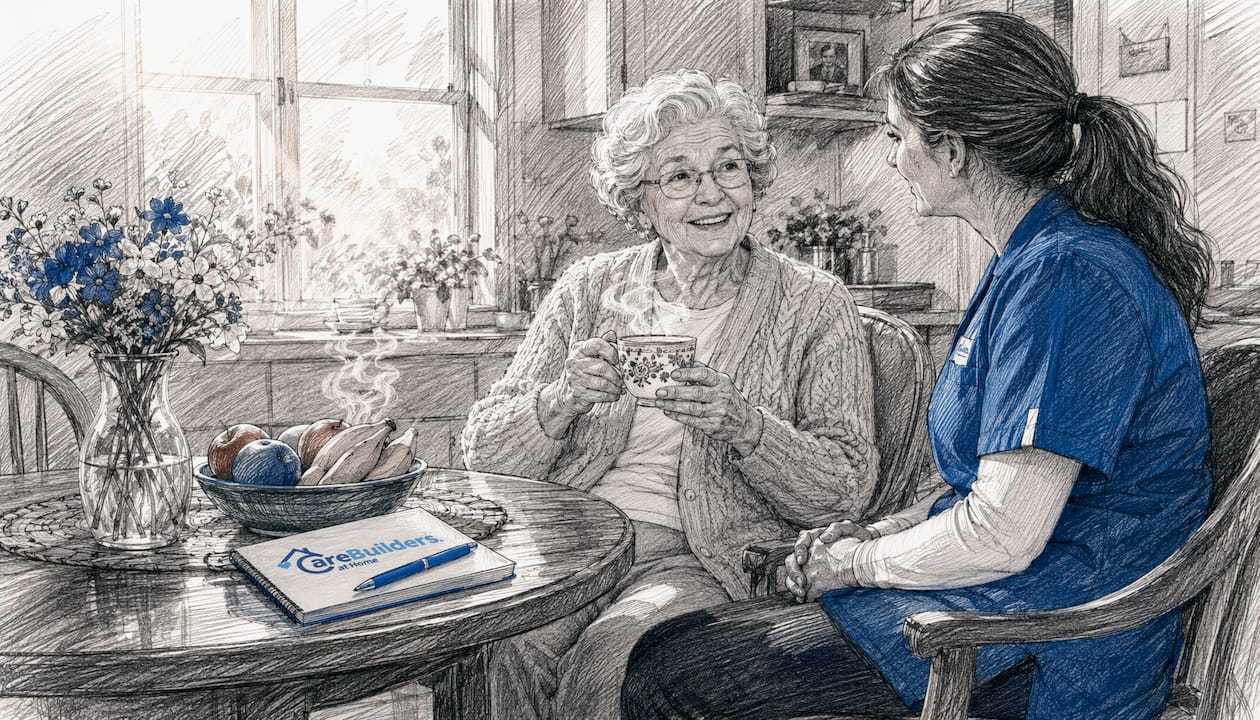
Companion caregivers provide supervision, social engagement, and basic household help. A typical visit might include preparing a light meal, accompanying your loved one on a walk, playing a familiar card game, or simply sitting with them during an anxious afternoon. They can also handle errands and transportation to appointments. Companion care is usually the entry point for families in the early stages of Alzheimer’s care planning.
Personal care services
Personal care aides assist with what the National Institute on Aging describes as activities of daily living: bathing, dressing, grooming, toileting, and mobility support. They may also help with light housekeeping and meal preparation. These aides are not medical professionals, and that distinction matters. If your loved one needs wound care or IV therapy, a personal care aide cannot provide it.
Schedule options for personal care include:
- Part-time visits: A few hours per day, several days a week, suited to early or mid-stage needs
- Full-time daytime care: Eight or more hours daily, covering the bulk of waking supervision
- Live-in or overnight care: A caregiver stays in the home, providing support through the night and during sundowning episodes
Skilled nursing and home health care
Home health care involves licensed medical professionals and requires a physician’s order. Services can include wound care for pressure sores, injections, intravenous therapy, physical or occupational therapy, and monitoring of serious health conditions. This type of care is prescribed and temporary, focused on recovery or stabilization rather than ongoing daily support. Home health care and personal home care are two distinct services, and many families need both simultaneously.
Specialized dementia care
Specialized dementia caregivers receive training beyond standard personal care certification. They understand how to redirect agitated behavior, communicate with someone who has lost language, and structure a day to minimize confusion. This type of care is particularly valuable during mid-to-late stages when behavioral symptoms like wandering, aggression, or sundowning become the primary challenge. Providers offering dementia-trained caregivers can make a measurable difference in how calm and safe your loved one feels at home.
Why Alzheimer’s patients benefit from staying at home with care support
Staying in a familiar environment is one of the most effective non-medical ways to reduce behavioral symptoms in Alzheimer’s. The sights, sounds, and routines of home provide a kind of anchor that a facility simply cannot replicate. Research supports this: a large majority of early-stage dementia patients receive care at home, and familiar surroundings are directly linked to reduced agitation and fewer sundowning episodes.
For family caregivers, the benefits are just as real. Bathing and dressing a person with Alzheimer’s is physically demanding and emotionally exhausting. When a trained aide takes over those tasks, you recover the energy to be a daughter, son, or spouse again rather than a full-time caregiver. The NIH notes that caregiver relief from demanding daily tasks lowers the risk of burnout and delays premature nursing home placement.
Consistent routines also reduce sundowning, the late-afternoon and evening confusion that many Alzheimer’s patients experience. A caregiver who arrives at the same time each day, follows the same sequence of activities, and uses the same calm communication style gives your loved one a predictable world to navigate. That predictability is therapeutic in a way that no medication fully replaces.
Safety is another clear advantage. A trained caregiver can identify fall hazards, monitor for wandering, and respond quickly to a sudden change in condition. For families managing home safety modifications, having a professional present adds a layer of protection that passive modifications alone cannot provide.
When should you consider in-home care for an Alzheimer’s patient?
Most families wait longer than they should. The right time to bring in professional support is before a crisis, not after one. Watch for these indicators:
- Difficulty with daily tasks: Forgetting to eat, wearing the same clothes repeatedly, or struggling with basic hygiene are early signs that personal care support is needed.
- Safety risks: Wandering outside unsupervised, leaving the stove on, or falling without anyone present are urgent signals. Home safety concerns, including wandering and fall hazards, are among the most common reasons families begin exploring care options.
- Caregiver strain: If you are losing sleep, skipping your own medical appointments, or feeling stretched thin, that is a sign the care load has exceeded what one person can carry alone.
- Increasing mobility needs: When your loved one can no longer transfer from bed to chair safely without assistance, part-time personal care becomes a practical necessity.
- Medical complexity: New diagnoses, recent hospitalizations, or medication regimens that require monitoring point toward home health care in addition to personal support.
- Behavioral escalation: Increased agitation, aggression, or confusion that you cannot manage safely on your own calls for specialized dementia care support.
The transition does not have to be all or nothing. Starting with a few hours of companion care a week lets your loved one adjust to a new face gradually, which tends to go more smoothly than introducing full-time care during a crisis.
How to choose an in-home care provider for an Alzheimer’s patient
The quality of care your loved one receives depends far more on the individual caregiver than on the agency’s brochure. Caregiver consistency is the single most important factor for Alzheimer’s patient well-being at home. A stable caregiver assignment reduces anxiety, supports routine, and minimizes the behavioral disruptions that come with constant change. Families often focus on hourly rate when they should be asking how often the agency rotates staff.
When evaluating providers, ask directly about these factors:
- Dementia-specific training: Does the caregiver hold certification in Alzheimer’s or dementia care? What does the agency’s training program cover beyond basic personal care? A guide on choosing a dementia-trained caregiver can help you frame the right questions.
- Caregiver consistency: Will the same person come each visit, or does the agency rotate staff based on availability? For Alzheimer’s patients, a rotating roster of unfamiliar faces is genuinely disruptive.
- Accreditation and reputation: Look for agencies accredited by recognized bodies and check state licensing. Ask for references from families who have used the service for dementia care specifically.
- Flexibility and personalization: Can the care plan be adjusted as your loved one’s needs change? An agency that offers only fixed packages may not serve you well as Alzheimer’s progresses.
- Communication practices: How does the agency keep you informed? Regular updates, care logs, and a clear point of contact matter when you cannot be present for every visit.
- Availability and coverage: Can the agency provide overnight or live-in care if needed? What happens when the primary caregiver is sick?
For families in Plano, Allen, Richardson, and surrounding Collin County areas, CareBuilders at Home of Plano & Allen pairs dementia-trained caregivers with virtual monitoring technology, including fall detection, to support safety between visits. Their memory care at home approach is built around caregiver consistency and personalized care plans.
What does Alzheimer’s in-home care cost, and how can you fund it?
Cost is one of the most stressful parts of dementia home care planning. The median monthly cost for in-home care in 2024 is approximately $6,292, though that figure varies considerably based on care level, hours, and geography. Companion care and basic personal care sit at the lower end of the range. Around-the-clock care with multiple caregivers covering shifts can exceed the cost of a memory care facility.
Cost snapshot: The median monthly cost for in-home care in 2024 is approximately $6,292, with 24/7 care potentially running higher than residential memory care due to continuous labor costs.
Here are the main funding sources families use:
- Medicare: Covers skilled home health care for up to 28–35 hours per week when a physician certifies the patient as homebound and orders specific skilled services. Medicare does not cover long-term custodial or personal care when that is the only service needed.
- Medicaid: Covers in-home care when a person would otherwise require nursing home placement. Eligibility and covered services vary by state.
- Veterans benefits: VA-approved providers can help eligible veterans access Aid and Attendance benefits, which can offset significant care costs. CareBuilders at Home of Plano & Allen is a VA-approved provider serving veterans in Collin County.
- Long-term care insurance: Policies vary widely, but many cover personal care and companion services. Review your policy’s daily benefit amount and elimination period carefully.
- Private pay: Many families fund care directly, sometimes supplemented by selling assets or drawing on retirement accounts.
- Respite care programs: Short-term funded respite is available through some state programs and nonprofit organizations, giving family caregivers a temporary break without full private-pay costs.
One practical strategy: start with fewer hours of paid care and use that time to rest and recover as a family caregiver. Burning out and then needing emergency placement is far more expensive than building sustainable support early.
What Medicare actually covers and what caregivers need to know
Medicare’s role in Alzheimer’s home care is narrower than most families expect. Medicare covers intermittent skilled nursing or therapy ordered by a physician, up to 28–35 hours per week, for patients certified as homebound. Covered services include wound care, injections, intravenous therapy, and physical or occupational therapy. A home health aide visit is covered only when the patient is already receiving skilled nursing or therapy at the same time.
What Medicare does not cover is equally important to understand. Medicare does not pay for long-term custodial care, personal care, or companion services when those are the only services needed. Bathing, dressing, and supervision are not Medicare benefits unless they accompany a skilled medical service. This gap surprises many families who assumed Medicare would cover the bulk of home care costs.
For Alzheimer’s families, this means Medicare may cover a short course of physical therapy after a fall or a period of skilled nursing after a hospitalization, but the ongoing personal care that most patients need daily falls outside Medicare’s scope. Medicaid, veterans benefits, long-term care insurance, and private pay fill that gap. Understanding this distinction early in your dementia home care planning prevents financial surprises later.
Caregiver support is also a clinical issue, not just a personal one. When family caregivers receive consistent relief, they provide better care and delay the point at which a patient needs residential placement. The role of home medical equipment and professional caregiver support together create a safer, more sustainable home environment for patients at every stage of Alzheimer’s.
Key Takeaways
Matching the right Alzheimer’s in-home care type to the patient’s current stage is the most important decision families make, and it requires understanding both what each service provides and what Medicare will and will not fund.
| Point | Details |
|---|---|
| Four core care types | Companion care, personal care, skilled nursing, and specialized dementia care each serve different needs and stages. |
| Medicare coverage limits | Medicare covers skilled home health up to 28–35 hours per week but does not cover long-term personal or custodial care. |
| Median monthly cost | In-home care costs approximately $6,292 per month in 2024, rising significantly for around-the-clock care. |
| Caregiver consistency matters | Stable caregiver assignment reduces anxiety and sundowning behaviors more than any agency brand or hourly rate. |
| Start before a crisis | Introducing care early, during mild stages, allows gradual adjustment and prevents emergency placement decisions. |
How CareBuilders at Home of Plano & Allen can support your family
Caring for a loved one with Alzheimer’s is one of the most demanding things a family can take on. You deserve support that is as consistent and thoughtful as the care you have already been giving. CareBuilders at Home of Plano & Allen provides dementia-trained caregivers, 24/7 medical alert monitoring, and personalized care plans for seniors and veterans in Plano, Allen, Richardson, Wylie, and surrounding Collin County communities. As a VA-approved provider, we also help eligible veterans access benefits that can make quality care more affordable.
If you are ready to talk through your options, reach out to CareBuilders at Home of Plano & Allen. A conversation costs nothing, and having a plan in place before the next difficult moment makes all the difference.
Recommended
- How Memory Care at Home Works: A Family Guide – CareBuilders at Home | Senior and Veteran Care in Plano, Allen & Richardson TX
- What Late-Stage Alzheimer’s Care Involves: A Family Guide – CareBuilders at Home | Senior and Veteran Care in Plano, Allen & Richardson TX
- Guide – CareBuilders at Home | Senior and Veteran Care in Plano, Allen & Richardson TX
- How to Choose a Dementia-Trained In-Home Caregiver – CareBuilders at Home | Senior and Veteran Care in Plano, Allen & Richardson TX
One Response