


Overnight Caregivers and Senior Safety: A Family Guide
TL;DR:
- Overnight caregivers provide continuous monitoring, personal care, and emergency response to help keep seniors safe at night. They reduce risks of falls, wandering, and undetected health issues, especially for those with dementia or high fall risk. Families should choose the right care model based on needs, home setup, and a detailed observation period to ensure optimal safety.
Overnight caregivers are defined as trained professionals who provide continuous monitoring, personal care, and emergency response for seniors during nighttime hours. The role of overnight caregivers in senior safety is to prevent falls, manage nighttime medical needs, and reduce the risk of emergencies that most often go undetected when a senior is alone. Families dealing with dementia, high fall risk, or post-hospitalization recovery face the greatest nighttime vulnerability. Proactive overnight care prevents hospitalizations by addressing risks before they become crises. CareBuilders at Home of Plano & Allen provides awake and sleep-in overnight care options, combining trained caregivers with technology such as fall detection and virtual monitoring to keep seniors safe through every hour of the night.
What is the role of overnight caregivers in senior safety?
Overnight caregivers fulfill a specific set of caregiver responsibilities at night that go well beyond simple supervision. Their duties include hands-on assistance with toileting, repositioning to prevent pressure sores, medication reminders, and monitoring for signs of agitation, confusion, or breathing changes. Each of these tasks addresses a real risk that peaks between midnight and 5:00 AM, when seniors are most disoriented and least likely to call for help.
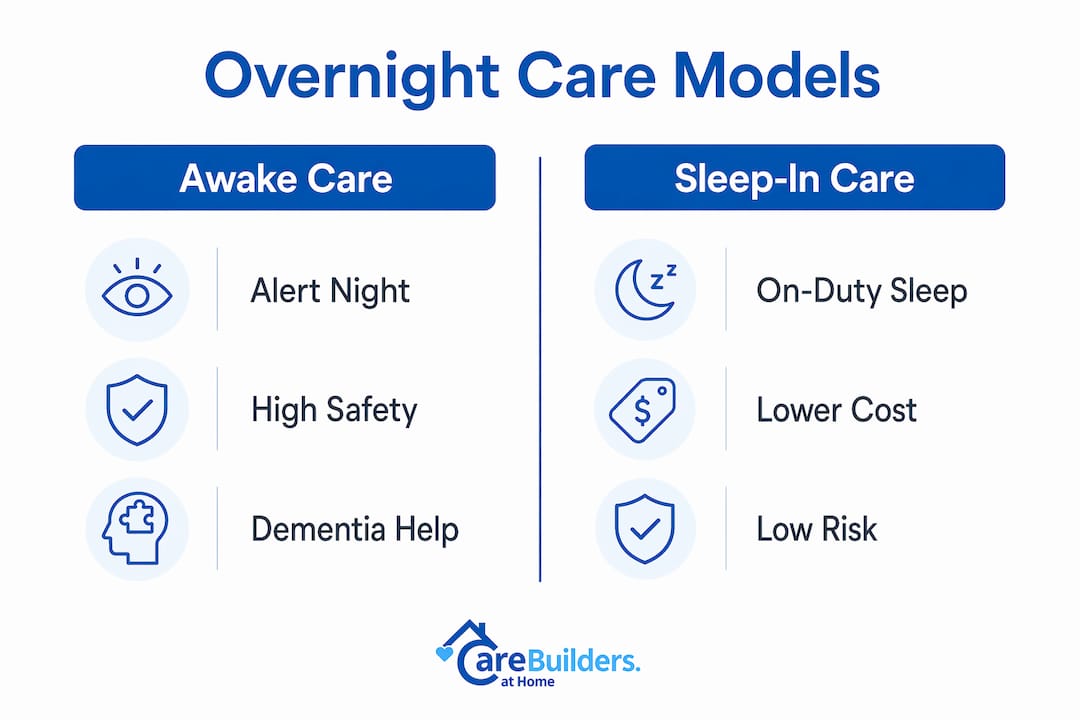
The distinction between an awake caregiver and a sleep-in caregiver shapes what level of protection your loved one actually receives. An awake caregiver stays alert throughout the entire shift, checks on the senior at regular intervals, and responds immediately to any change. A sleep-in caregiver rests on-site and responds when called, which suits seniors who need only occasional assistance rather than continuous monitoring.
Companionship is also a genuine safety tool at night. Seniors with dementia or anxiety often become agitated when they wake and find themselves alone. A caregiver who can speak calmly, redirect confusion, and provide reassurance reduces the chance that a disoriented senior will attempt to get up without help. Companion services at night directly lower the risk of falls caused by unsupervised movement.
Emergency response is the final and most critical responsibility. A trained overnight caregiver knows when to call 911, when to contact the family, and how to stabilize a situation while waiting for help. That chain of response is only possible when someone is physically present and awake.
Pro Tip: Ask any overnight care agency to describe their caregiver’s emergency escalation steps in writing before services begin. A clear protocol protects your loved one and removes confusion during a crisis.
How do overnight care models differ, and how do you choose the right one?
Choosing the wrong overnight care model is one of the most common and costly mistakes families make. The four main models are awake overnight care, sleep-in overnight care, live-in care, and scheduled check-in visits. Each carries different costs, availability requirements, and appropriate use cases.
| Care model | Caregiver status | Best suited for |
|---|---|---|
| Awake overnight care | Alert throughout the shift | Frequent assistance, wandering risk, dementia |
| Sleep-in overnight care | Resting on-site, available when called | Occasional nighttime needs, lower fall risk |
| Live-in care | On-site with designated sleep hours | Continuous daytime and nighttime presence |
| Scheduled check-in visits | Periodic visits, not continuous | Independent seniors with minimal night needs |
Live-in care and overnight care differ significantly. A live-in caregiver has legally required sleep hours and cannot be expected to provide the same level of alertness as a dedicated awake overnight caregiver. Families who assume live-in care covers full nighttime monitoring often discover gaps in protection when a fall or wandering episode occurs at 3:00 AM.
Costs for overnight care vary based on model type, frequency, and medical complexity. A care manager consultation aligns the right model with your budget and your loved one’s actual health requirements. Choosing a model without that assessment often leads to either overpaying for unnecessary coverage or underpaying for care that leaves real risks unaddressed.
The most reliable method for choosing the right model is a structured observation period. A 3–7 night log that records wake-ups, assistance types, and safety incidents gives families and care managers the data they need to make an informed decision. Guessing based on daytime behavior consistently underestimates nighttime needs.
Pro Tip: Keep a simple notebook by your loved one’s bed for one week. Record every wake-up, every trip to the bathroom, and every moment of confusion. That log will tell you more than any assessment form.
Home environment also shapes the right model. Grab bars, nightlights, and door alarms reduce environmental risk and can make sleep-in care viable for seniors who would otherwise require awake coverage. The physical setup of the home is part of the care plan, not an afterthought.
How does overnight care improve safety for seniors with dementia or high fall risk?
Dementia creates a specific and serious set of nighttime risks that standard supervision cannot address. Seniors with dementia experience sundowning, a pattern of increased confusion and agitation in the late afternoon and evening that often continues through the night. Trained overnight caregivers use redirection and calming techniques to manage this agitation before it leads to unsafe behavior.
The most dangerous nighttime behaviors for seniors with dementia include:
- Wandering. A senior who wakes disoriented may walk out a door, down stairs, or into traffic without any awareness of the danger. An awake caregiver intercepts this before it becomes an emergency.
- Unsupervised transfers. Attempting to get out of bed or reach the bathroom without help is the leading cause of nighttime falls. A caregiver who assists with every transfer eliminates this risk.
- Agitation and distress. Untreated nighttime agitation increases cortisol levels, disrupts sleep quality, and accelerates cognitive decline. Calm, consistent caregiver presence reduces this cycle.
- Missed health changes. Nighttime is when small health issues escalate. A caregiver trained to recognize changes in breathing, skin color, or responsiveness can identify a stroke, cardiac event, or infection before it becomes life-threatening.
- Pressure sore development. Seniors who cannot reposition themselves during the night develop pressure sores within hours. Regular repositioning by an overnight caregiver prevents tissue damage that is difficult and painful to reverse.
CareBuilders at Home of Plano & Allen trains its overnight caregivers specifically in dementia care, including de-escalation techniques, safe transfer methods, and recognition of medical warning signs. The specialized services available through CareBuilders at Home of Plano & Allen address the full range of nighttime risks that dementia and high fall risk create. Technology tools such as Sensi.AI monitoring complement caregiver presence by detecting unusual sounds and movement patterns that a caregiver might miss during a brief absence from the room.
What practical steps help families get the most from overnight care?
Families who prepare their home and establish clear expectations before overnight care begins see significantly better outcomes than those who arrange care reactively. The following steps create a foundation for safe, effective overnight caregiving.
- Write a clear emergency escalation plan. Define who calls 911, who contacts the family, and what the caregiver’s authority is in specific situations. Contracts must explicitly define escalation protocols, including how to handle falls, new medications, and backup caregiver arrangements.
- Modify the home environment. Install nightlights in hallways and bathrooms, add grab bars near the toilet and bed, and place door alarms on exits. Home modifications reduce environmental risk and allow caregivers to focus on direct care rather than compensating for hazardous surroundings.
- Document overnight behaviors consistently. A written record of nighttime events helps caregivers, family members, and healthcare providers track changes over time. Patterns that appear in the log often reveal health changes before they become emergencies.
- Establish communication routines. Set a regular check-in time for the caregiver to report to the family, whether by text, a care app, or a brief morning call. Consistent communication prevents surprises and builds trust.
- Plan for coverage gaps. Caregiver turnover and coverage gaps directly affect safety. Ask your care agency how they handle backup coverage on weekends, holidays, and when a caregiver calls in sick. Continuous coverage is not optional for high-risk seniors.
- Review and adjust the care plan regularly. A senior’s needs change. What worked three months ago may not be adequate today. Schedule a formal care plan review every 60–90 days, or immediately after any health event.
Pro Tip: Pair your overnight caregiver with a 24/7 medical alert system so your loved one has a direct line to emergency services even during the brief moments a caregiver steps away.
Key Takeaways
Overnight caregivers are the single most effective tool for preventing nighttime falls, managing dementia-related wandering, and catching health emergencies before they require hospitalization.
| Point | Details |
|---|---|
| Awake vs. sleep-in care | Awake care suits high-risk seniors; sleep-in care works for those needing only occasional nighttime help. |
| 3–7 night observation log | Documenting nighttime events for one week is the most reliable way to choose the right care model. |
| Dementia-specific risks | Trained caregivers use redirection and repositioning to prevent falls, wandering, and pressure sores. |
| Emergency escalation plan | Written protocols defining caregiver authority and backup coverage must be in place before care starts. |
| Home modifications matter | Nightlights, grab bars, and door alarms reduce environmental risk and improve caregiver effectiveness. |
Why I believe families wait too long to arrange overnight care
Families consistently underestimate nighttime risk until something goes wrong. I have seen this pattern repeat: a senior falls at 2:00 AM, spends three days in the hospital, and the family arranges overnight care during discharge planning. That sequence is entirely preventable. Waiting for a crisis to arrange night support leads to hospitalizations that early overnight care would have avoided.
The harder truth is that families often resist overnight care because it feels like an admission that their loved one has declined. That framing is wrong. Overnight care is not a concession to decline. It is a decision to protect dignity and independence by keeping a senior safely at home instead of in a facility.
Rested family caregivers also provide better daytime care. Overnight care supports family wellbeing by giving family members uninterrupted sleep, which directly improves their judgment, patience, and physical health. Caregiver burnout is real, and it affects the quality of care a senior receives every single day.
My recommendation is to arrange a personalized elder care plan before a crisis forces the decision. A professional assessment takes the guesswork out of choosing the right model and gives families a clear, written plan they can trust.
— cbahplano
Overnight care options at CareBuilders at Home of Plano & Allen
CareBuilders at Home of Plano & Allen offers both awake and sleep-in overnight care, with plans built around each senior’s specific health needs, home environment, and family schedule. Seniors with dementia, high fall risk, or complex medical needs receive care from caregivers trained in dementia-specific techniques and emergency response. Technology including virtual monitoring and fall detection works alongside in-person care to provide an additional layer of protection through the night. Families in Plano, Allen, Richardson, Wylie, and surrounding Collin County can explore personal care services or get step-by-step guidance on arranging in-home care for a loved one today.
FAQ
What does an overnight caregiver actually do?
An overnight caregiver monitors the senior for safety changes, assists with toileting and transfers, provides medication reminders, and responds to emergencies. Awake caregivers stay alert all night; sleep-in caregivers rest on-site and respond when called.
How do I know if my loved one needs awake or sleep-in overnight care?
Track nighttime wake-ups, assistance needs, and safety incidents for 3–7 nights. Seniors who need help more than once or twice per night, or who have dementia or a wandering risk, typically require awake overnight care.
Is overnight care different from live-in care?
Yes. Live-in caregivers have designated sleep hours and are not required to stay alert all night. Awake overnight caregivers remain fully alert for the entire shift, making them the appropriate choice for seniors with frequent or unpredictable nighttime needs.
How does overnight care help seniors with dementia?
Trained overnight caregivers use redirection and calming techniques to manage sundowning, prevent wandering, and assist with safe transfers. Their presence reduces falls, agitation, and the risk of undetected health emergencies during the night.
What should a family include in an overnight care contract?
The contract should define emergency escalation steps, caregiver authority in specific situations, medication management procedures, and backup coverage policies. Clear written protocols prevent confusion and protect your loved one when a crisis occurs.
Recommended
- Personal Care – CareBuilders at Home | Senior and Veteran Care in Plano, Allen & Richardson TX
- sensi.ai – CareBuilders at Home | Senior and Veteran Care in Plano, Allen & Richardson TX
- Senior Recovery After Hospitalization: A Family Guide to Safe Discharge
- Mastering Remote Senior Care Check-Ins: Hybrid AI + Human Support