


How In-Home Monitoring Supports Geriatric Patients
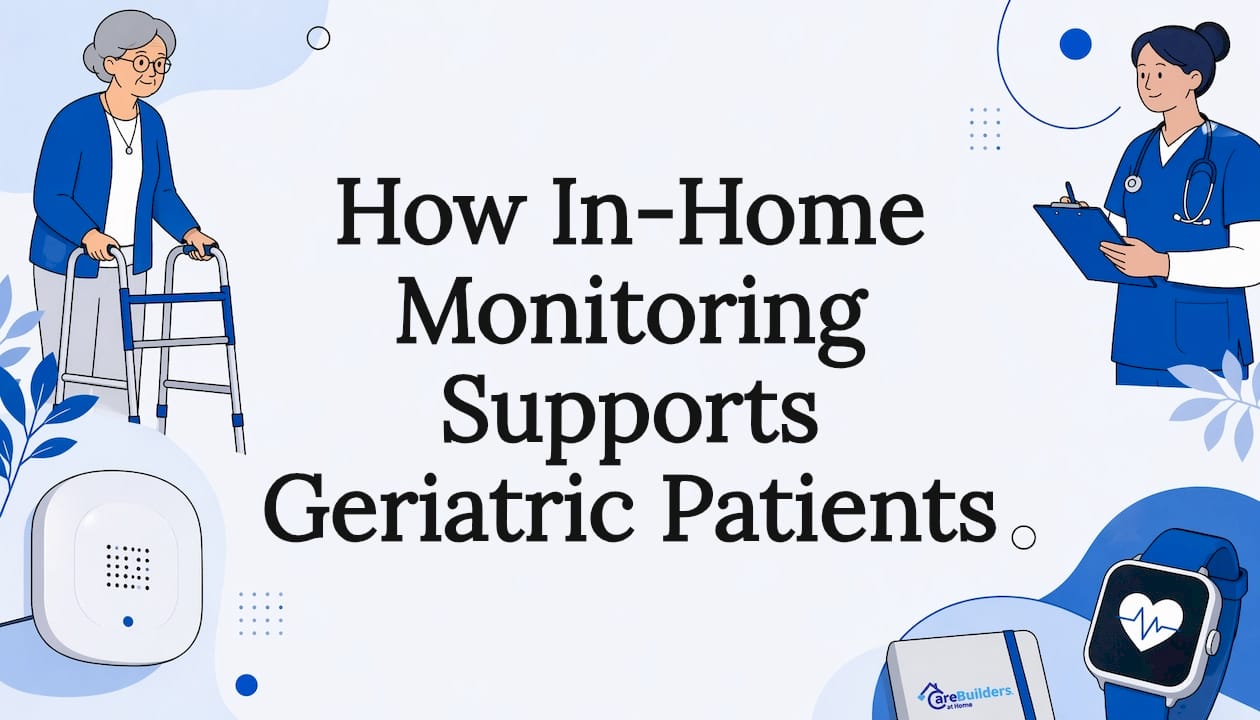
In-home monitoring supports geriatric patients by delivering continuous, objective observation of daily activities, catching subtle health changes before they become emergencies, and helping seniors stay safely in the homes they love. For families caring for a parent with Alzheimer’s or a veteran managing multiple chronic conditions, this technology is not a replacement for human care. It is the layer of awareness that makes everything else work better.
Here is what that support looks like in practice:
- Continuous observation of daily routines provides objective data that clinicians use to make nuanced, data-driven care decisions for seniors with cognitive deficits
- Early detection of functional changes, such as fewer trips to the kitchen or longer time in bed, can signal health decline weeks before a crisis
- Independence preserved because seniors remain at home with safety nets in place rather than moving prematurely to a facility
- Caregiver stress reduced through reliable remote alerts that replace constant worry with timely, relevant updates
- Personalized care plans informed by real monitoring data, not just periodic office visits or caregiver memory
Table of Contents
- How do you personalize monitoring for a senior’s specific needs?
- Does monitoring technology get in the way of real human connection?
- How CareBuilders at Home integrates monitoring with personal care
- How monitoring data guides better care decisions
- What privacy and data security mean for your family
- What types of monitoring technology are commonly used for geriatric care?
- What are the real challenges of in-home monitoring for seniors?
- CareBuilders at Home of Plano & Allen: personalized care backed by real monitoring
- Key Takeaways
How do you personalize monitoring for a senior’s specific needs?
No two seniors have the same daily rhythm, and no two conditions demand the same alerts. A person managing early-stage Alzheimer’s needs different monitoring parameters than someone with hypertension or a fall history. Tailored alert triggers and data points vary meaningfully between these conditions, and a one-size approach misses the point entirely.
Personalizing a continuous home monitoring setup means:
- Adjusting alert thresholds to match the individual’s normal activity patterns, not a generic population average
- Choosing ambient sensors (motion detectors, door contacts, bed presence mats) over wearables when the senior resists wearing devices
- Involving family members in setting notification preferences so alerts reach the right person at the right time
- Reviewing and updating the monitoring plan as the senior’s health evolves, especially after hospitalizations or medication changes
Pro Tip: Schedule a brief monthly review of monitoring settings with the care team. What worked in January may not reflect your loved one’s current routine by spring, and outdated thresholds generate false alarms that erode trust in the system.
Does monitoring technology get in the way of real human connection?
This is one of the most common concerns families raise, and the research is reassuring. Non-invasive monitoring actually preserves caregiver-senior relationships by intervening only when something genuinely warrants attention. Researchers describe this as “management by exception”: the technology stays quiet when things are normal and speaks up when they are not, avoiding the friction that constant surveillance creates.
In practice, monitoring supports human connection in several ways:
- Caregivers arrive for visits already informed by objective data, making conversations more focused and productive
- Families living at a distance feel confident between visits rather than anxious, which changes the emotional tone of every phone call
- Seniors often feel more comfortable knowing help is available without someone watching their every move
- Technology handles the background vigilance so caregivers can be fully present during the time they spend together
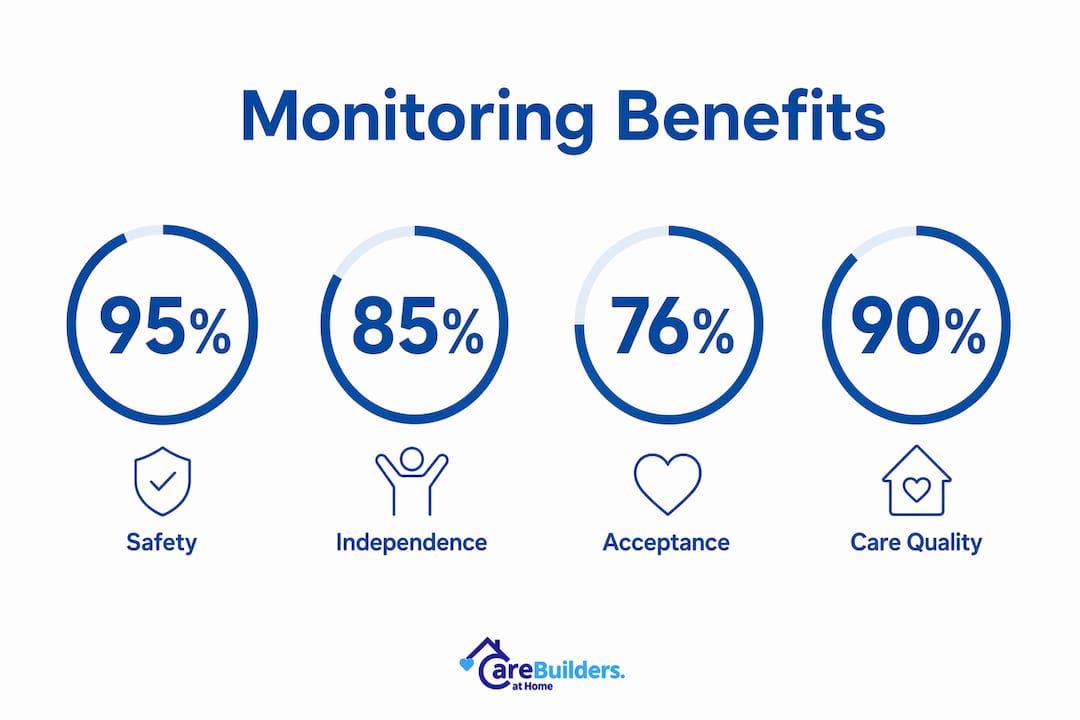
A 12-month study found that 76% of home-dwelling seniors, family caregivers, and nurses favored ambient sensors over wearables, citing accident prevention and quality of life improvements as the primary reasons.
How CareBuilders at Home integrates monitoring with personal care
CareBuilders at Home of Plano & Allen combines privacy-first monitoring technology with trained, compassionate caregivers to create a care experience that adapts as your loved one’s needs change. As a VA-approved provider serving Plano, Allen, Richardson, Wylie, and surrounding Collin County communities, the team supports both seniors and veterans with specialized dementia and veteran care services built around real monitoring data.
Key elements of this integrated approach:
- Ambient and AI-powered sensors that monitor sound patterns, movement, and daily routines without cameras or wearables
- 24/7 medical alert monitoring with alerts routed to caregivers and family members based on customized thresholds
- Care plan adjustments guided by monitoring insights, not just scheduled reassessments
- Coordinated caregiver response when alerts indicate a potential concern, with trained staff following up in person or virtually
| Feature | Benefit |
|---|---|
| AI-powered ambient sensors | Continuous observation without intrusiveness |
| VA-approved provider status | Veterans access care through existing benefits |
| 24/7 alert monitoring | Families receive timely, relevant notifications |
| Personalized care plans | Support adapts as health needs evolve |
| Dementia-specialized caregivers | Consistent, trained support for cognitive decline |
How monitoring data guides better care decisions
The most meaningful benefit of home health monitoring is what happens with the data. A study analyzing 147 telemonitoring reports found that clinicians used a four-step process: extract relevant data, compare it with other information sources, assess risk, then maintain or modify the care plan. Crucially, the introduction of monitoring led to a stabilization of monthly services, particularly in cases where service use had been climbing before monitoring began.
Subtle behavioral shifts are often the earliest warning signs available:
- Fewer refrigerator visits or skipped meals may indicate depression or swallowing difficulty
- Longer time in bed can precede respiratory illness or a urinary tract infection
- Reduced movement through the home may signal pain, fear of falling, or cognitive changes
AI filtering and nurse-led triage of these signals create an effective ecosystem where technology flags what matters and human caregivers decide what to do about it. Remote monitoring systems that integrate clinical oversight have shown support for reducing hospitalizations for seniors managing chronic conditions.
What privacy and data security mean for your family
Privacy is a legitimate concern, and it deserves a direct answer. Modern in-home monitoring systems designed for seniors prioritize passive, non-camera-based sensing. Motion detectors, door contact sensors, and bed presence mats collect behavioral patterns without recording video or audio of private moments. This approach respects dignity while still generating the data caregivers need.
Data security considerations worth discussing with any provider include how data is stored, who has access, and whether the system complies with applicable health privacy standards. Families should ask whether notifications are encrypted, whether data is retained after care ends, and which staff members can view monitoring reports. Transparency on these points is a reasonable expectation, not an unreasonable demand.
What types of monitoring technology are commonly used for geriatric care?
Several categories of technology support elderly care at home, each suited to different needs and comfort levels:
- Ambient motion sensors: Detect movement through rooms without requiring any action from the senior
- Door and contact sensors: Track entries, exits, and access to refrigerators or medication cabinets
- Bed and chair pressure mats: Monitor sleep duration, nighttime restlessness, and time spent seated
- Wearable medical alert devices: Provide fall detection and GPS location for seniors who are comfortable wearing them; a mobile medical alert smartwatch is one option that pairs monitoring with emergency response
- AI-powered audio monitoring: Analyzes sound patterns for signs of distress, falls, or unusual activity without recording conversations
- Medication management systems: Send reminders and confirm whether doses have been taken
What are the real challenges of in-home monitoring for seniors?
Honest families deserve an honest answer here. Monitoring technology is not perfect, and knowing the limitations helps you plan around them.
Acceptance is the most common hurdle. Some seniors feel monitored rather than supported, particularly those with strong privacy values or early-stage dementia who may not fully understand what the sensors do. Framing the technology as a safety tool rather than surveillance, and involving the senior in setup decisions, improves acceptance considerably.
False alarms erode confidence quickly. A system that alerts too frequently trains families to ignore notifications, which defeats the purpose. Proper threshold calibration during setup, and regular review afterward, keeps alert quality high.
Technology gaps exist in rural or lower-connectivity areas where reliable internet access is inconsistent. Some passive sensor systems transmit via cellular rather than broadband, which helps, but connectivity should be confirmed before installation.
Cognitive and physical barriers can make wearable devices impractical for seniors with moderate to advanced dementia, which is why ambient systems tend to be the preferred approach for this population. Proper elderly care protocols also remind care teams to account for sensory changes that affect how seniors interact with any technology.
CareBuilders at Home of Plano & Allen: personalized care backed by real monitoring
Families in Plano, Allen, Richardson, and Wylie who want more than a generic care plan will find a different approach at CareBuilders at Home of Plano & Allen. The personal care services here are built around each client’s actual daily patterns, informed by monitoring data and delivered by caregivers trained in dementia support and veteran care. There is no guesswork about whether your loved one is safe between visits. The monitoring system and the care team stay connected so that changes in routine trigger a real human response, not just an automated notification.
Veterans can access care through VA-approved benefits, and families can reach the team any time through 24/7 monitoring support. If you are ready to put a plan in place, contact CareBuilders at Home of Plano & Allen to discuss what a personalized monitoring and care plan would look like for your family.
Key Takeaways
In-home monitoring supports geriatric patients most effectively when ambient sensor data is paired with trained human caregivers who can act on what the technology reveals.
| Point | Details |
|---|---|
| Monitoring enables data-driven decisions | A study of 147 telemonitoring reports showed clinicians stabilized care plans using real-time ADL data. |
| Ambient sensors outperform wearables | A majority of seniors, families, and nurses preferred ambient sensors for safety and quality of life. |
| Management by exception protects relationships | Monitoring that alerts only when needed reduces friction and preserves caregiver-senior bonds. |
| Behavioral shifts are early warning signs | Changes like fewer fridge visits or longer sleep can precede medical emergencies by weeks or months. |
| CareBuilders at Home of Plano & Allen | Combines VA-approved, 24/7 monitoring with dementia-trained caregivers for seniors and veterans in Collin County. |
Recommended
- sensi.ai – CareBuilders at Home | Senior and Veteran Care in Plano, Allen & Richardson TX
- 24/7 Medical Alert Monitoring – CareBuilders at Home | Senior and Veteran Care in Plano, Allen & Richardson TX
- Arrange in-home care for an elderly parent: essential steps
- Personal Care – CareBuilders at Home | Senior and Veteran Care in Plano, Allen & Richardson TX